


Tracks or Wheels: The Ten Year Decision Track loader or skid steer is the first question every buyer asks, and the answer decides how your machine performs for the next ten years. Here is the plain English version, without the tailgate mythology.
Quick Summary: The quick rule up front: if your work touches dirt, turf, slopes, or wet ground, tracks earn their keep every single day. If you live on concrete and asphalt, wheels are still the smarter buy. A compact track loader and a skid steer are the same idea in different footwear, and that one difference decides traction, ground pressure, operating cost, and how many days a year the machine actually works. This guide covers the real difference, which jobs want which machine, what tracks honestly cost to run, what resale looks like in SoCal, and the Kubota SVL and SSV models most buyers land on.
Jump to what you came for
Questions every buyer is already asking.
If you're reading this, one of these is probably sitting in the back of your head. All three get answered below.
"Are tracks really worth the extra money?"
On soft ground, slopes, or finished turf, yes, every time. On abrasive concrete all day, honestly, no. We draw the exact line below so you can see which side your work falls on.
"What does maintenance actually cost on tracks vs tires?"
Tracks cost more to replace but protect the ground and grip better. Tires are cheap and fast to swap. The honest numbers, and the part dealers usually skip, are in the cost section.
"Which Kubota should I be looking at?"
For most SoCal buyers it comes down to the SVL75-3 or SVL97-2 track loaders, or the SSV65 skid steer. The lineup section sorts them out by the work you actually do.
Same Machine, Different Footwear
A compact track loader rides on rubber tracks. A skid steer rides on four wheels. That's the whole difference, and it changes almost everything about how the machine behaves: traction, ground pressure, ride quality, operating cost, and how many days a year it can work.
| What Matters | Track Loader (CTL) | Skid Steer (Wheels) |
|---|---|---|
| Soft ground, mud, sand | Floats over it | Digs in and spins |
| Ground pressure | Roughly a third of wheels | Higher, sinks when wet |
| Slopes and pushing power | More grip, climbs harder | Loses traction sooner |
| Finished turf and landscaping | Treads lighter, less damage | Tears turf on turns |
| Concrete and asphalt all day | Wears tracks fast | Faster, and tires are cheap |
| Undercarriage upkeep | Tracks cost more to replace | Simpler and cheaper |
| Purchase price | Higher for similar horsepower | Lower for similar horsepower |
Not sure which side of the line your work falls on? Tell us your three most common jobs and we'll tell you straight.
Which Jobs Want Which: Match the Machine to the Ground
Forget the spec sheet for a minute. The honest way to choose is to look at where the machine will spend most of its hours, then match it to that ground. Buy for the work you do most, not the work you do occasionally.
| Main Jobs | Recommended | Kubota to Look At |
|---|---|---|
| Grading, dirt work, wet season jobs | Track loader | SVL75-3 |
| Landscaping on finished lawns and turf | Track loader | SVL65-2 / SVL75-3 |
| Heavy pushing, large lots, hillside pads | Track loader, large frame | SVL97-2 |
| Demolition, concrete, asphalt all day | Skid steer | SSV65 / SSV75 |
| Tight crews, small gates, stand-on work | Stand-on track loader | SCL1000 |
Still torn? That usually means your work is mixed, and the real question becomes which jobs pay your bills. A few quick questions about those and we'll tell you exactly what we'd buy if it were our money.
Bring us the three jobs you do most and we'll match the machine in one conversation.
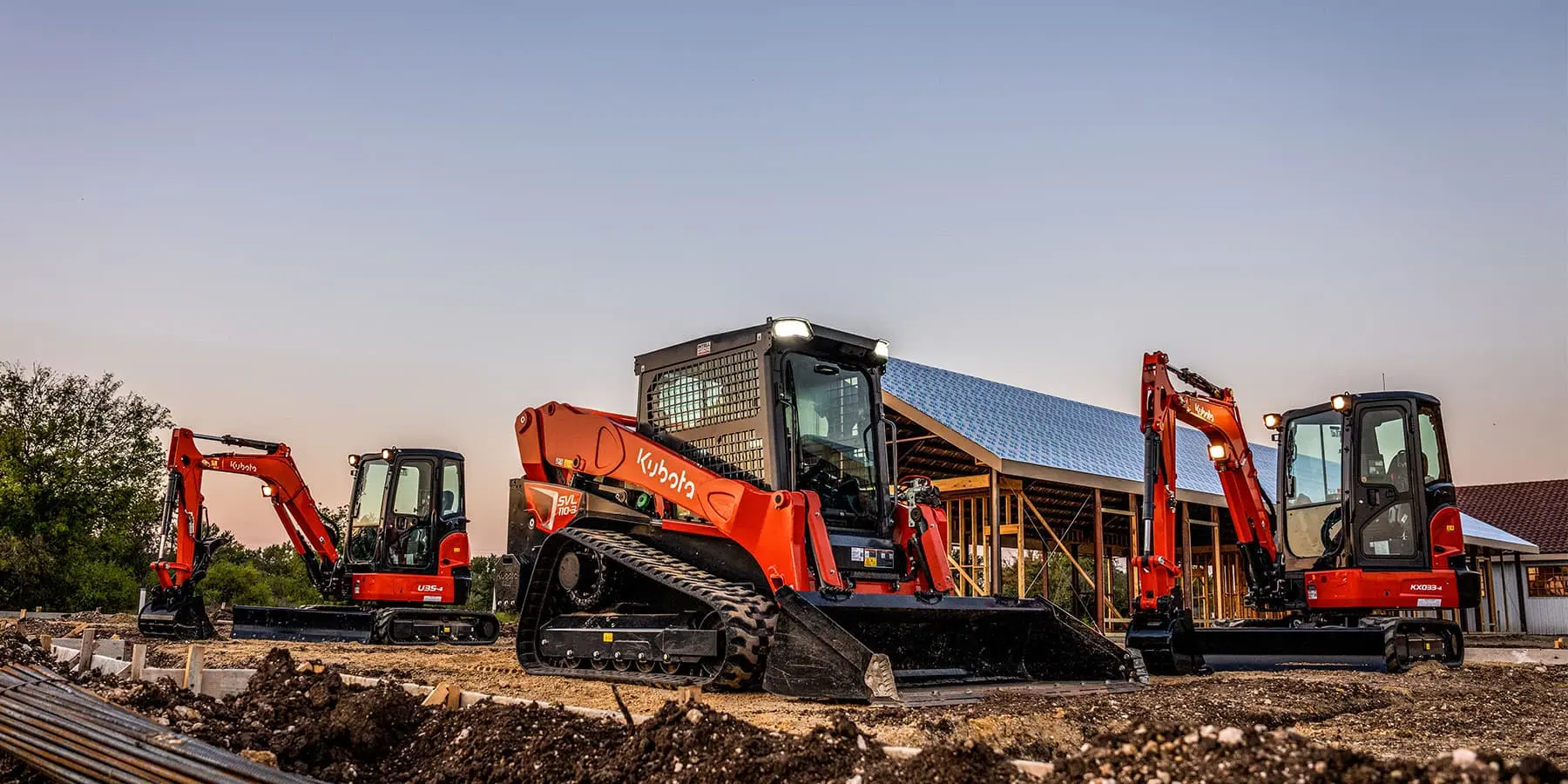
What Tracks Really Cost: The Honest Math
Tracks wear. On a machine that lives on dirt, a set typically lasts 1,200 to 1,600 hours. On abrasive surfaces, far less. Budget for a replacement set eventually and treat it as the price of working days that wheels can't give you.
Here's the part most dealers skip: a wheeled machine that sits parked every time the ground is soft costs you more than tracks ever will. In Southern California the ground is soft exactly when the work shows up: after rain, after irrigation, on fresh cuts. If you grade, trench, or landscape, those are your billable days.
- Smooth, wide turns extend track life more than anything else
- Spinning turns on asphalt are what chew tracks early
- Keep track tension set right; loose tracks wear fast and derail
- All-day demo and recycling work belongs on tires, full stop
Track life varies with surface, operator habits, and tension. The range here is what we see across SoCal fleets, not a warranty.
Want the real operating cost picture for your hours and your ground? We'll walk you through it with actual numbers.
More Work Days Now, More Money Back Later
The quiet advantage of tracks is the calendar. Rain that parks a wheeled machine for three days barely slows a track loader down, and over a year those recovered days usually matter more than any line on the spec sheet. The machine that works more days simply earns more.
Resale is the other half. Kubota SVL machines hold value unusually well in the SoCal market, and clean, low hour track loaders sell faster than comparable skid steers because tracks are what buyers here want. You feel that difference the day you trade up.
Buying is only half the math. See how the money side works in Kubota financing explained, then come back to the machine.
Wondering what your current machine is worth on a trade? Ask us for a straight number, no obligation attached.
The SVL and SSV Lineup: Where Most Buyers Land
Kubota builds the SVL series on tracks and the SSV series on wheels, plus a stand-on machine for tight crews. Here's the short version of who buys what.
SVL65-2
The lighter track loader. Finished turf, residential landscaping, and tighter budgets.
Best for: turf and yards
SVL75-3
The all-rounder most buyers land on. Big enough for real work, compact enough for residential jobs.
Best for: most buyers
SVL97-2
The large frame. Heavy pushing, bigger lift, and full time production work.
Best for: production crews
SSV65 / SSV75
The wheeled machines. Pavement, demo, and abrasive work where tires win.
Best for: pavement crews
Crews argue Kubota against Bobcat and Cat at every tailgate, and all three build a serious machine. Where the SVL series consistently wins: standard two speed travel, a wide, quiet cab operators actually like, strong hydraulic flow for attachments at the price, and Kubota's diesel reliability record. Our take as a dealer that services what we sell: buy the machine with the best support within an hour of your jobs. If that's us, the SVL75-3 is the best all-around compact track loader we've ever stocked, and it's our number one seller for a reason.
On the money side, Kubota Credit periodically runs $0 down, 0% APR programs on qualifying new models. Programs, terms, and eligible models change, so ask us what's running right now on the machine you want.
*Financing subject to credit approval through Kubota Credit Corporation. Programs and availability vary.
Fifteen minutes in the seat beats an hour on spec sheets. All three lots keep SVL and SSV units ready to run.
Questions We Get Every Single Day
Honest answers. No script.
Is a track loader better than a skid steer?
Better on dirt, slopes, turf, and soft ground: yes, clearly. Better on pavement, demo, and abrasive surfaces: no, wheels win there. Match the machine to the ground you work on most, not the one you work on occasionally.
How long do rubber tracks last?
Typically 1,200 to 1,600 hours in mixed dirt use. Concrete and rock chew them faster; smooth operators on soft ground beat those numbers. Avoid spinning turns on asphalt and you'll live at the top of the range.
What's the difference between the SVL75-3 and SVL97-2?
The SVL75-3 is the 74 horsepower all-rounder most buyers land on: big enough for real work, compact enough for residential jobs. The SVL97-2 is the large frame machine for heavy pushing, bigger lift, and full time production work. If you're asking, start with the 75.
Can a track loader work on finished lawns?
Yes, that's one of its best tricks. The tracks spread the machine's weight so it treads lighter than a wheeled machine half its size. Use smooth, wide turns and most turf never shows it was there.
Do I need high flow hydraulics?
Only if you're running hungry attachments: mulchers, cold planers, big trenchers. Buckets, forks, grapples, and augers run fine on standard flow. Buy high flow for the attachment plan you actually have, not the one you might have someday.
Should my first machine be new or used?
When a promotional rate is running, new is often the cheaper total cost path for a machine you'll keep. Used makes sense for a second unit or a tight budget; just insist on service records and an undercarriage inspection. We stock both.
Still have a question this guide didn't cover? Ask a human. That's what we're here for.
Your Jobs. Your Ground. Your Call.
You know your work better than any spec sheet does. Bring us the jobs and we'll match the machine, with real numbers and zero pressure.
*Subject to credit approval through Kubota Credit Corporation. Terms and availability vary. Consult your tax professional regarding Section 179.