


What Kubota Hydraulic Fluid Actually Is Super UDT2, why the shared sump makes it a real specification rather than brand loyalty, and what goes wrong slowly when you use something else
Disclosure. We sell Kubota machines and we sell Kubota fluid, so read the next few thousand words with that firmly in mind.
We are going to tell you to use Super UDT2. We are also going to tell you exactly why, in enough detail that you can check the reasoning yourself and tell us we are wrong. That seems fairer than the usual approach, which is a parts counter shrugging and saying it is what the book calls for.
The fluid in your tractor is not hydraulic oil. It is hydraulic oil, gear oil, wet brake fluid and clutch fluid all being asked to do four contradictory jobs from one sump.
That sentence is the entire article. Everything below is the detail.
Jump to what you came for
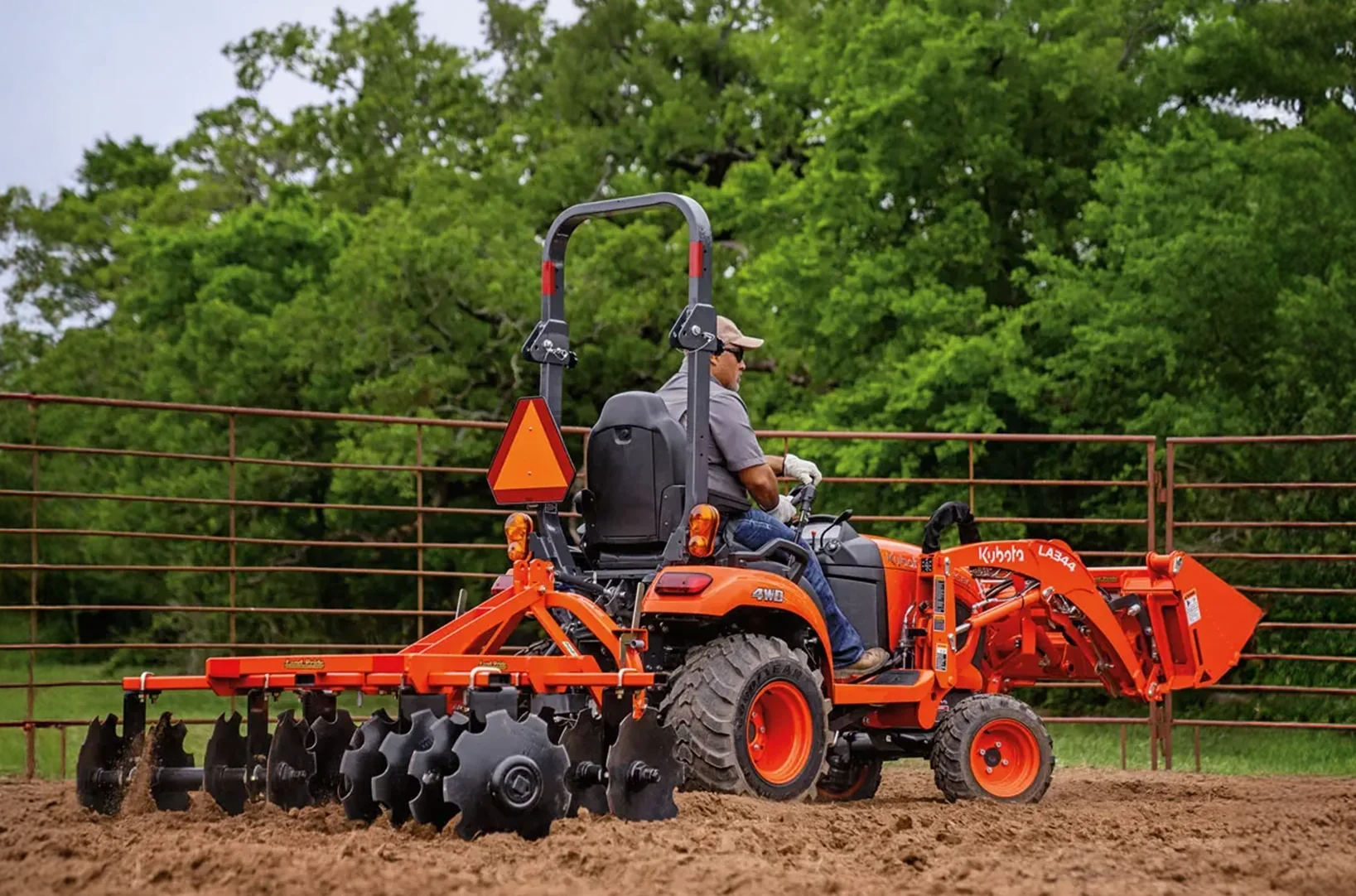
Super UDT2 Is a Transmission Fluid That Happens to Run Your Hydraulics
UDT stands for Universal Trans-Hydraulic Fluid. Super UDT2 is Kubota's current version of it, and the word doing the heavy lifting is universal.
On a car, the transmission has its own fluid, the brakes have their own fluid, the power steering has its own fluid, and none of them ever meet. On a compact tractor, one reservoir feeds the transmission, the hydraulic pump, the wet brakes, the power steering, the three point hitch, the loader and the PTO clutch packs. Same fluid, same sump, at the same time.
That is a genuinely hard engineering problem, and it is why the fluid is not interchangeable with things that look like it on a shelf.
The "2" matters too. Super UDT2 superseded the earlier UDT specification, with improved cold flow and a revised friction package. If you have an older jug of plain UDT on the shelf, it is not the current spec.
Four Jobs, One Fluid, All Pulling Against Each Other
Here is why you cannot just pour in something with a similar viscosity and call it done.
| Job | What it needs | Why it fights the others |
|---|---|---|
| Hydraulics | Stable viscosity, anti wear, no foam | Wants a thin, clean, slippery fluid. Friction modifiers are dead weight here. |
| Wet brakes | Very specific friction behaviour | Needs the fluid to grab predictably as plates close. Too slippery and you get chatter and squeal. |
| Clutch packs and PTO | Controlled slip, then firm lock | Wants friction that changes with pressure. Directly opposed to what the pump wants. |
| Gears and final drive | Extreme pressure protection | Wants a heavier film. The hydrostatic transmission wants it thin when cold so it will actually move. |
A fluid that satisfies all four at once is a compromise designed around one manufacturer's specific brake material, clutch material and pump clearances. That is what a proprietary specification is. It is not brand loyalty theatre, though we accept it is convenient for us that it works out that way.
What Happens If You Use Something Else
Honest answer. Usually nothing dramatic, immediately. That is exactly what makes it a bad idea.
Nobody pours generic tractor fluid in and watches the machine die in the yard. The machine runs. It runs for months. Then one of these shows up and nobody connects it to the fluid change eighteen months earlier.
A note on generic universal tractor fluids. Some are genuinely good products. The problem is the label. A jug claiming to meet a long list of older specifications from six manufacturers is claiming breadth, not depth, and the Kubota specification it names is often the superseded one. If you are going to run something else, at minimum confirm it names the current specification, and keep the receipt.
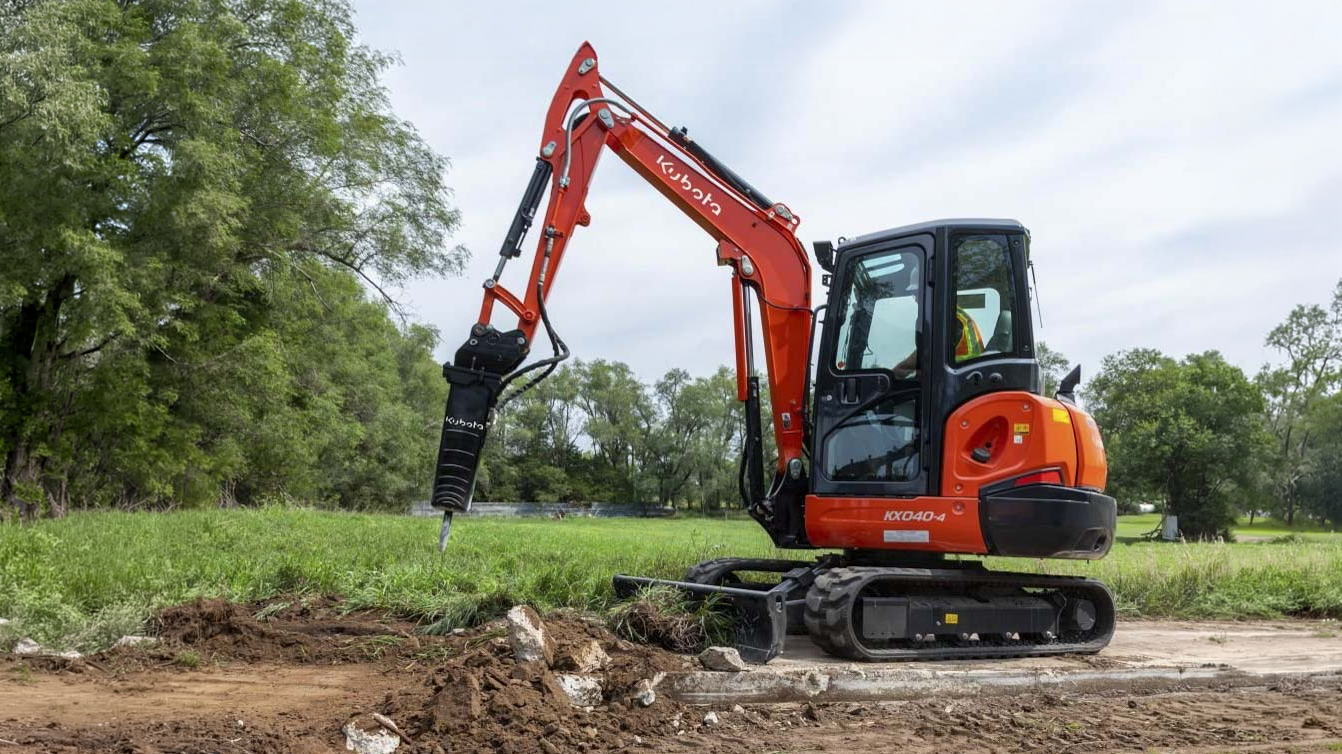
Tractors and Excavators Do Not Take the Same Thing
This is the most common mix up we field at the parts counter, and it is an easy one to make because both machines have hydraulics and both are orange.
A compact tractor shares one sump between transmission, hydraulics and wet brakes, which is why it needs a trans hydraulic fluid. A mini excavator does not. Its hydraulic system is separate, it has no wet brakes in that circuit, and it wants a dedicated hydraulic oil. Track loaders and skid steers vary by model and circuit.
So "what hydraulic fluid does my Kubota take" does not have one answer. It has an answer per machine, and that machine's own manual is the only place the answer is authoritative. Model, year and serial range all move it.
What the Machine Tells You Before the Invoice Does
Fluid problems announce themselves in a fairly consistent order. None of these is proof on its own, but together they are a pattern.
If you are chasing one of these, the useful thing to bring us is not a description. It is the hour meter reading, what went in last time, and roughly when it changed. That turns a guessing exercise into a short conversation.
Changing It Without Making Things Worse
We are not printing an interval here, because it varies by model and by how the machine is used, and a wrong number on a page like this is worse than no number. Your manual has it. What we will give you is the part people get wrong.
The Short Version
Use Super UDT2 in a Kubota tractor
The shared sump makes friction characteristics part of the specification, not a detail. This is the one place we will be boring and say use the manufacturer fluid, and we would say it if we sold a different brand.
Excavators are a different question
Separate hydraulic circuit, no wet brakes in it, dedicated hydraulic oil. Do not carry the tractor answer across. Check by serial number.
Brake chatter is the tell
If the wet brakes have started to groan or shudder, especially cold, fluid is the first thing to look at and it is cheaper than anything else on the list.
If you run something else, document it
Confirm the jug names the current specification rather than a superseded one, and keep the receipt. Warranty conversations go much better with paperwork.
Five Questions Worth Asking Your Dealer
- For my serial number, does this machine take a trans hydraulic fluid or a dedicated hydraulic oil?
- How many filters and screens are in the trans hydraulic circuit on this model, and are they all in the service kit?
- What is the refill capacity, as opposed to total system capacity?
- When is the break in service due, and what does it include beyond engine oil?
- If I have brake chatter, what would you check before selling me fluid?
Six branches for rentals, parts and service: Los Angeles (Sun Valley), Santa Fe Springs, Temecula, Corona, Escondido and Vista. Same family since 1952. The parts counter would rather look up your serial number than guess, and it takes about a minute.
Straight Answers
What hydraulic fluid does a Kubota tractor take?
Kubota compact tractors take Super UDT2, a universal trans hydraulic fluid. The transmission, hydraulics, wet brakes, power steering, three point hitch and PTO clutch packs all share one sump on these machines, so the fluid has to satisfy hydraulic, gear and friction requirements at the same time. Confirm against your machine's serial number, because specifications change during a production run.
What is Kubota Super UDT2?
Super UDT2 is Kubota's current universal trans hydraulic fluid, superseding the earlier UDT specification with improved cold flow and a revised friction additive package. Universal here means one fluid serving the transmission, hydraulic system, wet brakes and clutch packs from a shared reservoir.
Can I use regular hydraulic oil instead of Super UDT2?
Not in a compact tractor with a shared sump. Straight ISO hydraulic oil has no friction modifiers, because a hydraulic pump does not need them, but the wet brakes and clutch packs running off the same fluid do. The usual result is brake chatter or squeal, worse when cold.
What happens if you use the wrong hydraulic fluid in a Kubota?
Rarely anything dramatic at first, which is what makes it a poor decision. Over months the common symptoms are wet brake chatter and squeal, a hydrostatic transmission that is sluggish on cold mornings, a jerky three point hitch or a loader that creeps down overnight, and accelerated wear. It also complicates any hydraulic or transmission warranty claim.
Is ATF the same as Kubota hydraulic fluid?
No. Automatic transmission fluid has the wrong viscosity, the wrong additive package and the wrong anti wear chemistry for the gear loading in a tractor final drive. That both are transmission fluids and both are red is a coincidence, not a compatibility statement.
Do Kubota excavators use Super UDT2?
Generally no. A mini excavator's hydraulic system is separate, it has no wet brakes in that circuit, and it takes a dedicated hydraulic oil rather than a trans hydraulic fluid. Track loaders and skid steers vary by model and circuit. Look it up by serial number rather than carrying the tractor answer across.
How often should Kubota hydraulic fluid be changed?
It varies by model and by how the machine is worked, so the manual for your specific machine is the only authoritative source. What is consistent is that the first change comes much earlier than the rest, as part of the break in service, to clear manufacturing debris. Change the filters and the suction screen at the same time rather than putting fresh fluid through old media.
Yes, This Is an Ad
You just read an equipment dealer explain brush clearing. You knew what this was from the first line and read it anyway, so we will not pretend otherwise now.
What we are offering is the site walk. Send photos, or have us out, and we will tell you which of the four approaches your lot needs. Sometimes a rental. Sometimes one implement you use every spring. Sometimes your slope is too steep for any of it and you want a hand crew, in which case we will say so, because a customer who bought the wrong attachment does not come back for the tractor.
And if you are clearing ahead of the wet months, do the drainage in the same trip.
We have been here since 1952 by being the yard people call back, not the yard that sold somebody a mulcher they use twice.