

What Is Your Equipment Trade-In Actually Worth? How a dealer builds the offer, why it lands below what your neighbor got on Craigslist, and when you should skip us and sell it yourself
Disclosure. We are the dealer who makes the trade-in offer. We are on the other side of this number, and we would rather explain how it is built than have you think we pulled it out of a hat.
Short answer: Your equipment trade-in value is usually close to wholesale, meaning what a dealer can pay and still recondition, hold and resell the machine at a fair profit. It typically lands below private-party retail. The number that matters is not the trade figure alone but the net cost to change: the new machine's price minus what you get for the old one.
A trade-in is not a gift and it is not a robbery. It is a price for convenience.
People come in with a number from an online listing. Usually it is an asking price on a machine that sat for months and sold for less. Here is how the offer is built and how to check it without taking our word for anything.
Jump to what you came for
Retail, Wholesale and Trade-In Are Three Different Numbers
Most arguments about trade in value come from people using one word for three prices. Sort them out first.
Retail value
What a machine sells for to an end user, on a dealer lot or in a private sale, after it has been cleaned, serviced and shown.
Wholesale value
What a dealer or reseller pays for a machine as is, knowing they still have to fix it, store it and find the buyer. Auction results often sit near this number, because the people bidding are frequently dealers and contractors who know what they will spend after the hammer drops.
Trade-in value
What a dealer offers you when the old machine is part of buying a new one. It usually lives near wholesale, sometimes a little above it when the dealer wants the machine or the deal. If someone offers you full retail on a trade, look closely at the price of the new machine.
So when you trade in a tractor, the honest comparison is not "what would it list for." It is "what would it actually sell for, minus the work, the waiting and the risk of selling it."
What a Dealer Subtracts Before Making an Offer
Start at expected retail. Then take things away.
Add those up and the gap between retail and trade is real money. It is the price of handing over the keys and walking away. Sometimes that is worth it. Sometimes not.
What Actually Drives Trade-In Value
Two machines with the same model number can be worth very different money. Here is what we look at.
Brand and model demand
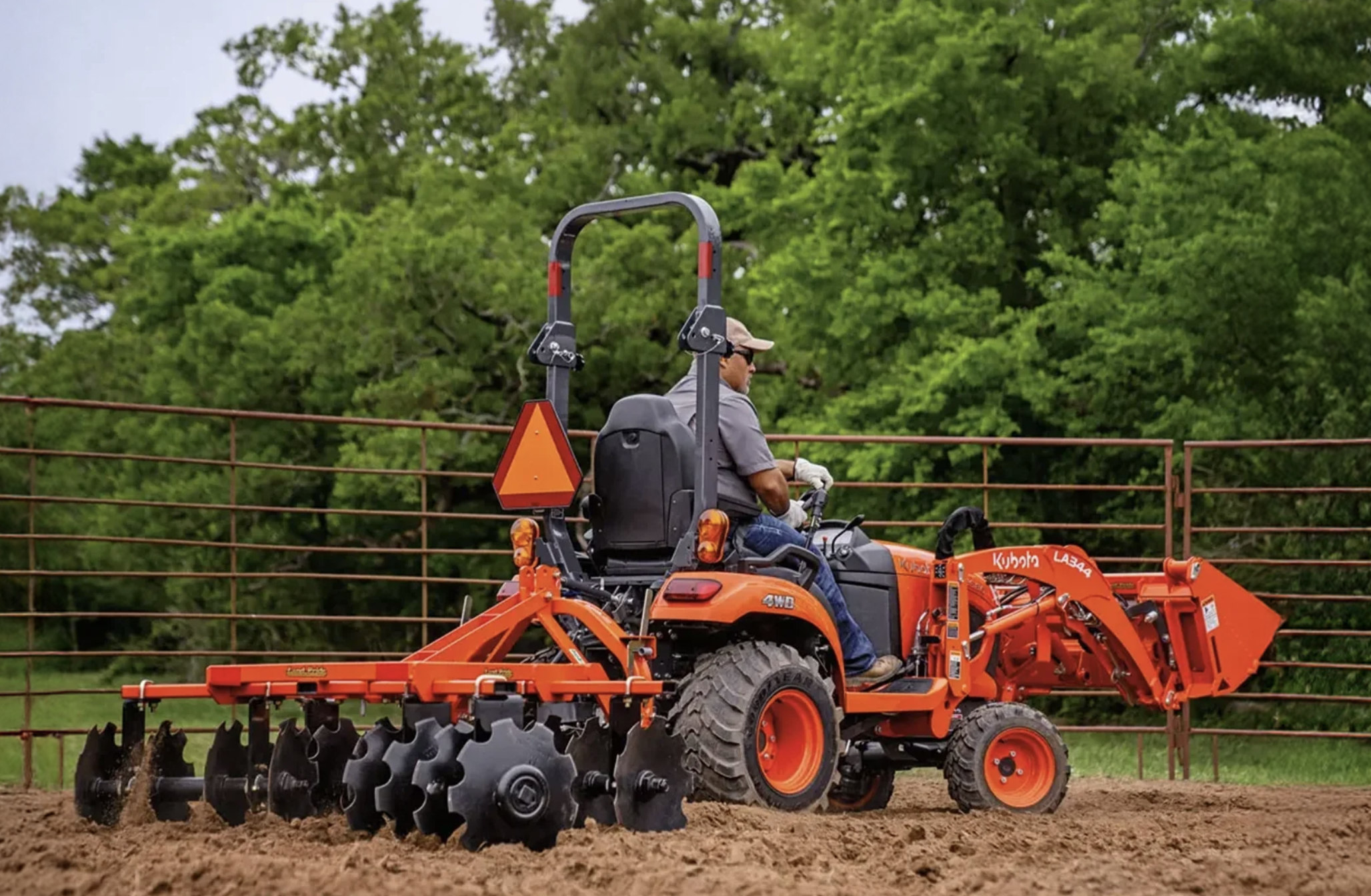
A machine people are already shopping for sells fast. Common Kubota compact tractors, mini excavators and track loaders tend to hold value because buyers know them and parts are easy to get. A rare model or an orphan brand is harder to move, and the offer reflects it.
Hours, read in context
Hours matter, but not by themselves. A 2,000 hour machine with clean records can be a better buy than a 900 hour machine that lived in a ditch. Our guide to what hours really mean on used equipment goes deeper on reading the meter honestly.
Condition you can see and condition you cannot
Undercarriage wear, tire tread, pins and bushings, leaks, cracked welds, a bent loader frame. Then what a test run reveals, like blow-by and slow hydraulics.
Attachments and service records
A tractor with its loader, a good box blade and a manual in the toolbox is worth more than the bare tractor. A folder of oil change receipts is worth more than you would think, because it lowers the risk number above.
Southern California demand and season
Demand here is not the same as in farm country. In LA County, small tractors and mini excavators that fit through a backyard gate sell well. In Riverside County and the Inland Empire, larger compact tractors for acreage and horse property move steadily. In San Diego County, hillside and ranch work drives what people want. Season matters too. Tractors tend to draw more interest ahead of spring work, and machines for brush clearing get attention ahead of fire season.
Emissions tier and California questions
California has its own rules for off-road diesel equipment, and they can affect who is able to buy an older machine and what they will pay. How much it matters depends on the machine, its horsepower, its engine tier and what the next owner uses it for. We are not your compliance advisor. Ask the dealer how they see your machine's engine affecting resale here, and check with the California Air Resources Board if you run a fleet.
How to Look Up Comparables Yourself
You do not have to trust our number. You should not, really. Check it.
Turn comps into an expected range
Pull a handful of auction results and a handful of listings. The auction cluster is roughly wholesale. The listings, trimmed down a bit, are roughly retail. A fair trade offer usually falls somewhere around the wholesale end. If an offer is well under your auction comps, ask why.
Look at the Spread, Not the Trade Number
A big trade number on a high new price is the oldest move in the business.
What you actually pay is the difference between the new machine and the old one. People call it the spread, or the net cost to change. That is the number to compare between dealers.
A worked example with round numbers
Say you are trading in a compact tractor and buying a new one. These are hypothetical numbers, not anybody's real prices.
| Line | Dealer A | Dealer B |
|---|---|---|
| New machine price | $50,000 | $55,000 |
| Trade-in offer | $20,000 | $24,000 |
| Net cost to change | $30,000 | $31,000 |
Dealer B gave you $4,000 more for the trade and still costs you $1,000 more. The trade number felt better. The deal was worse. Always ask for both numbers in writing, and compare the net.
Financing and tax change the math
A promotional rate on the new machine can be worth more than a few thousand on the trade, depending on the term. Our guide to how Kubota financing works covers what to compare. If the machine is for a business, a trade can also affect what you deduct, so read the Section 179 equipment deduction guide and talk to your accountant.
Sales tax on trade-ins
Whether and how a trade-in reduces the sales tax on a new machine depends on the state and on the details of the transaction. Ask your dealer and your tax advisor how a trade-in is treated in California for your specific purchase before you sign.
Trade-In vs Private Sale vs Consignment vs Auction
Every way to get rid of a machine trades money against time, hassle and risk. None is always right.
| Factor | Trade-in | Private sale | Consignment | Auction |
|---|---|---|---|---|
| Money to you | Near wholesale | Highest, if it sells | Retail minus a fee | Whatever the day brings |
| Time | Same day as the new deal | Weeks to months | Weeks to months | Wait for the sale date |
| Hassle | Low | High: calls, showings, no-shows | Moderate | Moderate: transport, paperwork |
| Risk | Low, price is fixed | Payment fraud, after-sale complaints | Depends on the consignor | Price can come in low |
When you should sell it yourself
Here is the honest line. If your machine is popular, clean, well documented and you have the time and patience, a private sale will often put more money in your pocket than our trade offer. That is just true. Meet buyers in daylight and get paid with certified funds.
When the trade makes sense
When your time is worth more than the difference. When the machine has problems you do not want to explain to strangers. When you need the old one working right up until the new one arrives.
And if the old machine might just need a repair instead of a replacement, read repair or replace before you trade anything.
How to Prep a Machine for a Better Number
You cannot make a tired machine new. You can stop giving the appraiser reasons to knock money off.
Clean it
Pressure wash it, blow out the radiator and engine bay, clean the cab or seat. SoCal dust and dried mud hide leaks, which makes an appraiser assume the worst.
Fix the cheap stuff
Burned out bulbs, a missing pin, a torn seat cover, a dead battery, overdue fluids. Do not pour money into a big repair right before trading. You rarely get it back.
Gather the records
Service receipts, the original purchase paperwork, the serial number and any warranty history. If you followed a schedule like the one in Kubota maintenance 101, prove it.
Keep the attachments together
Loader, bucket, box blade, the third function kit, the manual, the spare keys. A complete package is easier to sell, which is why tractor packages sell the way they do.
Disclose problems up front
Tell us about the slipping clutch or the overheating in July. We will probably find it anyway, and a surprise during inspection makes everyone more cautious on the rest of the number. Our used equipment inspection checklist is the same list a careful buyer will use on your machine, so walk through it first.
The Short Version
Compare the net, not the trade
New price minus trade value is what you pay. A big trade on an inflated price is not a good deal.
Expect something near wholesale
The dealer subtracts reconditioning, holding cost, risk and margin from retail. That gap is the price of convenience.
Check auction comps yourself
Real sold prices for the same model and hours tell you whether an offer is fair. Listings are only ceilings.
Sell it yourself if you have the time
A clean, popular, documented machine often brings more privately. Trade when time and hassle cost more than the difference.
Seven Questions to Ask About Any Trade-In Offer
- What is the new machine price and the trade value, separately and in writing?
- What is my net cost to change, after the trade?
- What reconditioning are you assuming my machine needs?
- Which comparable sales or auction results did you use?
- Does the trade offer change if I pay cash, finance or take a promotional rate?
- How does a trade-in affect sales tax on this purchase in California?
- How long is this offer good for, and what happens if the machine changes before delivery?
Straight Answers
How is equipment trade in value calculated?
A dealer starts with what the machine could sell for at retail, then subtracts reconditioning, holding cost, risk and margin. The result usually lands near wholesale value, which is close to what similar machines bring at auction.
Why is my trade-in offer lower than private sale prices?
Private sale prices assume you do the cleaning, repairs, advertising, showings and waiting. A dealer does that work and carries the risk of hidden problems, so the offer is lower. The difference is what you pay for convenience.
Should I trade in my tractor or sell it myself?
If the tractor is popular, clean and well documented and you have time, selling it yourself usually brings more money. If it has problems, you need it until the new one arrives, or your time is worth more than the difference, trading is often the better choice.
How do I find out what my tractor trade in value is?
Look up published auction results for the same make, model, year and hour range to estimate wholesale value. Use dealer and marketplace listings as a ceiling for retail. A fair trade offer usually sits near the auction numbers.
Does a trade-in lower sales tax on new equipment in California?
It depends on state rules and the details of the transaction, so do not assume. Ask your dealer and your tax advisor how a trade-in is treated for your specific purchase in California before you sign.
What can I do to get more for my heavy equipment trade in?
Clean the machine, fix inexpensive items like bulbs and pins, bring service records, keep attachments and manuals with it, and disclose known problems up front. Skip expensive repairs right before trading because you rarely get that money back.
This Is Still the Dealer Talking
We just spent a couple thousand words explaining why our trade offer will be lower than what you could get on your own. That is a strange way to sell something. We know.
Bring the machine, the records and the attachments to any of our branches, or send us photos and hours. We will give you a trade number and a new machine price as two separate lines, and if selling it yourself makes more sense, we will say so. For business buyers, ask about commercial financing on the replacement.
Seventy-some years of trades has taught us one thing. The customer who knew the auction comps never felt cheated, even when the number was low.