


Mini Excavator Sizing, In Plain English More SoCal crews run mini excavators every year. The machines make sense; the sizing is where people get lost. Buy for the access first, the dig depth second, and the towing third, and you'll pick right the first time.
Quick Summary: Mini covers everything from about 1.5 to 8 metric tons, and the right size comes down to three numbers: machine width for access, dig depth for the work, and weight for towing. Buy for the access first, the dig depth second, and the towing third. Horsepower matters less than people think. This guide maps size classes to real jobs, flags the machines that fit through a side gate, explains why Kubota builds the U Series, and gives you an honest read on towing before you find out the hard way.
Jump to what you came for
Questions every buyer is already asking.
If you're reading this, one of these is probably sitting in the back of your head. All three get answered below.
"Will it fit through the side gate?"
The single most important question in SoCal residential work. Machines that narrow to fit a standard side yard exist, and we flag them below. Measure the gate before you shop.
"How deep does it actually need to dig?"
Match dig depth to your deepest routine job plus a foot of margin, not your deepest job ever. The table below maps depth to size class so you don't pay for reach you'll never use.
"Can I tow it with my current truck and trailer?"
Under about 2 tons, usually yes with a properly equipped half ton. Above 3.5 tons you're into bigger truck territory. The towing section gives you the honest version.
Mini Excavator Sizes, Without the Jargon
Mini, compact, whatever a brochure calls it, the class runs from about 1.5 to 8 metric tons. The names don't matter. Three numbers do: how wide the machine is, how deep it digs, and how much it weighs on a trailer. Here's the class split in plain terms.
| Frame | Weight | Digs | Typical Work | Kubota Models |
|---|---|---|---|---|
| Small frame | 1.5 to 3 t | 7 to 9 ft | Irrigation, footings, spas, backyard access | K008, U17, KX018 |
| Mid frame | 2.5 to 4 t | 9 to 11 ft | Footings, drainage, pools, small demo | U27, KX030, KX040 |
| Large frame | 5 to 8 t | 12 to 14 ft | Sewer mains, foundations, heavy lift | U55, KX057 |
- Small frames tow behind a half ton with room to spare
- Mid frames are the sweet spot for most SoCal utility and pool work
- Large frames are production machines; access and towing get serious
- Zero and tight tail swing options exist across the range
Tell us your tightest gate and your deepest routine dig and we'll shortlist the sizes that actually fit.
Excavator Size, By the Jobs You Actually Do
Spec sheets sell metal. Jobs pick machines. Find your work in the left column and the right size usually picks itself.
| Main Jobs | Size Class | Kubota to Look At |
|---|---|---|
| Irrigation, gas lines, backyard access | 1.5 to 2 t | KX018-4 / U17-5 |
| Footings, spas, drainage, stump work | 2.5 to 3.5 t | U27-4 / KX030-4 |
| Pools, utilities, grading, small demo | 4 t | KX040-4 |
| Sewer mains, foundations, heavy lift | 5.5 t | KX057-6 |
| Street work beside traffic, zero overhang | Tight tail swing | U Series (U27, U35, U48, U55) |
The KX040-4 is our most popular size for a reason: deep enough for the bulk of SoCal utility and pool work, small enough to move without a CDL, and big enough that it never feels undersized on a normal week.
Bring us the three jobs you do most and we'll match a size in one conversation, no spec sheet decoder ring required.
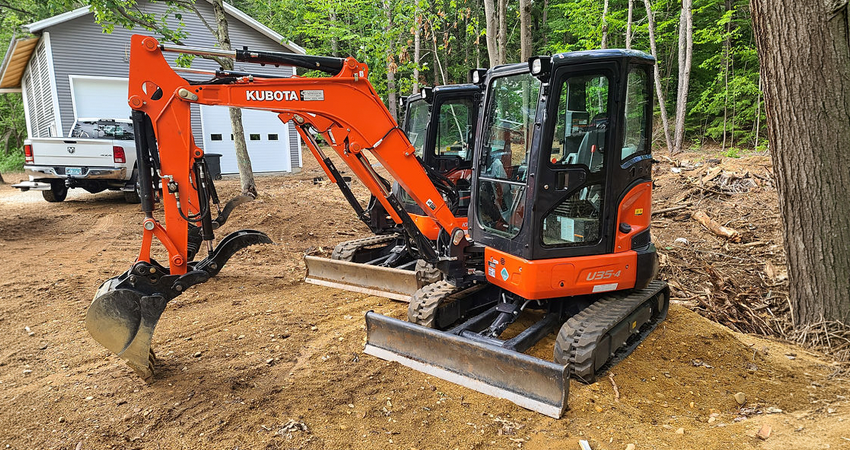
Will It Fit Through the Gate?
In SoCal residential work, the gate decides the machine. Machines in the 1.5 to 2 ton class are built for exactly this; several, including the Kubota K008 and U17 class, narrow enough to fit a standard side yard. Above that class, plan on coming through a fence panel or not at all.
- Measure your tightest gate first, not the average one
- Check the machine's retracted width, not the brochure width
- Count the blade and bucket; they set the real clearance
- Gas meters, hose bibs, and door swings all eat inches
Got a gate measurement and a job in mind? Send them over and we'll tell you what fits.
Zero Tail Swing vs Conventional: Why the U Series Exists
Kubota builds two families. KX models are conventional: the counterweight hangs past the tracks, which buys you a touch more stability and lift for the money. U Series models are tight tail swing: the house stays inside the track width, so you can spin the machine fully against a wall, a fence, or live traffic without crunching the counterweight.
If your work is open dirt, the KX is the value play. If you work between houses, along streets, or inside anything, the U Series pays for itself the first time you don't hit something. That is exactly why so many SoCal crews coming down from full size machines land on a U.
Not sure whether your jobs justify the tight tail swing? Describe a typical week and we'll talk it through honestly.
Your Truck, Your Trailer, and the Honest Math
Machines under about 2 tons, plus trailer and bucket, usually land inside a properly equipped half ton's ratings. From 3.5 tons up you're into three quarter or one ton territory with a 10K to 14K trailer. Check your actual ratings, door sticker and hitch both. Guessing costs more than the machine.
One more thing crews tell us after they switch: these machines start every morning and stay out of the shop. Kubota builds its own diesel engines, the same family that powers everything from tractors to generators, and that reliability record is a big part of why a ten year old Kubota mini still commands real money at resale.
On the money side, Kubota Credit periodically runs $0 down, 0% APR programs on qualifying new models. Programs, terms, and eligible models change, so ask us what's running right now on the size you need.
*Financing subject to credit approval through Kubota Credit Corporation. Programs and availability vary. Confirm towing capacities against your vehicle's actual ratings.
Tell us your truck and trailer and the size you're eyeing, and we'll sanity check the whole setup before you commit.
Questions We Get Every Single Day
Honest answers. No script.
What size mini excavator fits through a gate?
Machines in the 1.5 to 2 ton class are built for this. Several, including the Kubota K008 and U17 class, narrow to fit standard side yards. Measure your tightest gate, then bring us the number; access decides the machine, not the other way around.
How deep can a mini excavator dig?
Roughly 7 feet at 1.5 tons, 9 to 11 feet in the 3 to 4 ton class, and 12 to 14 feet at 5 to 8 tons. Buy for your deepest routine job plus about a foot of margin.
Is there a difference between a mini excavator and a compact excavator?
No. The terms are used interchangeably for machines under about 8 metric tons. Some brands market the small end as mini and the larger end as compact, but there's no technical line.
Can I tow a mini excavator with a half ton truck?
Machines under about 2 tons, plus trailer and bucket, usually land inside a properly equipped half ton's ratings. From 3.5 tons up you're into three quarter or one ton territory with a 10K to 14K trailer. Check your actual ratings; guessing costs more than the machine.
Kubota vs Takeuchi excavators: which should I buy?
Both are excellent, and PDQ sells and services both, so we have no horse in the race. Kubota wins on dealer network and resale in SoCal; Takeuchi loyalists point to digging feel and spec for spec value on certain sizes. Run both at our lot and let the seat decide.
Should I rent or buy?
Renting a machine a few days a month is fine. Once it becomes a regular part of your week, ownership usually wins, especially when a promotional rate is running, and you keep the equity. We do both, so you'll get a straight answer either way.
Still have a question this guide didn't cover? Ask a human. That's what we're here for.
Right Size. First Try. No Do Overs.
An undersized machine costs you every single day, and an oversized one costs you at the gate. Let's get it right the first time.
*Subject to credit approval through Kubota Credit Corporation. Terms and availability vary. Consult your tax professional regarding Section 179.