


Compact Excavator vs Mini Excavator They are the same machine. Here is the decision you were actually trying to make.
We are going to lose you a click here, so let's get it over with.
There is no difference between a compact excavator and a mini excavator. Not a technical one, not a legal one, not a spec sheet one. They are two words for the same machine, and which one you hear depends entirely on whose brochure you picked up.
You probably arrived here because you typed one of those phrases and got a page of results that all sounded a little too confident. Somebody told you compact is bigger. Somebody else told you mini is bigger. A third told you it comes down to tail swing, which is a real thing but has nothing to do with either word.
They were guessing. We sell and rent these machines every week and we can tell you the industry does not agree with itself either.
So here is the honest version, and then the question you were actually asking underneath the one you typed.
Jump to what you came for
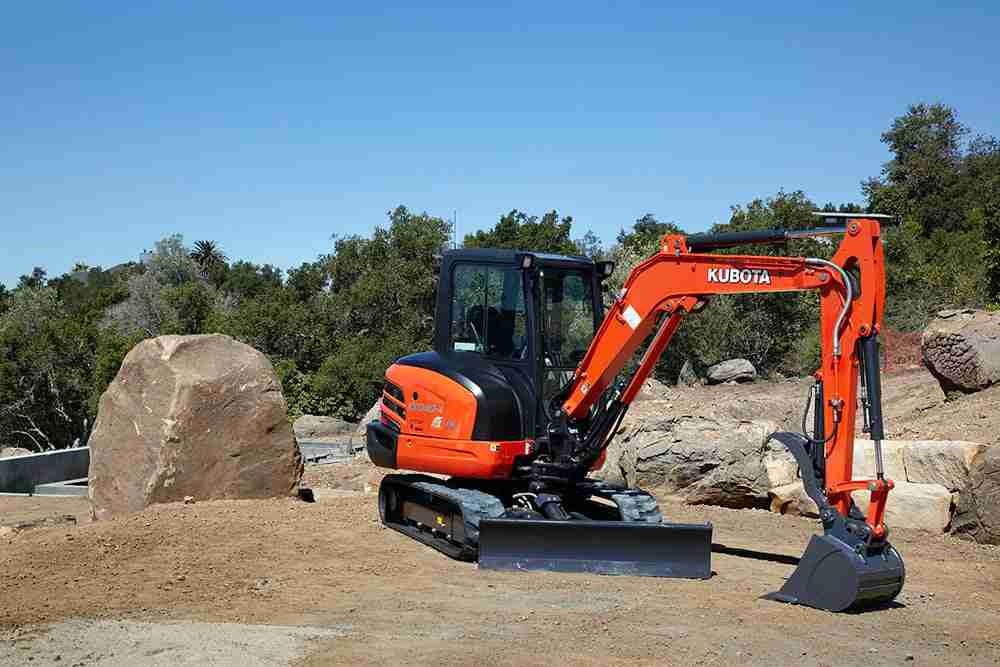
The Two Words Mean the Same Thing
Here is what is actually going on. There is no standards body that owns either term. No SAE definition, no ISO class, nothing. Manufacturers picked a word and stuck with it, and the trade press uses both in the same article without blinking.
If a salesperson tells you a compact excavator is a bigger class than a mini excavator, they are not lying to you on purpose. They just repeated something they heard. Ask them for the operating weight instead and watch the conversation get useful in about four seconds.
Weight Class Is the Only Thing That Means Anything
Drop both words. The number that decides everything is operating weight, because operating weight is what determines whether the machine fits through your gate, whether your truck can legally pull it, and whether it can reach the bottom of the hole you need dug.
Here is the Kubota line laid out by weight, which is the only sorting that survives contact with a job site.
| Weight | What it clears | What it cannot do |
|---|---|---|
| 1 ton, K008-5 | Wins. Fits a standard side gate and a pickup bed | Shallow reach, no cab, slow on volume |
| 1.7 ton, U17-5 | Wins. Backyard access with real dig depth | Runs out of breakout on hardpan and rock |
| 3 to 4 ton, KX033 and U35 | Wins. The volume seller, half of North America buys in here | Getting wide for tight residential access |
| 5.6 ton, KX057-5 | Wins. Utility depth and production trenching | Needs a real trailer and a real truck |
| 8.5 ton, KX080-5 | Wins. Still legally called compact, digs like it is not | You are into CDL territory on most trailer setups |
Notice the word compact never once changed meaning across that table. Only the number did.
If you want the long version of this, we already wrote it. The mini excavator sizing guide goes job by job instead of class by class, and it is the more useful page if you already know you are buying and just need the size.
What "Compact" Actually Buys You
The word is doing one job, and it is not describing size. It is describing access.
Every machine in this class exists because full size excavators cannot get to the work. That is the whole product category. And once you see it that way, the three things you should be shopping for become obvious.
None of those three things is on a spec sheet as a headline. All three decide whether the machine makes you money.
What Each Size Is Actually For

Kubota K008-5
Retractable tracks, no cab, fits where nothing else fits. This is a specialty tool, not a first machine. Buy it when access is the entire problem and you already own something bigger.

Kubota U17-5
Zero tail swing, so the counterweight stays inside the tracks and you can work against a wall without swinging into it. The default answer for residential landscape and hardscape crews.
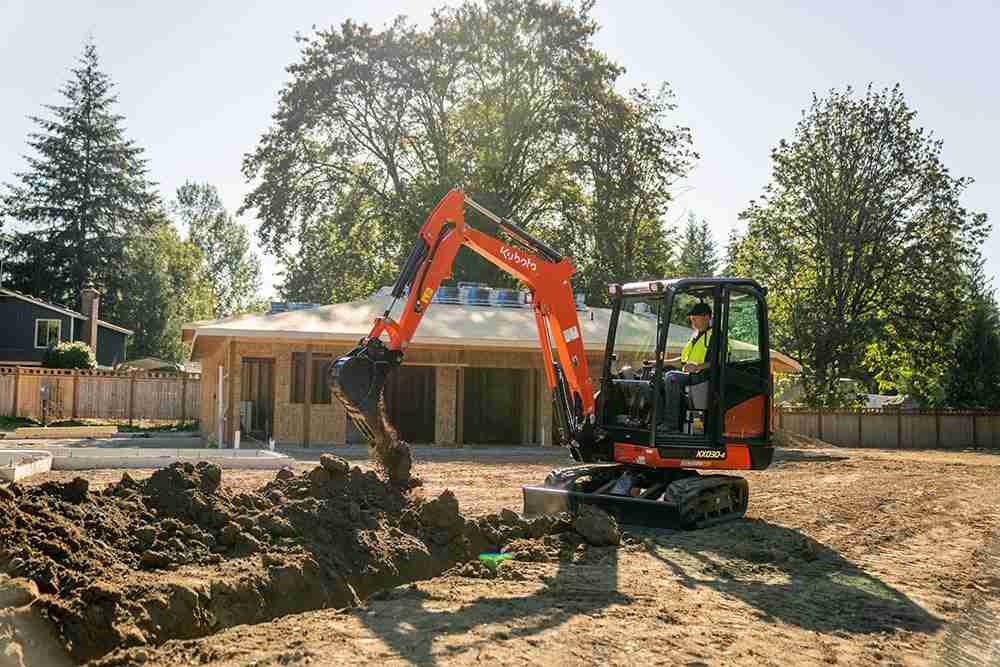
Kubota KX033 and U35
Roughly half of every compact excavator sold in North America lands in this band, and it is not an accident. Enough reach for foundations and utilities, still trailerable behind a three quarter ton truck.
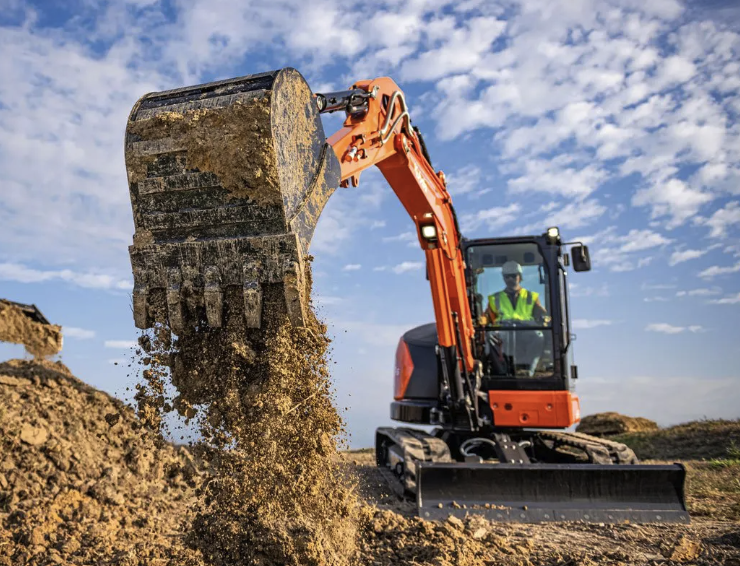
Kubota KX057-5
Where compact stops being a compromise. Real depth for utility work and sewer laterals. You are now hauling with intent rather than hooking up and going.

Kubota KX080-5
The top of the line, and the machine that proves the terminology is meaningless. Nobody looking at it would call it mini. Kubota still files it under compact.
The Short Version
Neither. Same class, same machines, different marketing department. Ask for operating weight instead.
1.7 to 3 ton, zero tail swing. It fits where the work is and you can tow it yourself.
3 to 5.6 ton. This is where the class earns its living and where most of the industry buys.
You have outgrown the class. Do not buy a bigger compact to fix it. Look at the 8 ton machines or step out entirely.
You may want a track loader instead, or as well. We laid out that call in track loaders vs skid steers.
Come dig with two of them on our yard, back to back. Twenty minutes settles it.
Talk to someone who runs these
What Staying in This Class Actually Costs You
We rent these machines out, which means we find out what they cost long before an owner would. A rental unit takes a different operator every week and nobody babies it. Two years in our fleet teaches what eight years of ownership would.
Here is what nobody selling you one is going to lead with.
None of that makes the class a bad buy. It is the stuff you learn in year two, and we already learned it on our own money. If the number that worries you is the one on the invoice rather than the ones above, how Kubota financing actually works covers the 0% offers and the Section 179 math without the fine print games.
The Word on the Machine Will Not Cost You Anything. Downtime Will.
Here is the uncomfortable part, and it undercuts most of what you just read.
Every manufacturer in this class builds a decent machine. Kubota, Bobcat, Takeuchi, Cat, Deere. None of them is going to fail you because of a name or a horsepower rating. The iron is not your risk.
Your risk is a machine sitting in a shop queue, and a parked machine earns exactly zero no matter what word is stamped on the side. Two contractors can buy the identical unit on the same day and have completely different experiences with it. The variable is not the brand and it is definitely not the terminology.
It is who services it and how fast. That is a local question, and it has nothing to do with either word you searched.
So stop comparing vocabulary and start asking the four questions that actually predict your next five years:
- Where is the nearest shop that works on this machine, and how far is that from your yard?
- Do they stock filters, tracks and wear items, or does everything get ordered?
- What is the real turnaround on a warranty repair this month, not in general?
- When you call, do you get a person who knows equipment or do you get a queue?
We are at three branches in Southern California. Sun Valley in Los Angeles, Temecula, and Escondido in San Diego. Same family since 1952. Ask us those four questions, then call whoever else you are considering and ask them the same four. Whoever answers without checking with someone is probably your dealer.
Straight Answers
Is there any difference between a compact excavator and a mini excavator?
No. They are two names for the same class of machine. No standards body defines either term, and manufacturers use them interchangeably. Kubota, Bobcat and Takeuchi say compact. Caterpillar says mini. The machines overlap completely.
What size is considered a compact excavator?
Most of the industry treats anything under six metric tons as compact or mini, and machines above that as midi. In practice manufacturers stretch it. Kubota sells an 8.5 ton KX080-5 as a compact excavator because customers wanted the capacity without losing transportability.
What is the most popular compact excavator size?
Roughly half of all compact excavators sold in North America fall between about 2.5 and 4 metric tons. That band covers residential foundations, utility trenching and general site work while still fitting on a standard trailer without a permit.
Do I need a CDL to tow a compact excavator?
It depends on the combined weight of your truck and trailer, not on the machine alone. The two to four ton machines are the popular size precisely because that combination usually stays under the threshold. Once you get into the six to eight ton machines, check your setup carefully before you buy.
What is zero tail swing and do I need it?
Zero tail swing means the counterweight stays within the width of the tracks, so the back of the machine does not swing out past the undercarriage. Kubota's U Series is built this way. If you work against walls, fences, or between structures, it matters a lot. On open ground it does not. We cover the tradeoff in more depth in our mini excavator sizing guide.
Should I rent a compact excavator before buying one?
Yes, and we say that as a company that would rather sell you one. Rent the size you think you need for a real week of your actual work. If it is undersized you will know by Wednesday, and that is a much cheaper way to find out than owning it.
That Was a Lot of Words to Say the Words Do Not Matter
You came here to settle a definition and we told you there was nothing to settle. Sorry about that. The trade did this, not us.
What is left is a real decision, and it is a decision about weight, access and who fixes the thing. That one we can actually help with, and it goes faster in person than it does on a page.
Yes, we sell Kubota. You could see that coming from the logo at the top. We also rent every size in this class, which means we will tell you when the machine you are about to buy is the wrong one, because we would rather rent you the right one twice than sell you the wrong one once.
Bring us the three jobs you do most. We will point at a weight class and tell you why.