

Concrete Demolition: Build Your Equipment List Before You Start Breaking Cut, break, separate, load, haul. Breaking is the fun part and the smallest part, and the truck is usually where the plan falls apart
Disclosure. We rent the saws, breakers, loaders and dump trucks this guide talks about, so we profit when your list gets longer. Some lists should be short. A few should end with a phone call to a demo contractor instead of us.
Short answer: Concrete demolition takes five steps, and each one needs its own tool: cut the edges with a concrete saw, break the slab with a hand breaker or a machine-mounted hammer, separate the rebar or mesh, load the pieces with a skid steer or track loader, and haul it away by truck. Broken concrete weighs roughly 4,000 pounds per cubic yard, so plan the hauling first and the breaking last.
Anybody can break concrete. The question is where two tons of it per yard goes on Tuesday.
Most people plan a concrete tear-out around the loud part. They picture a jackhammer and a Saturday. Then they find out the saw was needed first, the slab has rebar every foot, the wheelbarrow takes forty trips per ton, and the dump truck can only carry a fraction of the pile before it hits its weight rating.
So build the whole list before the first swing.
Jump to what you came for
Size the Job Before You Size the Equipment
Three numbers decide everything: square footage, thickness and what is inside the slab. Measure the area. Then find an edge, or drill a test hole, and measure the thickness. A slab that looks like 4 inches can be 6 at the edges where it was thickened.
The volume math
A cubic yard of concrete covers about 81 square feet at 4 inches thick. So a 400 square foot patio at 4 inches is roughly 5 cubic yards, which at roughly 4,000 pounds per yard is about 10 tons. A two-car driveway can easily be double that. Rule-of-thumb numbers, but close enough to plan trucks.
What is inside it
Plain slab, welded wire mesh, or rebar. Older patios in LA County are often plain or mesh. Driveways and newer work usually have rebar. Foundations always do. Steel is what turns a weekend job into a week.
| Step | Small patio or walkway | Driveway | Foundation or footings |
|---|---|---|---|
| Cut | Handheld cut-off saw, or skip it | Walk-behind concrete saw at the property line and garage | Saw, often by the demo contractor |
| Break | Sledge, pry bar or electric breaker | Breaker attachment on a mini excavator or skid steer | Excavator-mounted hammer, larger carrier |
| Steel | Bolt cutters for mesh | Cut-off saw or torch for rebar | Shears or torch, plus a separate steel pile |
| Load | Wheelbarrow or power buggy | Skid steer or track loader | Loader plus excavator |
| Haul | One or two small truck loads | Several dump truck loads | Many loads, often a hauler |
| Who should do it | You, probably | You or a contractor | Usually a licensed contractor |
Notice the last row. Foundation tear-outs involve permits, inspections and sometimes an engineer. We will rent you a hammer. We will also tell you to hire it out.
Cut Lines First, or Break Things You Meant to Keep
Concrete does not stop cracking where you want it to. Hit a patio with a breaker and the crack can run straight under the slab you are keeping, the garage apron, or the neighbor's walkway. A saw cut along the edge gives the break a place to stop.
When to saw and when to skip it
If you are removing everything to dirt and nothing touches a surface you care about, you may not need a saw at all. If the slab meets a garage floor, a sidewalk, a city apron or another slab you are keeping, cut it. Our sister guide on renting a concrete saw covers blade diameter, cut depth and walk-behind versus handheld.
What can hide in a slab
How to Break Up Concrete Without Breaking Yourself
Match the breaker to the thickness and the steel, not to how angry you are at the patio.
By hand: sledge and pry bar
For a thin walkway or a small pad with no steel, a sledgehammer and a long pry bar still work. Lift an edge, put a block under it so the slab is hanging in the air, and hit it. Unsupported concrete breaks far easier than concrete lying flat on dirt. Cheap and slow.
Electric breakers
The handheld demolition hammer most people call a jackhammer. Runs on a regular outlet or a generator, no compressor needed. Good for patios, steps and walkways at typical residential thickness. It gets slow on thick or heavily reinforced slabs.
Breaker attachments on a machine
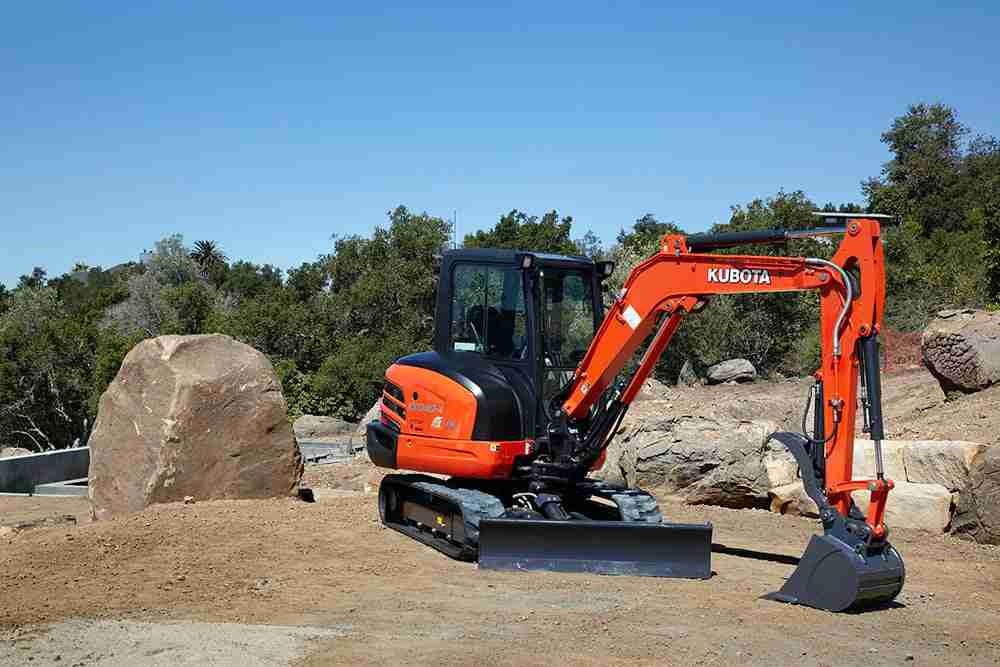
A hydraulic hammer on a mini excavator or skid steer is the right tool for driveways and anything with rebar. The hammer has to match the carrier: its weight, its hydraulic flow and its pressure. Too big and you overload the machine, too small and you are just making noise. Our mini excavator attachments guide covers matching the hookup.
Demolition robots for interior work
Inside a building, where you cannot fit or exhaust a diesel machine, a remote-controlled demolition robot is the specialty answer. They take training to run well, so this is usually a contractor job.
Rebar and Mesh: The Part That Eats the Schedule
Reinforced concrete breaks and then hangs together on the steel like a bad necklace. Cut it loose before anything gets loaded.
Wire mesh
Bolt cutters handle most welded wire mesh. Pull the mesh up as you break so it does not tangle in the loader bucket. Roll it into a pile.
Rebar
A cut-off saw with a metal-cutting blade, a torch, or hydraulic shears. Budget real time here. On a driveway with rebar on a tight grid, cutting steel can take longer than breaking concrete.
Keep steel and concrete separate
Many recycling yards want concrete clean of steel, or charge more if it is not, and scrap yards may take the steel. Ask both before you start, because separating on the ground is easier than picking rebar out of a truck bed later.
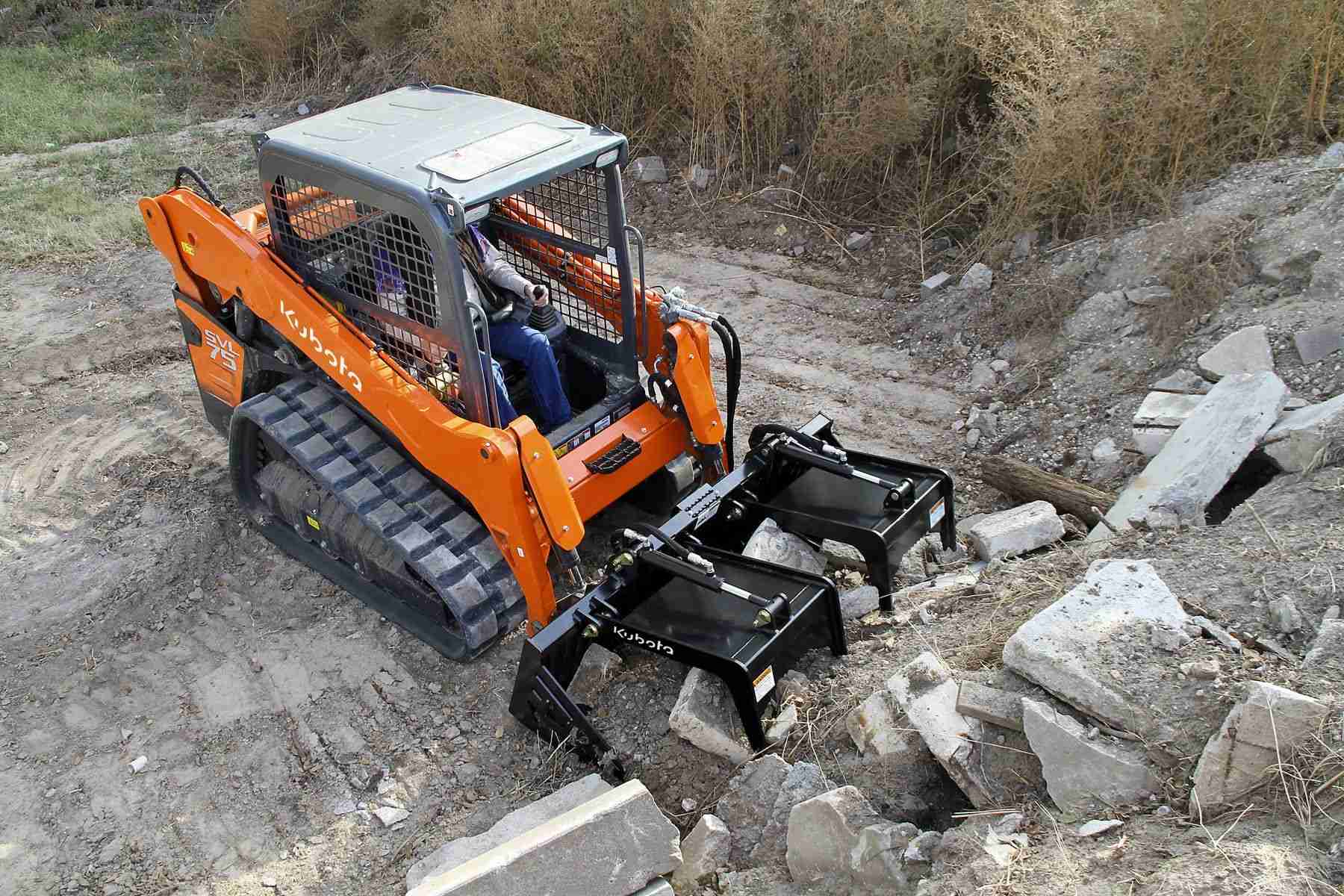
A grapple helps a lot at this stage. A rock grapple on a loader lets dirt fall through and clamps slabs that would slide off a bucket. Our skid steer grapple guide covers which type your machine can carry.

Loading Out: Wheelbarrow, Buggy or Loader
Ten tons of driveway in a wheelbarrow is a long week.
Power buggy
A small motorized carrier that fits through gates and down side yards. Good middle ground for backyard patios where a loader cannot get in.
Skid steer or track loader
The workhorse for driveways. Scoops broken pieces and dumps them into a truck. If the machine will cross a driveway or lawn you are keeping, read our sibling guide on protecting driveways during equipment work before delivery day.
Excavator plus loader
On bigger jobs, the excavator breaks and loads trucks directly while a loader cleans up and stages pieces. Whether that second machine pays for itself is its own question, and our guide on pairing an excavator and loader works through it.
Hauling and Recycling: Weight Runs Out Before Space Does
Here is the mistake we see most. Someone rents a dump truck, fills the bed to the top with broken concrete, and the truck is now far over its rated payload. Concrete hits the weight limit long before the bed looks full.
Plan trucks by weight
Ask what payload the specific truck is rated for, then divide your tonnage by it. That is your number of trips, not your guess from looking at the pile. Overloading is a brake problem and a safety problem. Proof of insurance is required for truck rentals under PDQ's posted rental policies, and the signed rental contract is what governs.
Recycle or landfill
Clean broken concrete is commonly accepted at aggregate recycling yards across LA County, the Inland Empire and San Diego County, and it often costs less to drop there than at a landfill. Rules vary by yard: some take rebar in the pieces, some do not, and most do not want dirt, wood or trash mixed in. Call the yard first.
Dust, Noise and the Neighbors
Breaking concrete makes two things your neighbors will notice: noise and dust. One of them can also hurt you.
Silica dust
Cutting and breaking concrete releases crystalline silica dust. Cal/OSHA and federal OSHA require dust controls such as wet cutting or vacuum capture, plus respiratory protection where needed. On a hot, dry, windy day in the Inland Empire, that dust travels. Keep it wet, wear a proper respirator, and if you have workers on site, get them trained.
Noise
Many cities limit construction hours. Check your city or county before you schedule a 7 a.m. start, and tell the neighbors. It costs nothing and saves a lot of complaints.
Eye and hearing protection, boots and gloves. Keep people and pets well back from a running hammer.
And when the slab is out and the base is ready for something new, the next step is usually compaction. Our sibling guide on plate compactors, rammers and rollers covers that.
The Short Version
Plan the truck first
At roughly 4,000 pounds per cubic yard, hauling sets the schedule. Count trips by weight, not by how full the bed looks.
Cut what you are keeping
A saw cut stops cracks from running into the slab, apron or walkway that stays.
Match the breaker to the steel
Hand breaker for thin plain slabs. Machine-mounted hammer for rebar and driveways.
Foundations are a contractor job
Permits, engineering and post-tension cables are not weekend learning material.
Seven Questions Before You Start Breaking
- How many square feet, how thick, and is there mesh or rebar inside?
- Have I called 811, and do I know where my own private lines run?
- Is any part of the slab I am keeping, and where do I need saw cuts?
- Can a machine get into the work area, or am I breaking and loading by hand?
- What is the rated payload of the truck, and how many trips does my tonnage need?
- Which recycling yard takes my concrete, and do they want the steel removed?
- What are my city's construction hours, and how am I controlling dust?
Straight Answers
What equipment do I need for concrete demolition?
Plan for five steps. A concrete saw for clean edges, a breaker for the slab, cutters or a torch for rebar and mesh, a loader or power buggy to move the pieces, and a truck to haul it away. Small patios can skip the loader and saw. Driveways usually need all five.
How do you break up concrete without a jackhammer?
For thin slabs with no rebar, lift an edge with a pry bar, block it up so the slab hangs unsupported, and break it with a sledgehammer. It works but it is slow. Anything thick or reinforced goes much faster with an electric breaker or a machine-mounted hammer.
How much does broken concrete weigh?
As a rule of thumb, roughly 4,000 pounds per cubic yard of slab, or about two tons. A 400 square foot slab at 4 inches thick is roughly 5 cubic yards, or about 10 tons. Plan hauling by weight because trucks hit their payload rating well before the bed looks full.
Can I remove a concrete driveway myself?
Many people do, with a saw, a breaker attachment on a mini excavator or skid steer, a loader and several dump truck loads. The hard parts are the rebar, the hauling weight and protecting the street apron. If the driveway connects to a city sidewalk or apron, check with your city first.
Where can I dump broken concrete in Southern California?
Aggregate recycling yards commonly accept clean broken concrete, often for less than a landfill charges. Each yard sets its own rules on rebar, dirt and piece size, so call ahead. You can also reuse broken concrete on site for edging or low garden walls.
Do I need a permit to remove a concrete patio or driveway?
It depends on your city or county and on what the concrete is connected to. Patio removal often needs nothing, while driveway approaches, sidewalks and foundations often do. Check with your local building department before you start.
Fine, We Want to Rent You the Hammer
You just read a long explanation of why your list needs a saw, a breaker, a loader and a truck, written by people who rent saws, breakers, loaders and trucks. We noticed too.
Bring the square footage, the thickness and a guess about the steel. We will help you build the list, check access, point you to our rental catalog, and say so when the right call is a sledgehammer or a demo contractor instead.
We have watched a lot of concrete come out of a lot of yards. The ones that went well were planned from the truck backward.