


One Machine or Two? When an Excavator and Loader Make a Better Team Cycle times, double handling, and the honest math on paying for a second machine that might just sit there
Disclosure. We rent excavators and loaders, so on paper we make more money when you take both. Sometimes you should. Plenty of times one machine does the whole job, and we would rather tell you that now.
Short answer: An excavator and loader make a better team when the dirt has to travel more than a short swing from the hole, or when the excavator would otherwise stop digging to wait on trucks or move its own spoil. If the excavator can dig and load trucks or piles without moving, one machine is usually enough. If the job is mostly grading and carrying with shallow digging, a loader alone may do it.
Two machines do not dig twice as fast. They just stop the one that digs from doing everything else.
Most people frame this as a cost question. It is really a question about where the dirt goes after it leaves the ground. Answer that first and the machine list mostly writes itself.
We see this play out across LA County, Riverside County and San Diego County every week. A homeowner fills the yard with spoil by noon and spends the afternoon tracking the excavator across the lawn. Or a contractor's loader sits parked for two days because trucks pulled right up to the hole.
Jump to what you came for

What an Excavator Does Well on Its Own
An excavator is a digging machine that sits still. It plants its tracks, swings the house, and moves dirt in an arc. That is what it is built for and that is where it is fast.
Digging and loading in one spot
If a dump truck can back up within the excavator's swing, the excavator digs and loads straight into the bed. No second machine touches the dirt. This is the cheapest way to move spoil, period. The catch is size. Small mini excavators often do not have the dump height to clear the side of a full size dump truck. Check the machine's maximum dump height against the truck's side height before you plan on it. Our mini excavator sizing guide walks through the specs that matter.
Digging and piling beside the hole
Trenches, footings and utility runs often work fine with one machine. Dig, swing, drop the spoil next to the trench, backfill from the same pile later. The excavator never travels far. A blade on the front of most minis handles rough backfill.
Where it falls apart
Excavators are slow travelers. Ask one to carry a bucket of dirt 150 feet across a yard and you will watch the clock. Every trip is time the machine is not digging. On a finished yard it also chews up turf with every turn. If you see yourself tracking back and forth, you need a carrier.
What a Loader Does Well on Its Own
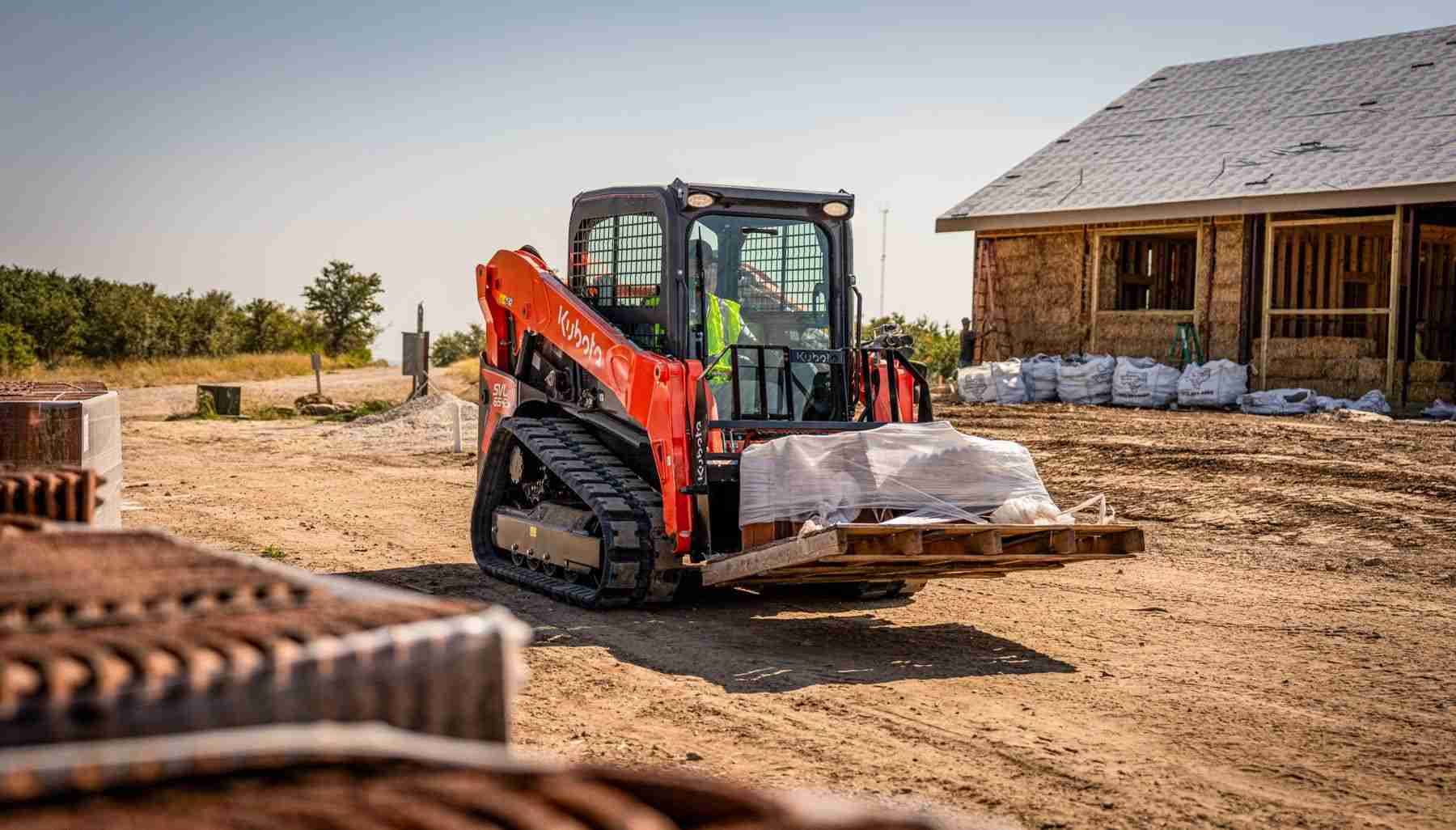
A skid steer or compact track loader is the opposite machine. It is quick, it carries, it pushes, it grades. It is a poor digger below grade.
Jobs a loader handles alone
Spreading base rock. Grading a pad. Moving a pile of mulch, DG or gravel from the driveway to the backyard. Clearing brush. Loading a truck from a stockpile. Scraping off a few inches of topsoil. If the work is mostly at or near ground level, you may not need an excavator at all.
Where a loader comes up short
A loader digs by pushing its bucket into the ground and driving. That gets you a few inches at a time, and it gets worse on the rocky Inland Empire ground and caliche we see in Riverside County. It cannot dig a clean trench, cannot go down several feet with vertical walls, and cannot reach into a hole.
Skid steer or track loader
Tracks float better on soft dirt and grip better on hillsides. Wheels are cheaper to run on hardscape and scuff it less if you turn gently. Our comparison of track loaders vs skid steers goes deeper. For the team question, either one works as the carrier. Pick the one that fits the gate and the ground.
Cycle Times and the Double Handling Trap
A cycle is one full round trip: fill the bucket, move it, dump it, come back. The machine that digs has a short cycle when it swings in place. It has a long, ugly cycle when it has to drive.
What a second machine actually buys you
A loader does not make the excavator dig faster. It keeps the excavator digging. The excavator swings spoil into a pile, the loader picks up the pile and carries it off. On a job where the dirt has to travel, that is often the difference between finishing Friday and finishing Tuesday.
The double handling trap
Double handling means touching the same dirt twice. Excavator to pile, then loader to truck, is double handling. Sometimes it is worth it, because the alternative is the excavator crawling across the yard. Sometimes it is pure waste, like when a truck could have backed up to the hole and taken it straight from the bucket. Every time dirt hits the ground and gets picked up again, you pay for it in hours and fuel.
Keep the digger from waiting
The most expensive thing on a dirt job is an excavator sitting idle with a full crew around it. If trucks cycle slowly because the dump site is far away, a loader can keep a stockpile moving so the excavator never stops. If trucks are lined up and waiting, the loader is probably not your bottleneck. We cover truck counts and staging in our sibling guide on dirt removal and spoil haul off.
Job by Job: One Machine or Two
These are general patterns, not rules. Your access, soil and haul route can flip any of them.
| Job | Excavator alone | Loader alone | Both |
|---|---|---|---|
| Utility trench, spoil beside the trench | Usually enough | Cannot dig it | Rarely needed |
| Footings with trucks reaching the hole | Usually enough | Cannot dig it | Only if spoil must move |
| Backyard pool or basement dig, tight access | Slow, lots of tracking | Cannot dig it | Usually worth it |
| Grading a pad or spreading base | Wrong tool | Usually enough | Rarely needed |
| Hillside cut with spoil hauled off site | Workable if trucks reach | Limited | Often worth it |
| Concrete breakout and haul | Breaks and loads | Loads and carries | Often worth it |
Backyard digs
Tight side yards are where two machines earn their keep. The excavator digs in back. A small loader shuttles spoil through the gate to a truck or bin out front. Our sibling guide on pool excavation equipment covers gate widths and machine sizing for this exact setup.
Utility work
For water, sewer or electrical runs, one excavator usually digs, piles and backfills. Add a compactor for backfill in lifts. A loader only earns a spot if bedding material has to come from far away. Our sibling guide to trenching equipment rental covers the whole sequence from 811 to backfill.
Site prep and grading
If you are mostly shaping ground and the deepest cut is a few inches, start with a loader. Add an excavator only for the pockets that need real digging, like a stump hole or a drain trench.
The Two Machine Math
A second rental is not free. Neither is an extra day of labor. The honest comparison is the second machine's cost against the time it saves.
A worked example with round numbers
These are hypothetical numbers for the arithmetic, not our rates. Say your crew costs you $1,000 a day. Say a loader, plus its share of delivery, adds $500 a day. If running both machines cuts a four day job to three days, you spend an extra $1,500 on the loader over three days and save $1,000 of crew time plus a day of excavator rental. Close call. If it cuts the job from four days to two, the loader wins easily. If it saves half a day, skip it. Our guide to daily, weekly and monthly rental rates helps you price the machines honestly.
One operator or two
Two machines running at once need two operators. If it is just you, both machines will not run at the same time. That does not always kill the idea. A common solo pattern is to dig all morning and pile the spoil, then climb into the loader and haul all afternoon. You still save time over tracking the excavator back and forth, and you save the turf. Just be honest about summer heat and one person's stamina.
How rental time is counted
PDQ's posted rental policies define a day rate as 24 hours in your possession with up to 8 hours of use, and hour-metered machines over 8 hours a day are charged overtime. A second machine sitting idle still runs the clock while it is in your possession. The signed rental contract is what governs, so check it and our rental policies page, and ask us about delivery for two machines at once.
The Backhoe Option and Other Shortcuts
Before you rent two machines, check whether one machine with the right setup gets you most of the way.
The backhoe as both machines
A tractor loader backhoe digs on one end and loads on the other, with one operator. It travels faster than an excavator on wheels and carries more in its front bucket. The tradeoffs: it is bigger, it needs a wider gate, it repositions for every dig, and the wheels are hard on finished lawns. On open lots it is a strong single machine choice. In a tight yard it often does not fit. We compare them head to head in backhoe vs mini excavator.
Attachments that change the answer
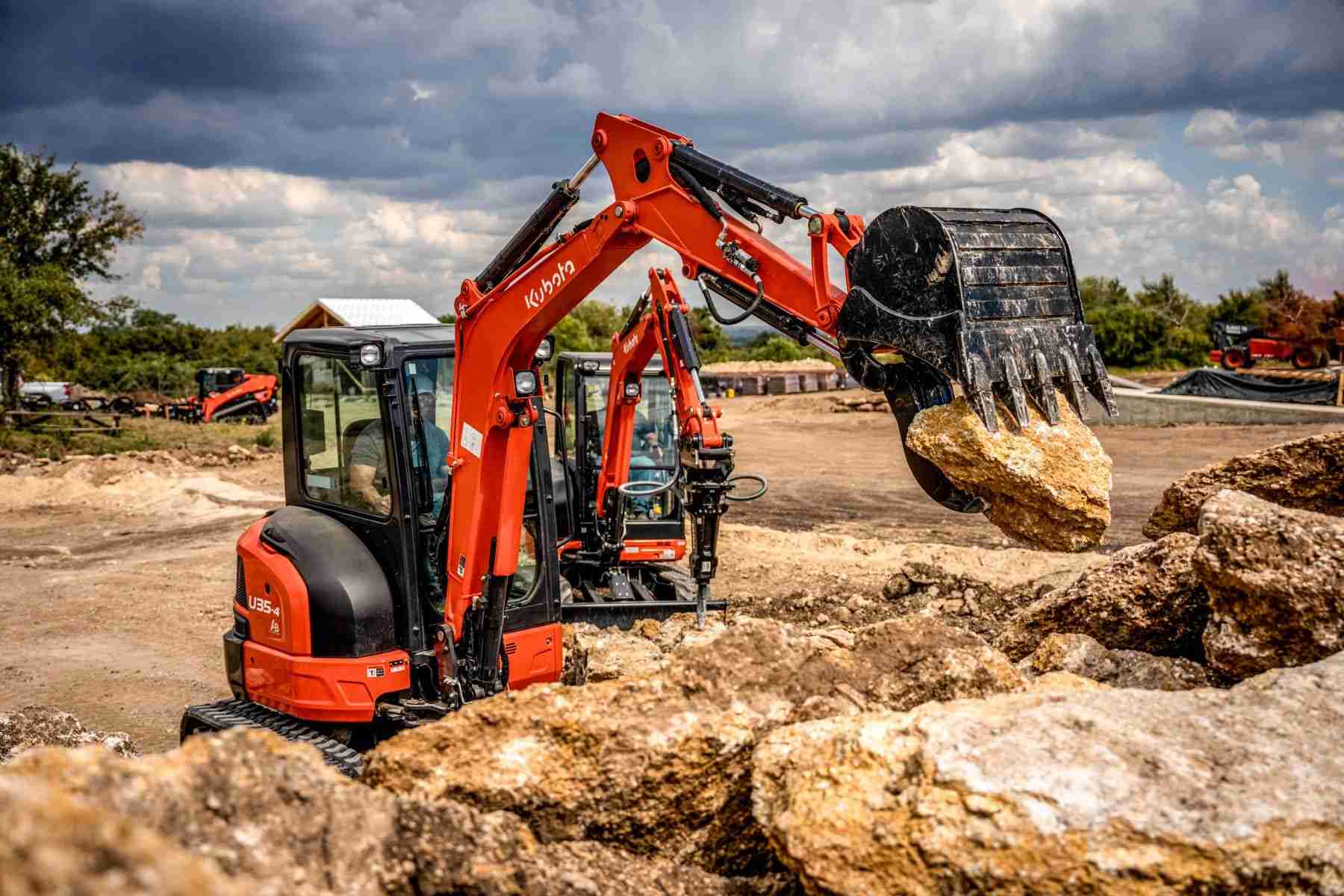
A hydraulic thumb lets an excavator pick up rocks, roots and broken concrete without a second machine to sort them. On the rocky ground common in the Inland Empire and northern San Diego County, that alone can save a loader rental. See our excavator thumb guide. On the loader side, a grapple or forks can handle cleanup and materials the excavator would otherwise juggle.
Bigger excavator, fewer trips
Sometimes the right answer is not two machines but one larger excavator that can reach the truck. If access allows it, a machine with more reach and dump height can load trucks directly and remove the need for a carrier. If access does not allow it, two small machines beat one big machine that cannot get in.
Protect the path
Two machines means twice the traffic. Plan mats or plywood along the haul route. Our sibling guide on protecting driveways and finished surfaces covers it.
The Short Version
Follow the dirt
If spoil stays within the excavator's swing or trucks reach the hole, one excavator is usually enough.
Add a loader for distance
When dirt has to travel across a yard or through a gate, a loader keeps the excavator digging.
Shallow work, loader only
Grading, spreading and moving piles rarely need an excavator at all.
Count operators
Two machines with one person means taking turns. Still often worth it, but plan the day around it.
Six Questions Before You Book Two Machines
- Where does the spoil go, and how far is that from the hole?
- Can a dump truck back up within the excavator's reach, and can the excavator clear the truck's side?
- Is any of the work deeper than a loader can dig?
- How many operators will be on site, and can they run at the same time?
- Do both machines fit through the gate and down the side yard?
- How many days does the second machine save, and is that worth more than it costs?
Straight Answers
Do I need an excavator and a loader for my job?
Only if the dirt has to travel farther than the excavator can swing it. If trucks can reach the hole or spoil can be piled beside it, one excavator is usually enough. If the dirt has to cross a yard or go through a gate, a loader often saves time.
Mini excavator vs skid steer: which should I rent?
Rent a mini excavator for digging below grade, such as trenches, footings and holes. Rent a skid steer for grading, spreading material and carrying loads. If the job needs both deep digging and moving spoil a distance, renting both is often faster.
Can a mini excavator load a dump truck?
Larger mini excavators often can, but smaller ones may not have enough dump height to clear the side of a full size dump truck. Compare the machine's maximum dump height to the truck's side height before planning on it.
Can a skid steer dig a trench or a hole?
Not well. A skid steer digs a few inches at a time by pushing its bucket. For trenches or holes deeper than that, an excavator or a trencher is the right tool.
Is a backhoe better than renting an excavator and a skid steer?
A backhoe digs and loads with one operator, which works well on open lots. It is larger and harder on lawns, so in tight backyards two smaller machines usually fit and work better.
Can one person run a mini excavator and skid steer on the same job?
Yes, by taking turns. A common approach is to dig and pile spoil in the morning, then haul it with the loader in the afternoon. It is slower than two operators but usually faster than moving spoil with the excavator alone.
Fine, We Want to Rent You Something
A rental company just spent a few thousand words on whether you need a second rental. You can guess which answer we were hoping for. We tried to give you the other one where it was true.
Call with the dig depth, the access, and where the spoil has to end up. We will tell you whether one machine does it, including when the honest answer is a single excavator and a dump truck parked in the right spot. You can browse what we carry on the PDQ rentals site.
The best second machine is sometimes a better parking spot for the truck.