

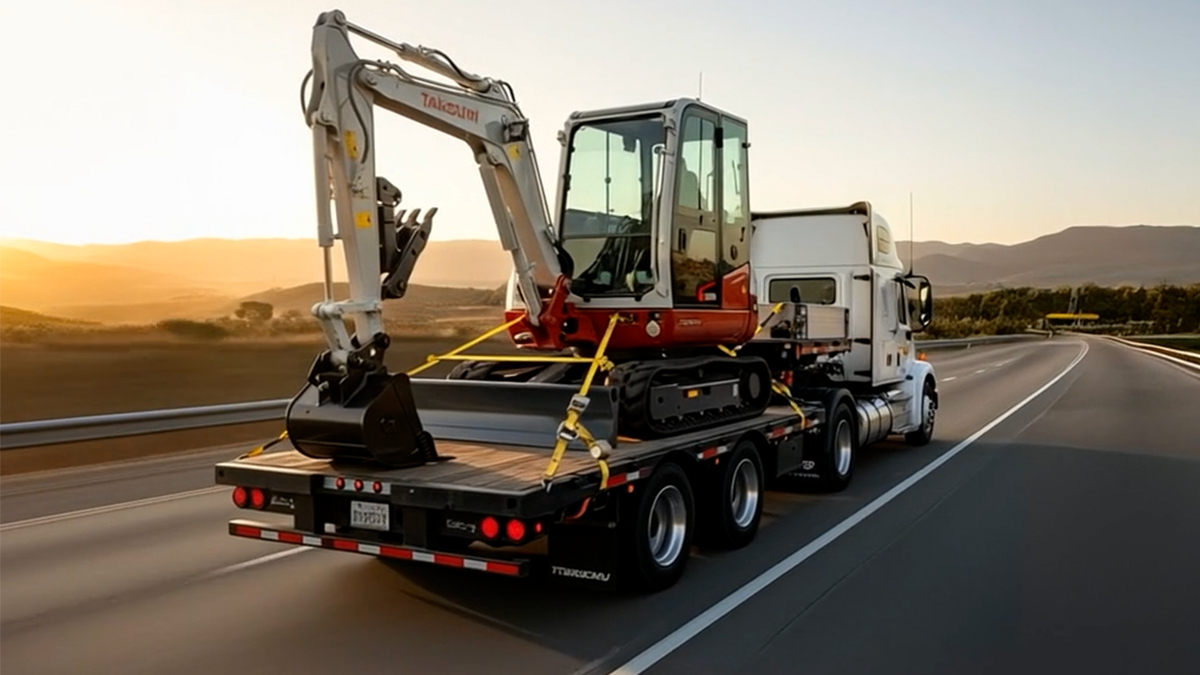
Equipment Delivery Checklist: Be Ready Before the Truck Arrives Gates, ground, wires, signatures and photos, plus the stuff that turns a ten minute drop into a wasted morning
Disclosure. We rent equipment and deliver it, so we want your delivery to go well. Partly for you. Partly because a bad delivery ruins our driver's day, and he will tell the whole yard.
Short answer: Before construction equipment delivery, measure every gate and path the machine must pass, pick a flat, firm unloading spot the truck can reach, check for overhead lines and trees, and have someone on site who can sign and walk the machine. Take photos of the equipment when it arrives, and plan one spot where it will sit for pickup.
The truck is never the problem. The gate is the problem. Sometimes the wire is the problem.
Most delivery trouble is boring. A side yard that was 4 feet wide on the phone turns out to be 34 inches at the hose bib. The driveway is steeper than anyone mentioned. Nobody is home. A power line hangs right where the ramp needs to go.
Jump to what you came for
Gates, Paths and the Narrowest Point
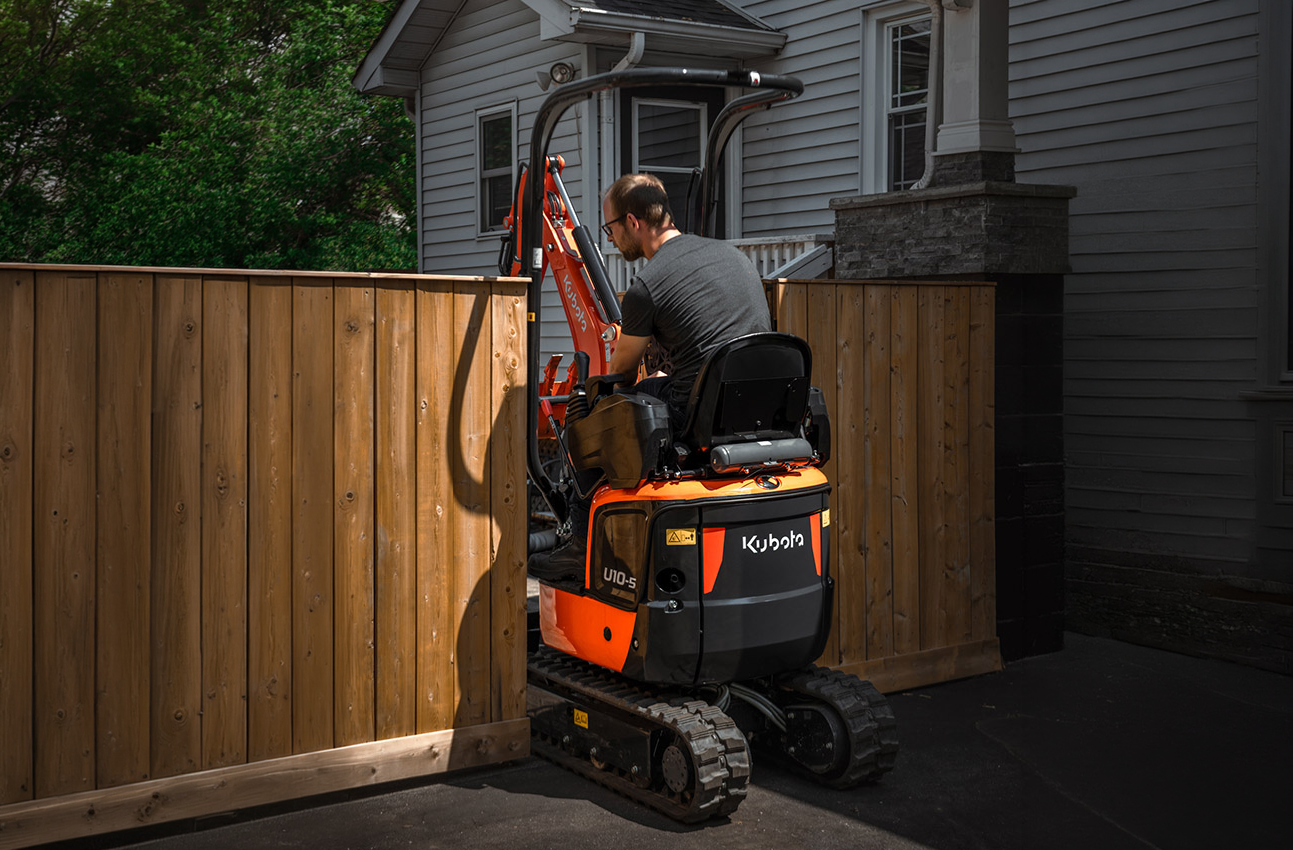
Your gate is only the first narrow point. Walk the whole route from the street to the work and measure the tightest spot.
Measure the pinch points
Then ask for the machine's real numbers
Give the rental desk your narrowest measurement and ask for the width and height of the specific machine they plan to send, in the configuration it will travel in. Some compact excavators have tracks that retract to get through tight spots. Leave yourself a few inches of margin on each side.
If it does not fit, that is useful news: a smaller machine, a different route, or a fence panel pulled for a day. Our mini excavator sizing guide covers the tradeoff between the machine that fits and the machine that digs fast, and the ADU equipment guide deals with the tight backyard version of this problem in detail.
Pick the Unloading Spot Before the Driver Does
If you do not pick the unloading spot, the driver will, and it may not be where you wanted the machine sitting.
What a good unloading spot looks like
Street, driveway or jobsite
Unloading in the street is common on residential jobs. Move the cars, keep kids and dogs clear, and check with the city, HOA or property manager about any rules on trucks and staging. We will not guess at your local rules.
On commercial and grading jobs, tell us the gate entrance, any site check in procedure and where the laydown area is.
Summer heat and dust
In August, dirt in Riverside County and inland San Diego County turns to powder that hides ruts. Walk the spot the morning of delivery.
Overhead Lines, Trees and What Is Buried
Tilt decks lift. Booms swing. Lifts and reach forklifts go where wires live. This is the item on the list most likely to hurt someone.
Overhead
Underground
If the equipment is going to dig, call 811 before the machine arrives. In Southern California that request goes to DigAlert, which notifies member utilities to mark their lines. Allow time for the marking. Private lines such as sprinklers, low voltage lighting, a line to a detached garage or a septic system are usually not marked by the utilities, so find those yourself.
Who Signs, Who Watches, Who Runs It
The most common delivery headache is nobody answering the phone.
Have a person on site
Someone who knows where the machine goes and is allowed to sign should meet the truck. If you cannot be there, name that person when you book and give the desk their cell number.
Have the paperwork done first
Sort out the account, ID, payment and any insurance certificate before delivery day so nothing holds up the drop. PDQ's posted rental policies say a valid California driver's license is required for all rentals, a utility bill or major credit card may be required as a second ID, and proof of insurance is required for truck rentals. Deposits vary by item. The signed rental contract is what governs. If you are still sorting out the waiver versus your own coverage, our guide to rental damage coverage vs. insurance walks through the questions, and the first timer version of all of this is in renting equipment for the first time.
Who actually runs the machine
Delivery is not training. Make sure whoever operates the equipment knows that machine type and has whatever training or certification the work calls for, especially on lifts and reach forklifts. Ask the driver to show the controls, the shutoff and the tie down points if it is a model you have not run. Better than learning on a hillside with the neighbors watching.
Photos and the Walkaround at Drop Off
Every rental return dispute is easier when both sides have pictures.
Take photos and a short video when the machine comes off the truck. Working machines have scratches. Do not pay for ones you did not make.
What to photograph
| Item | Your job | Ask the driver |
|---|---|---|
| Unloading spot and route | Pick it and clear it | Confirm it works for the rig |
| Existing damage | Photograph it | Note it if needed |
| Hours and fuel | Photograph both | Confirm the reading |
| Controls and shutoff | Know your limits | Show you once |
| Attachments and keys | Count them | Confirm what was sent |
| Overhead and buried hazards | Find and flag them first | Not a substitute for 811 |
Timing the Drop So You Actually Use It
A machine that arrives at 2 pm in December gives you maybe two and a half hours of light in Southern California. Fine for staging. A waste if you wanted to dig.
Book the window, not just the day
Ask for a delivery window and plan around it. Delivery and pickup are available, and PDQ's posted rental policies say rates vary by equipment type and delivery location, so ask for the delivery charge on the quote rather than discovering it on the invoice. Our guide to the costs to check on a rental quote covers the rest.
Seasons change the plan
Should you just pick it up yourself
Sometimes yes. If you already own a truck and trailer rated for the load and know how to tie down a machine, will call can make sense. Be honest about it, though. Our guide on mini excavator weight and California towing rules explains why plenty of half ton pickups should not be pulling what people hook to them. Paying for delivery is often cheaper than finding out the hard way.
The Rental Clock and Getting Ready for Pickup
Delivery changes when your rental starts and stops, which changes what you pay.
When the clock starts
PDQ's posted rental policies say that on delivered rentals the clock starts when the equipment is received. On will call, it runs from when you pick it up until you drop it back at a PDQ location. The signed rental contract governs, so check yours.
When the clock stops
On a delivered rental, the posted policies say the clock stops when you call the equipment off rent and PDQ issues a termination number. Write that number down. After you call it off, the equipment has to be accessible and available for pickup, and you are still responsible for keeping it safe until it is picked up.
Things like cleaning expectations, swap timing and weekend pickups are not in the posted policy summary, so ask the desk and check the posted rental policies. Our guide to returning rental equipment covers the pickup side of this in more detail.
The Short Version
Measure the narrowest point
Walk the whole route and measure the tightest spot. Then ask for the real width and height of the machine being sent.
Pick a flat, firm spot
Level ground with room for the truck, the ramps and the machine. Not fresh fill, not a thin driveway.
Look up and call 811
Flag power lines and low limbs. If you will dig, get the lines marked before delivery day.
Be there and take photos
Someone who can sign, plus photos of damage, hours and fuel. Then keep the termination number when you call it off.
The Delivery Day Checklist
- What is the narrowest width and lowest height on the route, and does the machine fit with margin?
- Where exactly will the truck park and unload, and is that ground flat and firm?
- Are there power lines, service drops or low limbs over the unloading or work area?
- If we are digging, have the lines been marked through 811, and do we know where private lines and septic are?
- Who will meet the truck, can they sign, and does the desk have their cell number?
- Are ID, payment, deposit and any insurance certificate sorted before delivery?
- Who will photograph the machine, the hour meter and the fuel gauge at drop off?
- Where will the machine and attachments sit, secured, for pickup?
Straight Answers
How do I prepare for construction equipment delivery?
Measure the narrowest point on the route, pick a flat and firm unloading spot, check for overhead lines, call 811 if you will dig, and have someone on site who can sign and take photos.
How wide does a gate need to be for a mini excavator?
It depends on the machine. Measure your narrowest point, then ask the rental desk for the width of the specific model with its tracks in travel position, and leave a few inches of margin on each side. If it will not fit, a smaller machine or a different route is usually the answer.
Do I need to be home when rental equipment is delivered?
Someone should be. That person needs to know where the machine goes and be allowed to sign. If you cannot be there, name them when you book.
Can a delivery truck unload on my street?
Often yes on residential jobs, but local rules, HOAs and property managers can restrict trucks and staging. Check before delivery day and make sure there is level room for the truck, ramps and machine.
When does the rental clock start on a delivered rental?
PDQ's posted rental policies say the clock starts when the equipment is received and stops when you call it off rent and receive a termination number. The signed rental contract governs, so confirm the terms on yours.
Should I take pictures of rental equipment at delivery?
Yes. Photograph all four sides, any existing damage, the attachments, the hour meter and the fuel gauge. Keep the photos until the rental is closed and any charges are settled.
Fine, We Want the Delivery
A rental company writing a delivery checklist is a little like a pizza place reminding you to turn your porch light on. We benefit. We admit it.
Send us your narrowest measurement, a photo of the driveway or street, and what the machine needs to do. We will tell you what fits, where the truck can park, and when the honest answer is a smaller machine or a pickup you handle yourself. You can also browse the rentals catalog first.
Since 1952 our drivers have seen every kind of gate. The worst ones were always described as "plenty wide" on the phone.