

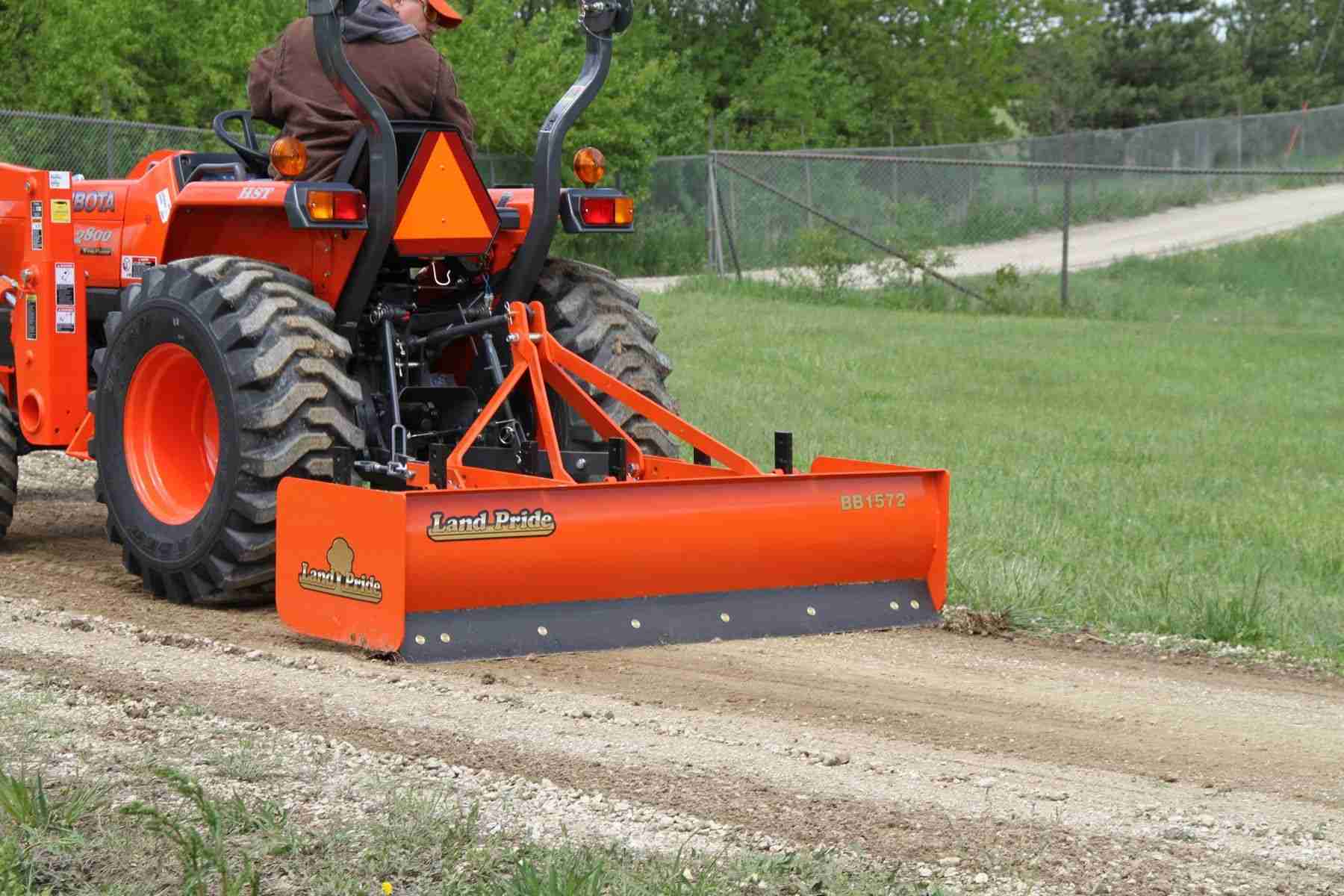
Why Does Your Gravel Driveway Keep Getting Potholes? It is almost always the water, not the gravel, and another load of rock dumped in the holes will not fix it
Disclosure. We sell Kubota tractors and the box blades and land planes that hang off the back of them. A long gravel driveway is one of the better reasons to own one, so take our enthusiasm with some salt.
Short answer: Gravel driveways get potholes because water sits on them. A drive with no crown, no ditches and a thin base holds rain in low spots, traffic splashes out the fine material that binds the gravel, and the hole grows. Gravel driveway repair that lasts means cutting the high spots down, rebuilding the crown, compacting, and grading it again a few times a year.
Filling a pothole with gravel is like bailing a boat without patching it. You will be busy. You will not be dry.
Most people fix potholes the same way. Buy a few yards of gravel, shovel it into the holes, drive over it. It looks great for about three weeks. Then it rains and the holes come back in the same spots. That is the drive telling you where the water goes.
Jump to what you came for
Why Potholes Form in the First Place
A good gravel drive is three layers: firm subgrade (the native dirt), a compacted base of crushed rock with fines, and a thin top layer. When one fails, you get potholes.
Water sits on a flat or dished surface
The big one. A drive that is flat side to side, or lower in the middle, holds water. Every car through a puddle pushes water into the base and sprays the fines out. Fines are the small particles, the sand and rock dust, that lock bigger stones together. Lose the fines and you have loose marbles. Marbles move.
The base is too thin
Lots of drives are a couple of inches of gravel spread on dirt. Fine in August. In January the dirt goes soft, the gravel sinks, and mud comes up. Expansive clay soils, common across parts of LA County, Riverside County and San Diego County, are especially bad for this because they swell when wet and shrink when dry.
The wrong rock
Pea gravel and river rock roll like ball bearings. Crushed angular rock with mixed sizes, often sold as road base or Class 2 base, packs tight. Ask your rock yard what they sell for driveway base.
Traffic does the rest
Braking and turning shove gravel around, so holes show up at the bottom of hills, at turns and at the gate.
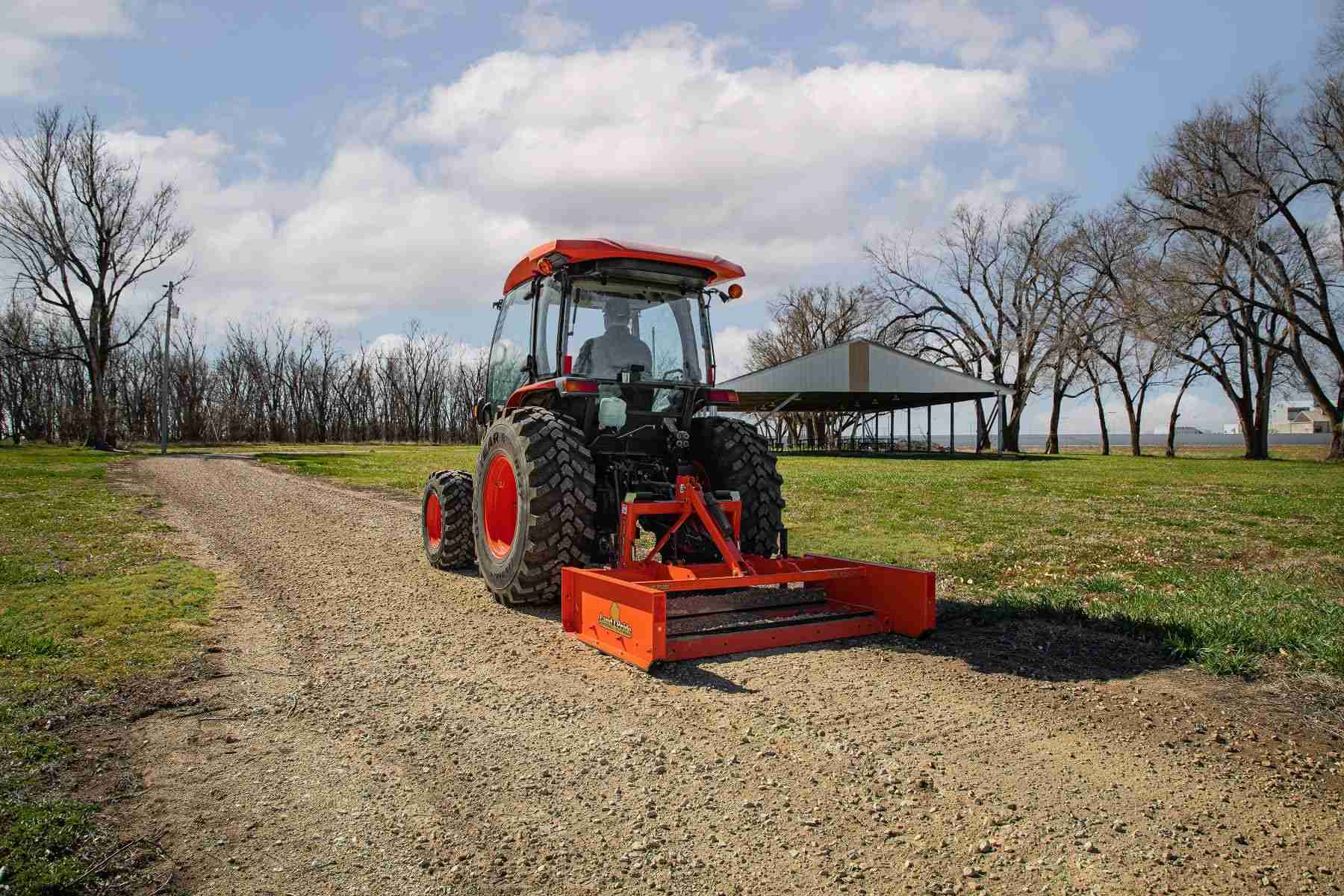
It Is a Water Problem Wearing a Gravel Costume
Get the water off the drive and most of the potholes stop.
What a crown is
A crown is a gentle hump down the center of the drive so water sheds to both sides instead of sitting on top. A commonly cited target for gravel roads is a cross slope of roughly 4 percent, which works out to about half an inch of drop per foot from the center to the edge. On a 12 foot wide drive, that is about 3 inches higher in the middle than at the edges. You can barely see it. Water can.
A hillside drive can use a single slope instead of a crown. Either way, water goes toward a ditch or safe outlet, never toward your house, septic area or the neighbor's lot.
Ditches and shoulders
A shallow ditch or swale (a gentle grassy or rock-lined channel) along the side carries water away. The most common failure we see: a crowned drive with a ridge of gravel, called a berm, built up along the edges from years of grading, trapping water on top anyway.
Our guide to grading a decomposed granite driveway covers DG surfaces specifically, which behave a little differently.
Why Filling the Holes Does Not Work
It is cheap and fast. Here is why it keeps failing.
Loose gravel in a hole never bonds
The hole has hard sides and a muddy bottom. New gravel has nothing to grab. The first tire kicks half of it out, and the rest settles into a smaller dish.
The hole is a low spot, and you just made a smaller low spot
Filling the hole level still leaves a drive with no crown. Water still sits. You are back next month.
Patching is fine as a stopgap. You are buying weeks, not years.
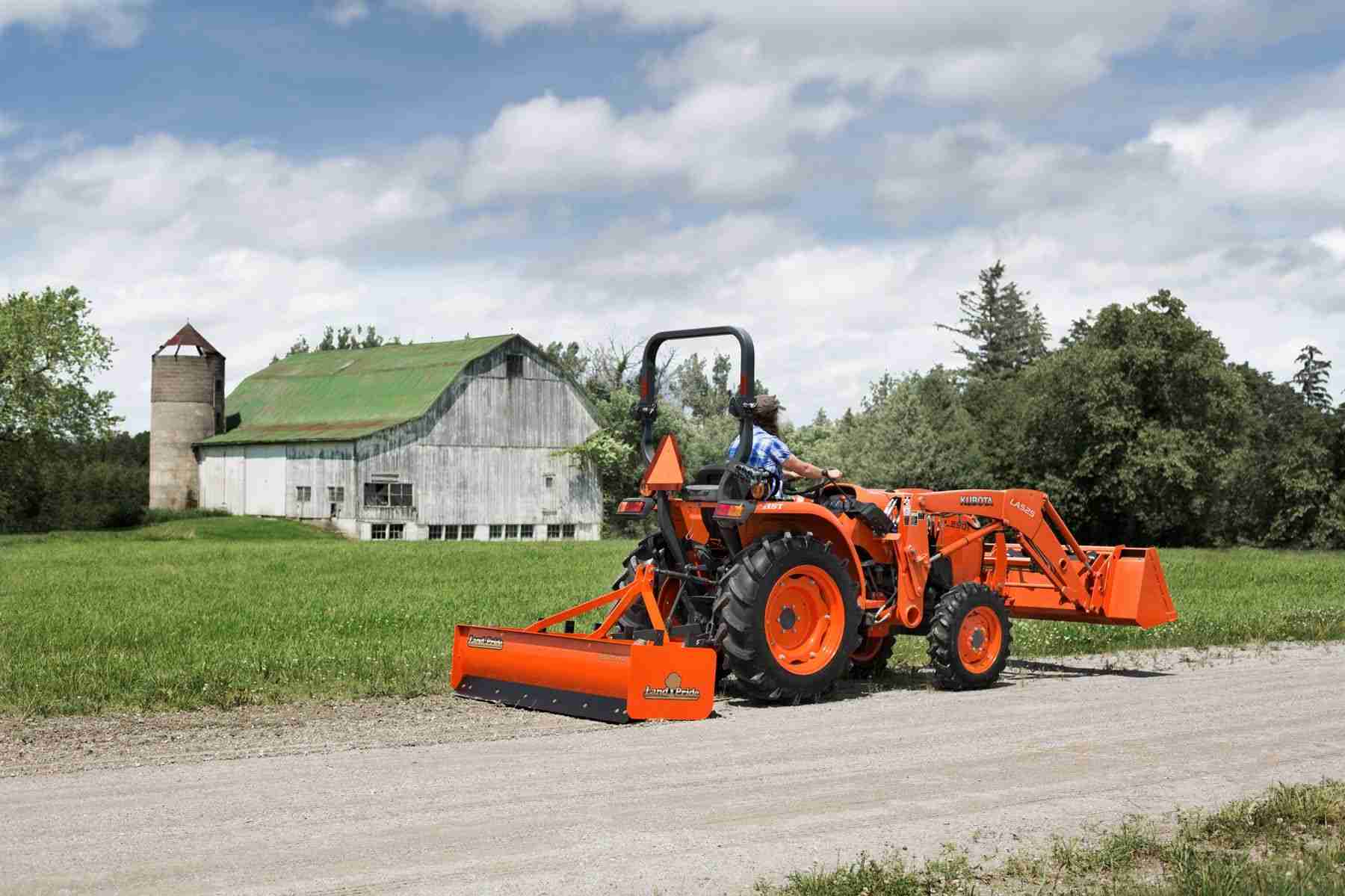
The Real Fix: Cut, Crown, Compact
You do not start by adding rock. You start by taking material off the high spots.
Step 1: Cut down to the bottom of the holes
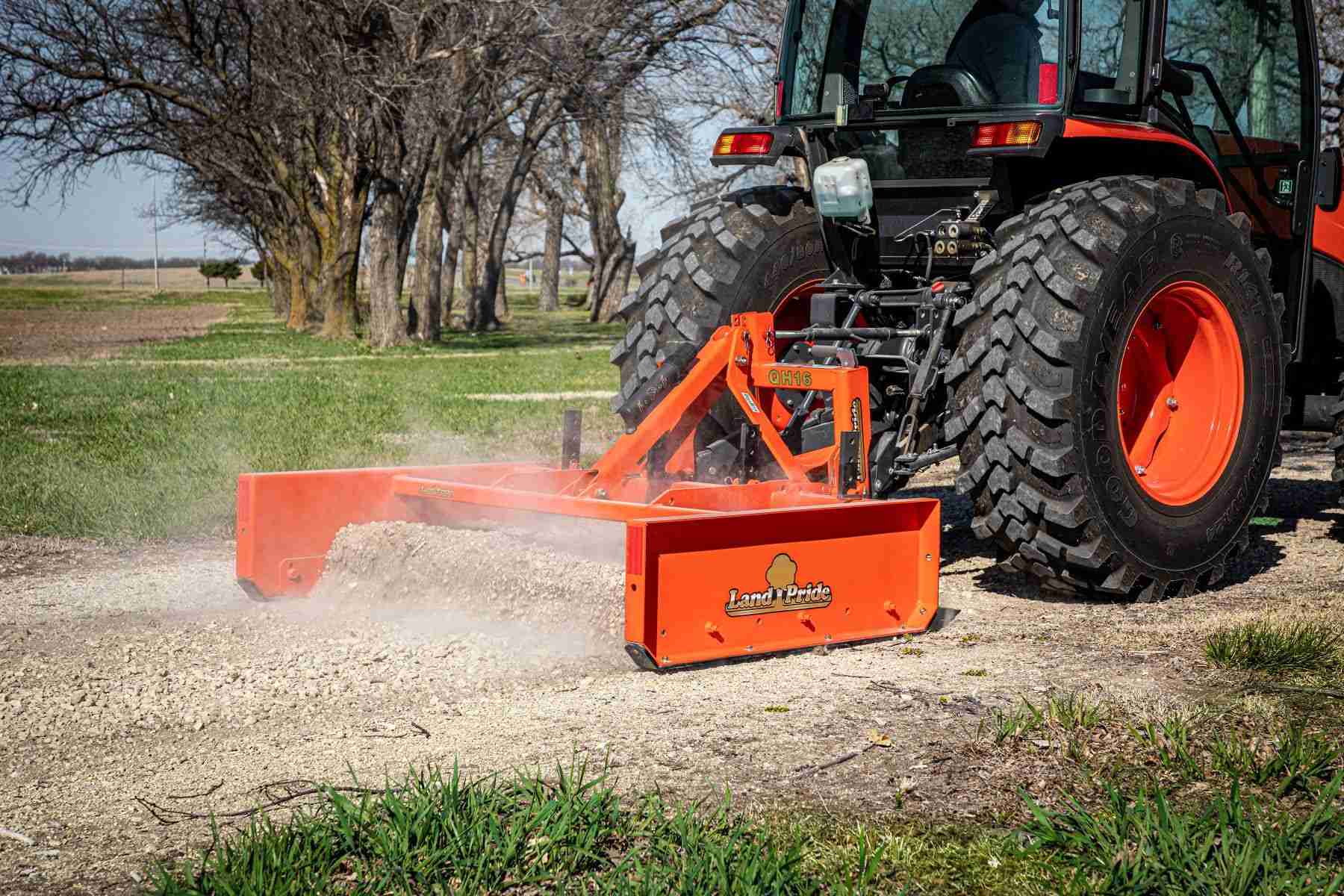
Use a box blade (a three-sided steel box on the back of a tractor, usually with ripper teeth called scarifiers) to loosen the surface and cut it down until you reach the bottom of the potholes. On most drives that is an inch or two.
Step 2: Reshape the crown
Pull the loosened material toward the center and shape a crown, or a single slope on a hillside drive. Knock down the gravel berms along the edges so water can actually leave. A crown is easier to describe than to build.
Step 3: Add road base where it is thin
Where you hit dirt or mud, the base is too thin. Add road base in layers of a few inches and blend it in.
Step 4: Compact it while it is damp
Base packs best damp, not soaking and not bone dry. A drive graded in summer heat and left loose washes out with the first storm. A roller or plate compactor makes a big difference.
See our compaction equipment guide.
Keeping It Flat: Land Plane or Box Blade
Every gravel drive wears. The fix is light grading before holes form. Most rural drives in San Diego County, Riverside County and the foothills of LA County do well with a pass in the fall before the rains and another in spring after them.
Land plane
A long frame with angled blades inside. It bridges low spots and shaves high ones, so it levels as you pull it. Forgiving for beginners.
Box blade
Heavier work. The scarifiers rip hard surfaces and the box carries material to low spots. More skill needed, but it rebuilds a crown.
Plenty of owners end up with both. Our land plane vs box blade comparison covers which fits which drive.
| Job | Land plane | Box blade |
|---|---|---|
| Routine leveling passes | Easier, more forgiving | Works, takes practice |
| Ripping a hard, potholed surface | Struggles | Scarifiers do it |
| Building or restoring a crown | Possible with skill | Better control |
| Spreading new road base | Good | Carries material |
| Learning curve | Short | Longer |
Own a Tractor or Pay Someone to Grade It
The answer that makes us money is "buy a tractor." Often it is the wrong one.
When paying a grader makes sense
If your drive is short, say under a couple hundred feet, and you have no other tractor work on the property, hire it out. A grading contractor can do a short drive in an afternoon, better than a first-time operator. Renting a machine for a weekend from a place like PDQ Rentals is the other honest alternative if you want to try it once.
When owning a compact tractor makes sense
It pencils out when the drive is long and you have acres, horses, brush or fence lines too. The driveway becomes one of ten jobs. A hypothetical: a few hundred dollars per grading visit, three times a year, rarely pays for a tractor. Add mowing, brush, rock and storm cleanup and the math changes.
What size
Weight and traction matter more than horsepower. A sub-compact BX can pull a light land plane on a short drive. A compact B, LX or L series handles a box blade on long or rocky drives better, especially on Inland Empire caliche. Our guide to what size tractor you need goes deeper, and if you are leaning toward buying, read what first-time tractor buyers overlook first.
When It Is Not a DIY Job
Some problems are bigger than a tractor and a weekend.
Shared and private roads
A drive serving several homes means shared costs and shared arguments. Our guide to private road repair covers the shared road side of this. If it gets tense, document things and talk to a real estate attorney.
Washouts and storm damage
A blown culvert or a gully across the drive is a repair job, not maintenance. Start with our post-storm property cleanup guide for the order to tackle things.
Steep grades and slopes
A drive cut into a hillside with a drop-off needs a grading contractor and often a civil engineer, especially near a retaining wall. Compact tractors tip on slopes. Keep ROPS up and the seat belt on, and carry loads low.
Where the water lands
Never send runoff onto a neighbor's lot. If it heads toward someone else, check with your city or county and a grading contractor first.
The Short Version
Fix the water first
Potholes are drainage problems. Crown the drive and give the water a ditch or safe outlet, and most of them stop.
Cut, do not fill
Cut the high spots down to the bottom of the holes, then reshape. Filling holes just builds smaller holes.
Compact the base
Use angular road base, add it where the base is thin, and compact it damp. Loose gravel washes out.
Grade a little, often
A land plane or box blade pass before and after the rainy season beats a big repair every winter.
Six Questions Before You Fix Your Drive
- Where does the water go when it rains, and did I watch it happen?
- Does my drive have a crown, or is it flat or dished in the middle?
- Are there gravel berms along the edges trapping water on the surface?
- How thick is the base, and is it angular road base or round rock?
- Are my culverts clear at both ends?
- Do I have enough other work on the property to justify owning a tractor, or should I hire a grader twice a year?
Straight Answers
Why do potholes keep coming back in my gravel driveway?
Because water keeps sitting in the same low spots. If the drive has no crown or the edges are blocked by gravel berms, rain pools, traffic washes out the fines, and the hole re-forms. Fix the drainage and reshape the surface, and they stop coming back.
What is the best way to fill potholes in a gravel driveway?
The lasting fix is not filling them. Loosen the surface, cut the high spots down to the bottom of the holes, reshape a crown, add road base where it is thin, and compact it while damp. Filling holes alone is a short term patch.
How much crown should a gravel driveway have?
A commonly cited target for gravel roads is about 4 percent cross slope, roughly half an inch of drop per foot from the center to the edge. Confirm with a grading contractor for your drive, especially on a slope.
What kind of gravel is best for a driveway?
Crushed angular rock with a mix of sizes and fines, often sold in California as road base, packs down and locks together. Round pea gravel and river rock roll under tires and do not hold a shape.
Is a land plane or box blade better for a gravel driveway?
A land plane is easier for routine leveling. A box blade with scarifiers is better for ripping up a hard, potholed surface and rebuilding a crown. Many owners with long drives end up using both.
Do I need a tractor to maintain a gravel driveway?
Not always. For a short drive with no other property work, hiring a grading contractor twice a year is usually cheaper. A compact tractor makes sense when the drive is long and you have other jobs on the property for it.
This Was a Sales Pitch With a Crown on It
Yes, a tractor dealer just spent a few thousand words explaining why your driveway needs a tractor implement. We noticed too.
Tell us how long your drive is, what the ground is like and what else you do on the property. We will tell you whether a tractor makes sense, what size, and when the honest answer is to call a grader and keep your money.
We have been selling tractors since 1952. The customers who stick around are the ones we talked out of the bigger one.