

Your Private Road Is Your Only Way Out: Plan Repairs Before Storm Season Crown, ditches, culverts and base rock, done while the ground is dry, plus the jobs that belong to a grading contractor or the county instead of you
Disclosure. We rent and sell the tractors, loaders, rollers and dump trucks people use for private road repair, so we make money if you do this yourself. Some of this work belongs to a contractor or the county, and we will say which.
Short answer: Private road repair before storm season means restoring the crown so water runs off, cleaning ditches and culvert inlets, and filling soft spots with compacted base rock while the ground is still dry. Most owners can grade and compact a gravel road with a rented tractor and roller. Replacing culverts, rebuilding creek crossings or touching a county-maintained road is not a DIY job.
A dirt road does not fail in the storm. It fails in October, when nobody fixed it.
If you live at the end of a long gravel drive or shared dirt road in LA County, Riverside County or San Diego County, that road is your fire exit and the only way an ambulance or delivery truck reaches you. The first real rain finds every flat spot and plugged culvert.
NOAA's winter outlook, released October 15, 2026, favors wetter than average conditions for California from December through February, and the Climate Prediction Center described a very strong El Nino developing. Wetter odds are not a guarantee; the strong 2015 to 2016 El Nino underdelivered here. A road that sheds water is cheap insurance either way.
Jump to what you came for
Walk the Road Before You Rent Anything
Walk it, with your phone. Driving tells you nothing, because you have learned to steer around the problems. Walk it after a light rain if you can. Water shows you where it wants to go.
Is there still a crown?
A gravel or dirt road should be higher in the middle than at the edges, so rain runs off to the sides instead of down the wheel tracks. A common rule of thumb for gravel roads is roughly a half inch of fall per foot of width from the center out. Traffic and lazy blading flatten it or push the edges up into berms that trap water. Water in the tire tracks means the crown is gone.
Where do the ditches go?
Follow each ditch top to bottom. Look for silt, brush and rolled rock, and spots where the ditch dumps water back across the road. A ditch that leads nowhere is a puddle with ambition.
Can you find both ends of every culvert?
Plenty of owners have never seen their culvert outlet. Find both ends. Look for crushed ends, rusted metal pipe and a scour hole where water has been eating the hillside.
Potholes, washboard and soft spots
The Fixes, in the Order That Works
Order matters. Grading a road and then digging out the ditches puts spoil right back on your fresh crown. Work from the drainage in.
1. Clean ditches and culvert inlets
Pull silt and debris out of ditches and clear culvert inlets and outlets. Before you dig anything with a machine, call 811 at least two working days ahead. DigAlert marks public utilities, but private lines (a water line to a barn, power to a well pump, a buried gate opener feed) are usually yours to locate, so pothole by hand near anything you suspect.
2. Rock the culvert outlets
If water leaving a culvert is digging a hole, larger rock at the outlet slows it down. Small job, big payoff. If scour has undercut the pipe or bank, get a contractor to look.
3. Scarify, regrade and restore the crown
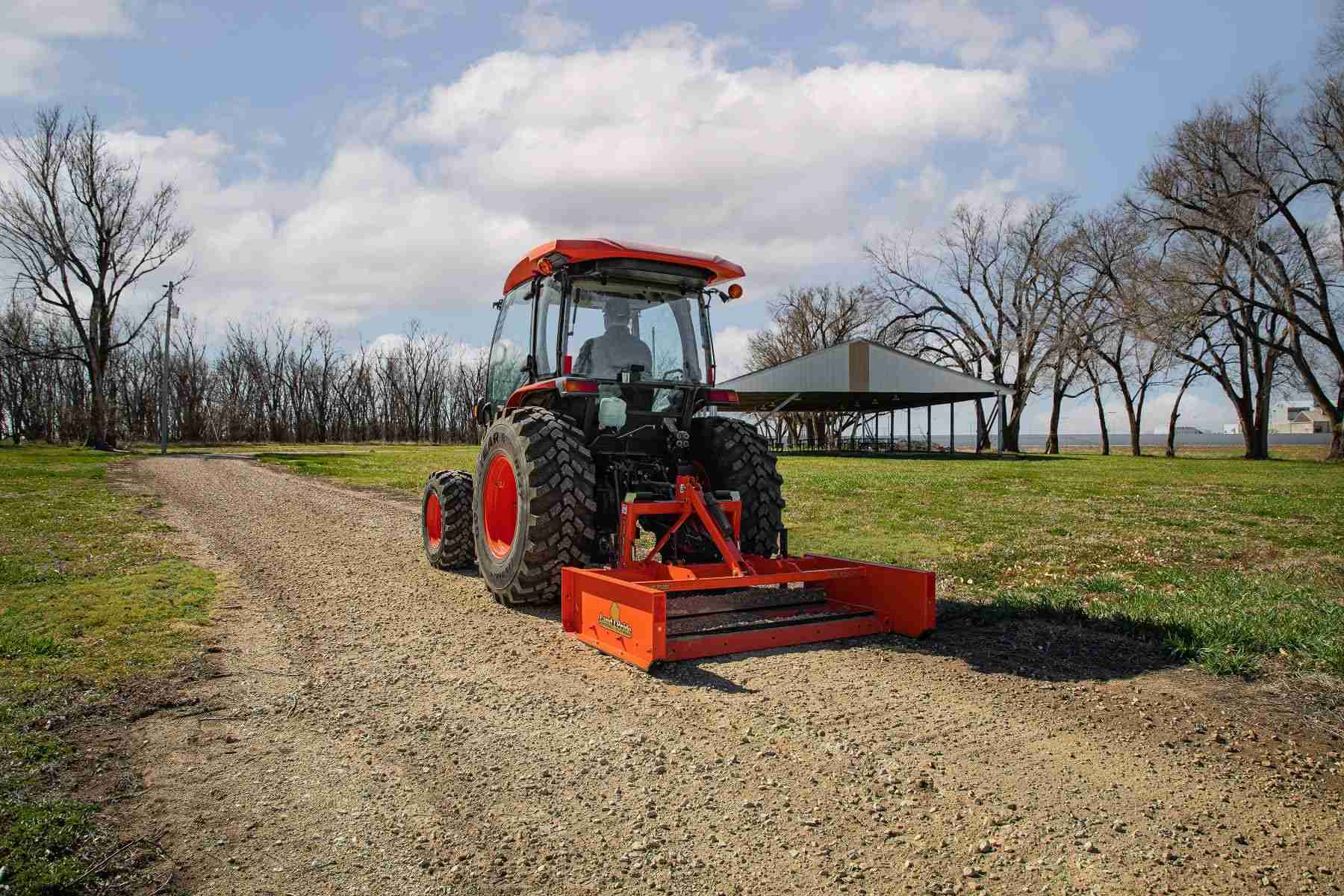
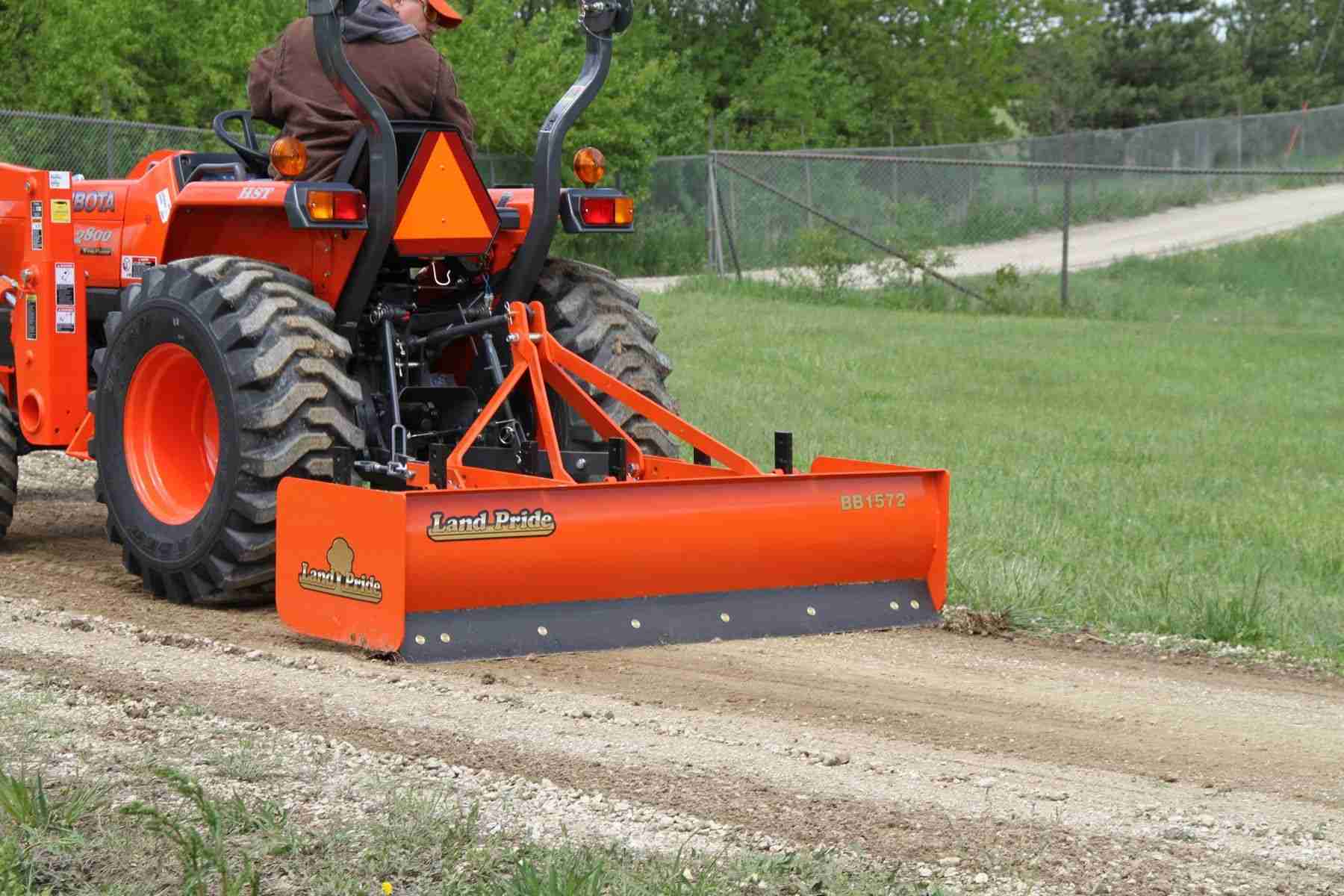
Rip the surface with scarifier shanks deep enough to get below potholes and washboard, then pull the material back to the center and shape the crown. Our land plane vs box blade guide covers which tool does which part.
4. Add base rock to soft spots, then compact
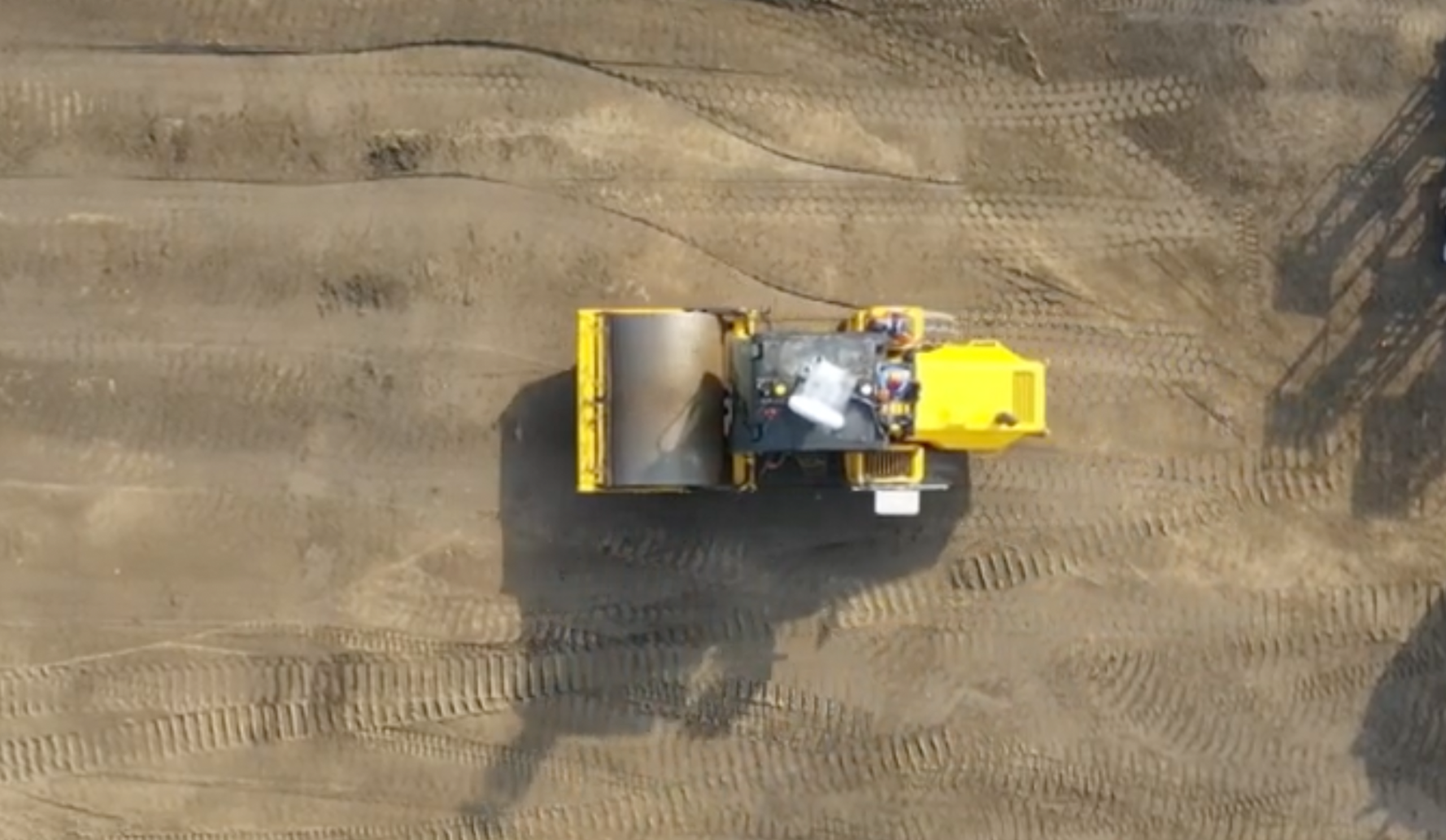
Where the road is soft, dig out the bad material, fill with crushed base rock in lifts, and compact each lift. Loose rock on mud is expensive mud by February. Bone dry DG or base rock will not compact well, so plan on water. If your road is DG, the decomposed granite driveway grading guide goes deeper on how it behaves.
5. Add water bars on slopes
On steeper sections, a low berm or shallow trench angled across the road kicks water off before it builds speed and cuts a gully down the middle. Spacing depends on the slope, and the exit point must be somewhere that can take the water. Unsure? Have a grading contractor lay them out.
Equipment for Each Part of the Job
Most private road repair needs one tractor, one roller and a load or two of rock.
| Job | Usual machine | DIY with a rental? |
|---|---|---|
| Restore crown, cut washboard | Tractor with box blade (scarifiers) or land plane | Yes, most owners |
| Spread and move base rock | Skid steer, track loader or tractor loader | Yes |
| Compact base rock and soft spots | Walk-behind or riding roller, plate compactor for small patches | Yes |
| Haul base rock and spoil | Dump truck | Yes, with the right license and insurance |
| Wet the material for compaction | Water truck or a hose and patience | Yes |
| Clean ditches, dig around culverts | Mini excavator | Yes, small ditches only |
| Replace or upsize a culvert, creek crossing | Contractor's equipment and a plan | No, hire it out |
Tractor with a box blade or land plane
The workhorse for gravel road maintenance. Scarifier shanks break up hard pan and washboard; a land plane levels and holds a crown. On a long road, a tractor is faster and smoother than a skid steer.
Skid steer or track loader
Good for moving rock piles and spoil. Tracks spread weight on soft ground. Neither grades a long road as nicely as a tractor and blade.
Roller or plate compactor
The step people skip, and why their regrade washes out. Plate compactors handle patches and tight spots near culverts. See our compaction equipment guide for which one fits your road.
Dump truck and water truck
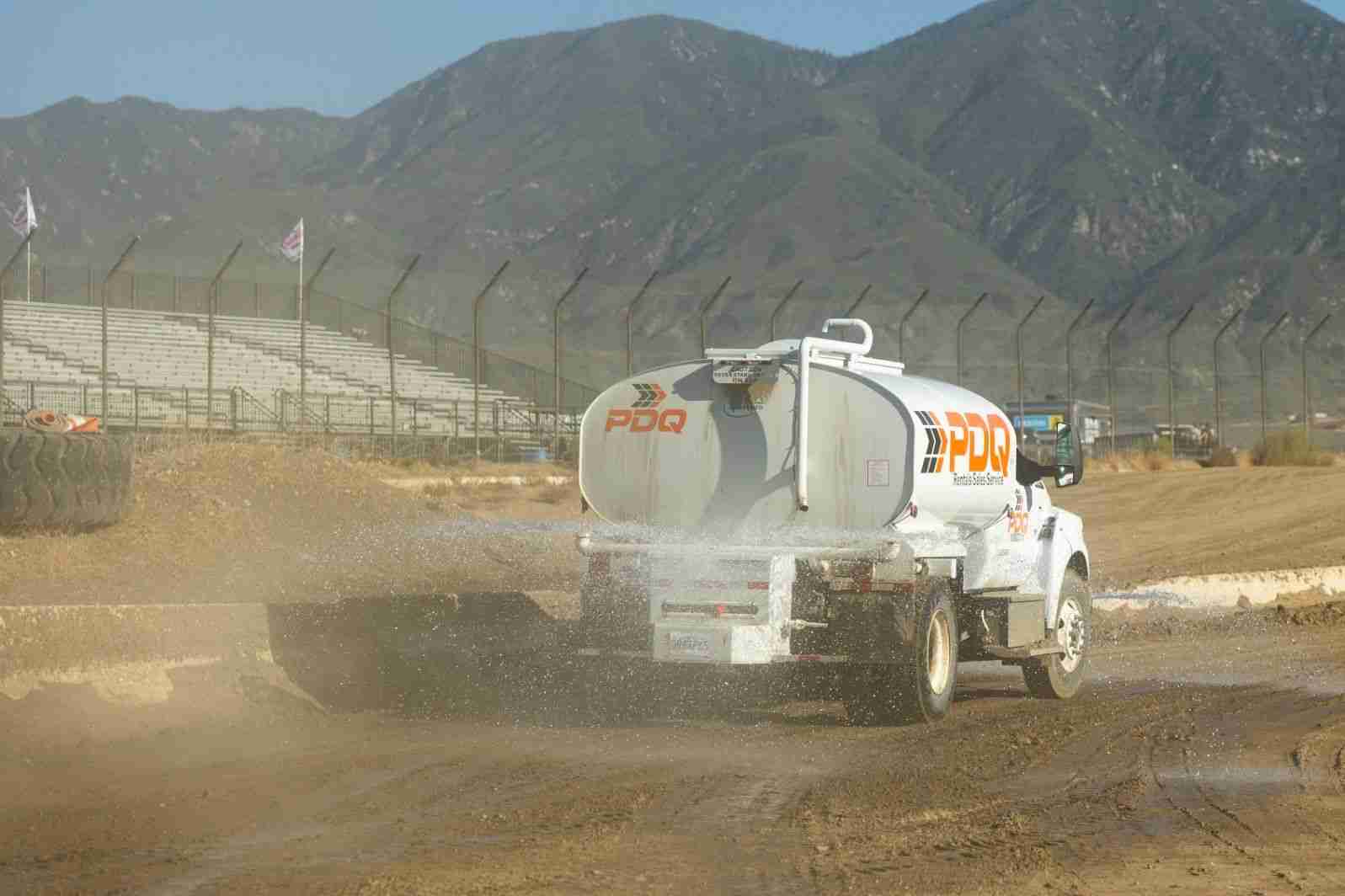
Dump trucks and water trucks are among the most rented items in our fleet, and road work is a big reason why. PDQ's posted rental policies say proof of insurance is required for truck rentals, along with a valid California driver's license. The signed rental contract is what governs, so read it.
Mini excavator
Right for cleaning a ditch, digging out a soft spot or exposing a culvert end. Wrong for setting a new culvert with no plan. Browse the categories on the PDQ rentals site, then call to confirm what is available.
Timing, the Rain and Getting a Truck Up Your Road
The window is after the heat breaks and before the first real storm. Too dry, nothing compacts. Too wet, you rut the road.
Do it before the ground is saturated
Wet clay and decomposed granite lose their ability to carry weight. A loaded truck can rut a soft road or get stuck. Wait until after the first storm and the road may not carry the truck bringing your machine. Our sibling guide on equipment delivery after heavy rain walks the route from the truck's point of view.
What happens if it rains during your rental
PDQ's posted rental policies say that on a rain day or other day you cannot use the equipment, PDQ must be notified the morning of that day so it can decide whether a credit can be extended. That is a decision, not an automatic credit, and the signed rental contract governs. For cancellation terms, delivery fees and anything else not covered there, ask, and read the rental policies page.
Plan the delivery
Delivery and pickup are available, and rates vary by equipment type and location. Tell the branch about grades, turns, gates and a firm, level unload spot.
Never during a storm
When there is a flood or debris flow warning, follow evacuation orders and stay off the equipment. Machines are for prep before and cleanup after, never for working in moving water or on a slope during a storm. If the road washes out anyway, our guide to storm debris removal equipment covers the cleanup side.
When to Hire a Grading Contractor Instead
We would rather rent you a tractor. We would also rather you not wreck a culvert and lose the road. Here is where the line usually sits.
What you can still do yourself
You can still keep ditches clean, clear culvert inlets after each storm and touch up the crown between rains. For the whole property, not just the road, see the El Nino property checklist and the older guide on compact equipment for El Nino storm prep.
The Short Version
Drainage first, grading second
Clean ditches and culverts before you touch the surface. A crowned road with nowhere for water to go still fails.
Compact or do it twice
Base rock that is not watered and rolled washes out. The roller is the cheapest part of the job and the most skipped.
Do it while it is dry
Fix the road before the ground is saturated, or the truck bringing your machine may not make it up.
Culverts and crossings are not DIY
Anything in a creek, under a county road or holding up a slope goes to a contractor, an engineer or the county.
Questions to Answer Before You Start
- Where does water sit or run across the road today, and where should it go instead?
- Can I find both ends of every culvert, and are they open, crushed or scoured?
- Is this road shared, and is there a road agreement that says who maintains what?
- Will any fix send water or mud onto a neighbor's property?
- Is any part of the road or a crossing maintained by the county?
- Have I called 811, and where are the private lines the utility will not mark?
- Can a loaded delivery truck get up the road, and where can it unload on firm ground?
- Is the job small enough for a tractor and a roller, or is this a grading contractor's job?
Straight Answers
How do you repair a private gravel road?
Start with drainage by cleaning ditches and culvert inlets. Then scarify, regrade with a crown, add base rock to soft spots and compact it while damp.
What equipment do I need to grade a dirt road?
For most private roads, a tractor with a box blade or land plane plus a roller or plate compactor. Add a loader, dump truck or mini excavator as the job needs.
How do you fix washboard on a gravel road?
Cut below the bottom of the ripples with scarifier shanks, mix the material, regrade and compact it with some moisture. Dragging only the top layer usually brings the washboard back quickly.
Why does my gravel road keep getting potholes?
Usually because water sits on the road. Without a crown, water pools and traffic pumps out the fines. Restore the crown and ditches, then patch with compacted base rock.
When is the best time to grade a private road in Southern California?
After the summer heat and before the ground gets saturated by winter storms. Material needs moisture to compact, but a soaked road ruts.
Who is responsible for maintaining a shared private road?
It depends on the road maintenance agreement or easement terms, if any exist. Check recorded documents, talk with neighbors first, and ask your county about any crossing.
Fine, We Want to Rent You a Tractor
That was a few thousand words of road advice from people who rent tractors and rollers for a living. We know how it looks.
Tell us how long your road is, what it is made of, where the water goes and whether a truck can get up it. We will tell you what to rent, what to skip, and when the honest answer is a grading contractor.
We have been at this since 1952. The roads that make it through winter are the ones somebody fixed in the fall.