


Rental Damage Coverage vs. Insurance: What Questions Should You Ask? A waiver is not a policy, a policy is not a waiver, and the fine print on both decides who pays for the cracked window
Disclosure. We rent equipment and we charge for the damage waiver, so we make money if you buy it. We would still rather you understand what you are paying for than find out at the counter after something broke.
Short answer: A rental damage waiver is a fee you pay the rental company so it agrees not to charge you for certain accidental damage, while rental equipment insurance is a policy from your own insurer that pays for damage to equipment you rent. Neither one covers everything. Before you sign, ask what each excludes (theft, negligence, tires, glass and misuse are the usual suspects), what the deductible is, and whether your certificate of insurance is on file.
Nobody reads the waiver section until the bucket is in the windshield.
Most people always take the waiver or always skip it, without knowing what it covers. Fine until a machine comes back with a crushed track roller, or does not come back at all.
This is not legal or insurance advice. We are an equipment dealer. Your agent and your signed contract outrank us. If you are still building out the rest of your rental budget, our guide to the costs to check on a rental quote covers the other lines.
Jump to what you came for
Two Different Things With Similar Names
People use "rental insurance" to mean two separate things. They work differently and come from different places.
A damage waiver is a deal with the rental company
A damage waiver is not insurance. It is a fee you pay the rental company, and in exchange it agrees to waive some or all of what it could charge you for accidental damage. The terms live in the rental contract. No adjuster, no premium history, and no protection beyond what the contract says.
Rental equipment insurance is a policy you carry
Rental equipment insurance is coverage from your own insurer, usually part of a business policy, that pays for damage to equipment you rent. It has a deductible, limits and exclusions. The rental company usually wants a certificate of insurance before you can skip its waiver.
Liability is a third thing again
Liability coverage handles damage you do to other people's property. If the excavator takes out the neighbor's block wall in a tight LA County backyard, the waiver on the excavator does not pay for the wall.
| Question | Rental damage waiver | Your own equipment policy |
|---|---|---|
| Who writes the terms | The rental company, in the contract | Your insurer, in the policy |
| How you pay | A fee on each rental | An annual premium |
| Deductible | Depends on the contract | Usually yes, set by the policy |
| Effect on your premiums later | None, since there is no claim | A claim may follow you |
| Paperwork at the counter | Initial a box | Certificate on file first |
| Makes sense for | Occasional renters | Frequent renters and contractors |
How PDQ's Damage Waiver Works
Here is what we can tell you from PDQ's posted rental policies. The signed rental contract is what governs, every time.
The basic rule
PDQ's posted rental policies say the damage waiver is a 15% fee on the rental rate, unless an approved certificate of insurance is on file. So you either carry the waiver or show us your own coverage. On a hypothetical $1,000 weekly rental, that is $150. Round hypothetical numbers. Call for a real quote.
Trucks are priced differently
On trucks, the posted policies list a collision waiver of $20 for 4 hours or $25 per day. Trucks also require proof of insurance, which we get to below.
Read the exceptions in the contract
The posted policies say the rental contract lists the exceptions and explains how the waiver protects you for accidental damage. Note the word accidental. We are not going to paraphrase those exceptions and get it wrong. Read them at the counter and ask about any line that does not make sense.
Using Your Own Insurance Instead
If you rent often, 15% on every ticket adds up. That is the honest case for carrying your own coverage with a certificate on file, which is how plenty of busy contractors in Riverside County and San Diego County handle it.
What kind of policy usually covers rented equipment
Rented machines are often covered under a contractor's equipment or inland marine policy, sometimes with a specific endorsement for rented or leased equipment. Ask your agent, in writing, whether equipment you rent is covered and up to what value.
General liability is usually not the answer
Many general liability policies exclude damage to property in your care, custody or control, and a rented machine sitting on your jobsite is exactly that. If your agent says yours covers rented equipment, ask them to show you where.
The certificate has to be on file before the rental
Approved and on file means your agent sends it ahead of time and the rental company checks it. A policy number on your phone at 6:30 in the morning is not the same thing. Ask the desk what the certificate needs to show.
The Usual Gaps: Theft, Negligence, Tires, Glass and Misuse
These commonly show up as exclusions or limits in waivers and policies across the industry. We are not saying any particular contract excludes them. They are what to ask about, on both sides.
Theft and vandalism
Equipment theft is a real problem on Southern California jobsites, from open lots in the Inland Empire to residential streets in San Diego County. Ask whether theft is covered, whether it needs a police report, and whether coverage depends on the machine being locked or fenced.
Negligence and misuse
Accidental damage and careless damage are not the same thing on paper. Overloading, running outside the manufacturer's limits or letting an untrained person operate can fall outside coverage. Ask how misuse is defined.
Tires, tracks and glass
A tire cut on rebar, a track torn on rock, a cab window cracked by a flying stone. Common damage charges, and often under their own rules. Ask specifically.
Weather and the elements
PDQ's posted policies say items should be protected from the weather. A machine left in a wash during a storm is a conversation you do not want to have. If your job may slip, read our guide on what happens to your rental when a job gets delayed before the forecast turns.
Trucks and Hauling Are Their Own Category
Trucks bring the most insurance questions, because now you are on public roads.
Proof of insurance is required for trucks
PDQ's posted rental policies say proof of insurance is required for truck rentals, and list the collision waiver at $20 for 4 hours or $25 per day. The signed contract governs. The collision waiver deals with damage to the truck. It is not your liability coverage on the road.
Ask your agent about hired vehicles
Ask whether your auto policy covers vehicles you rent for business, sometimes called hired auto coverage, and whether it covers a dump truck or only a passenger vehicle.
Towing it yourself changes the picture
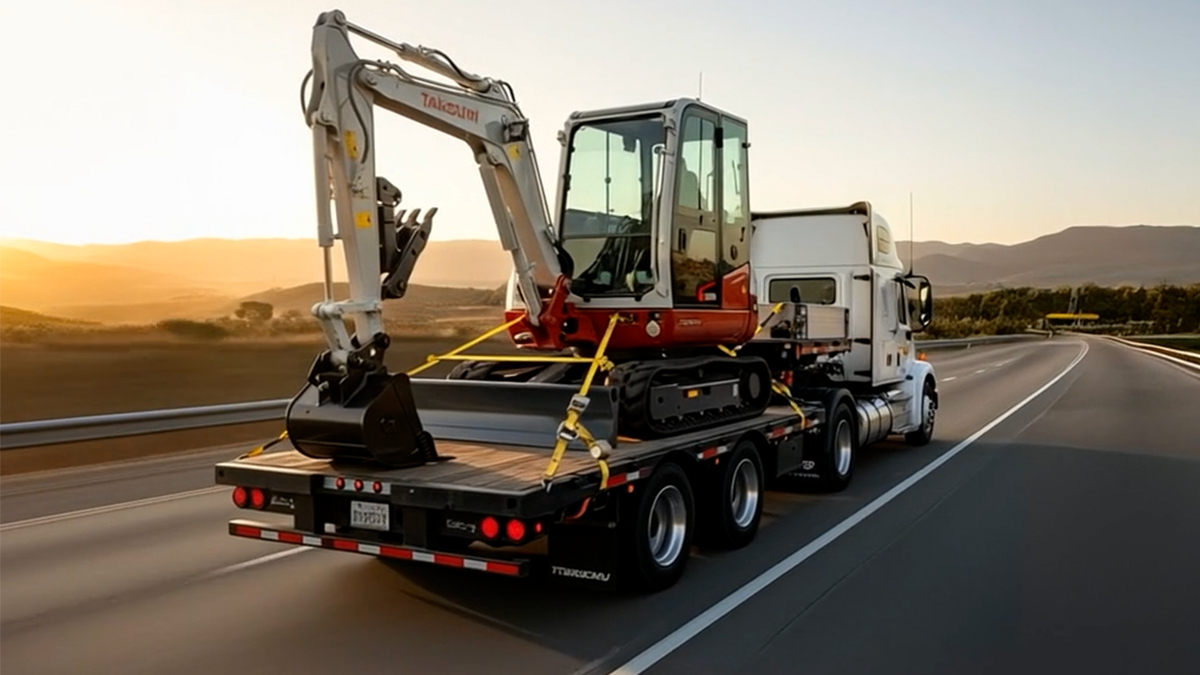
Towing a rented machine yourself can put the machine, trailer and truck under three different policies. Our guide to mini excavator weight and California towing rules covers the weight side. Or ask about delivery and read our delivery checklist so the truck does not show up to a blocked gate.
When Something Breaks or Goes Missing
Coverage is only as good as what happens in the first hour after the problem.
Call the rental desk right away
PDQ's posted rental policies say that if the equipment has an operational problem during the rental, you should notify PDQ immediately so they can get you running and note the contract for any credit or adjustment due. If the machine is down for the day, our guide on what to do when your machine breaks walks through the next steps.
Photograph everything, twice
Photograph all four sides, the glass, the tires or tracks and the hour meter at delivery and again at return. Five minutes settles most arguments. Our guide on returning rental equipment without preventable charges has the full return routine.
Call your agent the same day if you are using your own policy
Policies generally want prompt notice. Ask your agent ahead of time what they need: photos, a police report for theft, the contract.

Who Should Take the Waiver and Who Should Not
This is where a rental company is supposed to say always take the waiver. Sometimes you should not.
Take the waiver if you rent once in a while
A homeowner renting a mini excavator for a weekend usually has no policy that covers rented machines. The waiver is the simplest protection. Read what it excludes.
Carry your own policy if you rent every week
If rentals are a steady line in your business, a contractor's equipment policy with rented equipment coverage and a certificate on file is usually cheaper over a year than 15% on every ticket. That math gets stronger on weekly and monthly rentals, where the base rate is bigger.
You might not need much at all
A pallet jack for an afternoon is a small fee and a small risk. Save the phone calls for the 60 foot boom lift and the dump truck.
Do not double pay by accident
If your certificate expired last month, you may be paying the waiver without knowing. Check the ticket. First time renters can read our guide to what to have ready before renting construction equipment so the paperwork is sorted before the counter.
The Short Version
A waiver is not insurance
It is a fee to the rental company, with terms in the contract. Read the exceptions before you sign.
Your own policy needs a certificate on file
Have your agent send it ahead of time. A policy number at the counter is not the same thing.
Ask about the five gaps
Theft, negligence, tires, glass and misuse. Ask about each on both the waiver and your policy.
Trucks need proof of insurance
The collision waiver covers the truck, not your liability on the road. Talk to your agent about hired vehicles.
Questions to Ask Before You Sign
- Agent: Does my policy cover equipment I rent, and up to what replacement value?
- Agent: What is my deductible on rented equipment, and is it higher than the waiver fee for this job?
- Agent: Are theft, vandalism, tires, tracks and glass covered, and what do you need from me to file a claim?
- Agent: Does my auto policy cover a rented dump truck or water truck, and every driver who will use it?
- Rental desk: Is my certificate of insurance on file and approved, and when does it expire?
- Rental desk: What does the waiver exclude, and is there anything I still pay for if I take it?
- Rental desk: Who do I call, and how fast, if the machine breaks or goes missing?
Straight Answers
Do I need insurance to rent construction equipment?
It depends on the rental company and the item. At PDQ, the posted rental policies say you either pay a 15% damage waiver or have an approved certificate of insurance on file, and proof of insurance is required for truck rentals. The signed rental contract governs.
Is a rental damage waiver the same as insurance?
No. A damage waiver is a fee you pay the rental company so it agrees not to charge you for certain accidental damage. Insurance is a policy from your own insurer with its own limits, deductible and exclusions.
Does a damage waiver cover theft?
It depends on the contract. Theft is one of the most common exclusions or limits on rental waivers across the industry, so read the exceptions in the rental contract and ask the rental desk before you sign.
Does my general liability policy cover rented equipment?
Often not. Many general liability policies exclude damage to property in your care, custody or control. Rented machines are more commonly covered under a contractor's equipment or inland marine policy. Ask your agent to confirm in writing.
Should I take the damage waiver on an equipment rental?
If you rent occasionally and have no policy that covers rented equipment, the waiver is usually the simpler choice. If you rent often and carry your own coverage with a certificate on file, the waiver may not be needed. Compare your deductible to the fee.
What should I do if rental equipment gets damaged?
Stop using it, call the rental company right away, photograph the damage and the machine, and notify your insurance agent the same day if you are using your own policy. Keep the machine secured until it is picked up.
We Sell the Waiver. You Knew That.
A rental company wrote a whole page on damage waivers and did not tell you to always buy one. Do not get used to it. This is still marketing, just the honest kind.
Call the counter with what you are renting and how long you need it. We will tell you what the waiver costs on that ticket, what we need to put your certificate on file, and when your own policy is the better deal.
We have been renting machines since 1952. The customers who come back are the ones who read the contract before the rock hit the glass.