

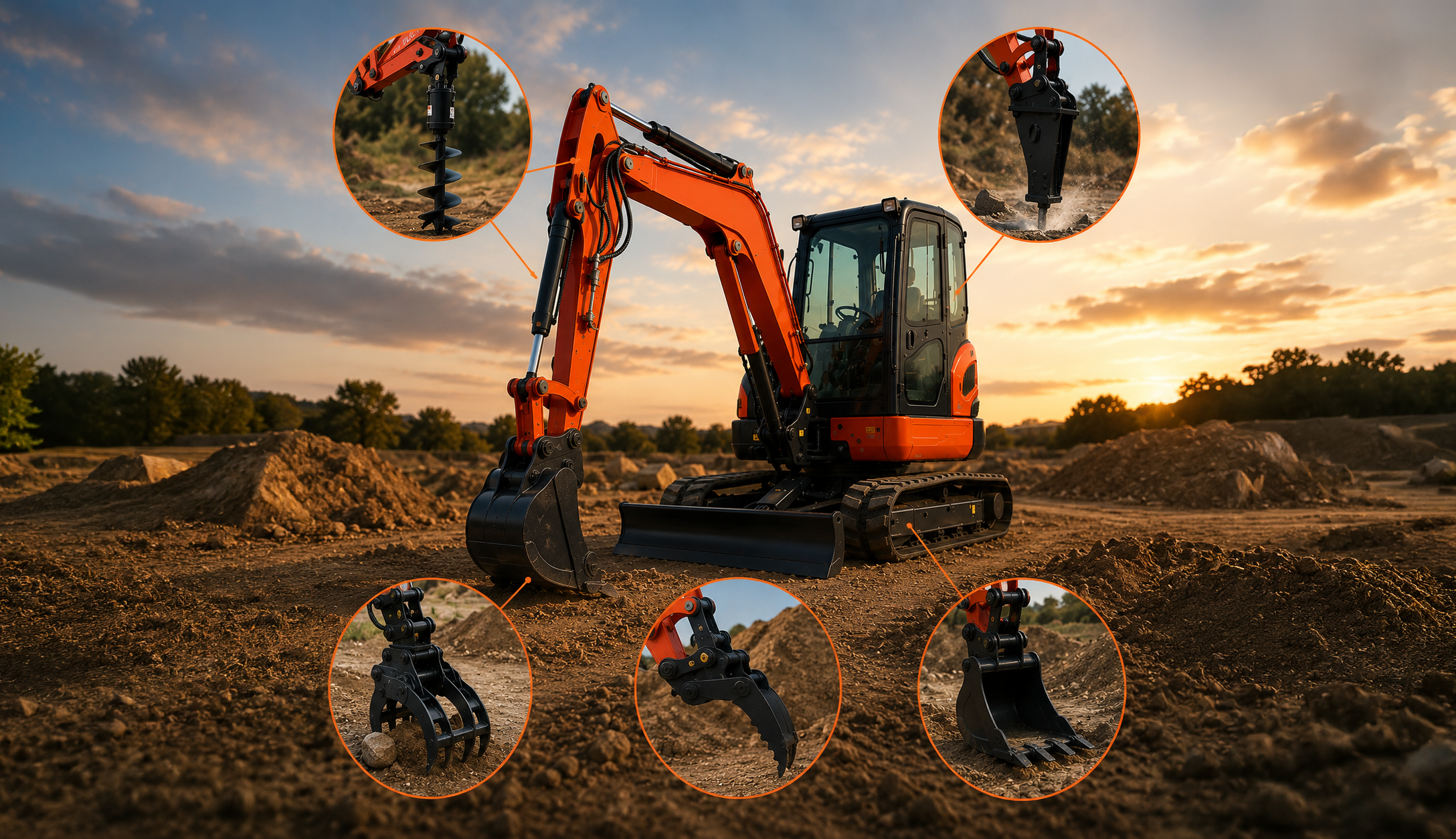
Most Attachments Sit Which mini excavator attachments earn their keep, which ones to rent, and why your machine may not run the one you bought
Disclosure first. We sell mini excavator attachments and we rent them out, which means we also pay to fix the ones that come back cracked, bent or packed with our own dirt.
Read the next ten minutes with that in mind. A dealer writing about attachments has an obvious reason to want you to own more of them.
We will argue the other way for most of this page. Most attachments bought around here get worked hard on one job and then live on a pallet behind the shop. Two years later that customer calls to ask what a barely used breaker is worth, and the answer is never what he hoped. There are roughly three exceptions. Everything else is a phone call to a rental counter and a line item you bill to the job.
Nobody mentions at the point of sale that the attachment is the easy part. The hard part is whether your machine can run it. We get that call weekly, tool already in the truck.
You are about to spend anywhere from a few hundred dollars on a bucket to more than a used truck on a mulching head. On a machine that may not run it.
Jump to what you came for
The Thumb Is the One Nobody Regrets
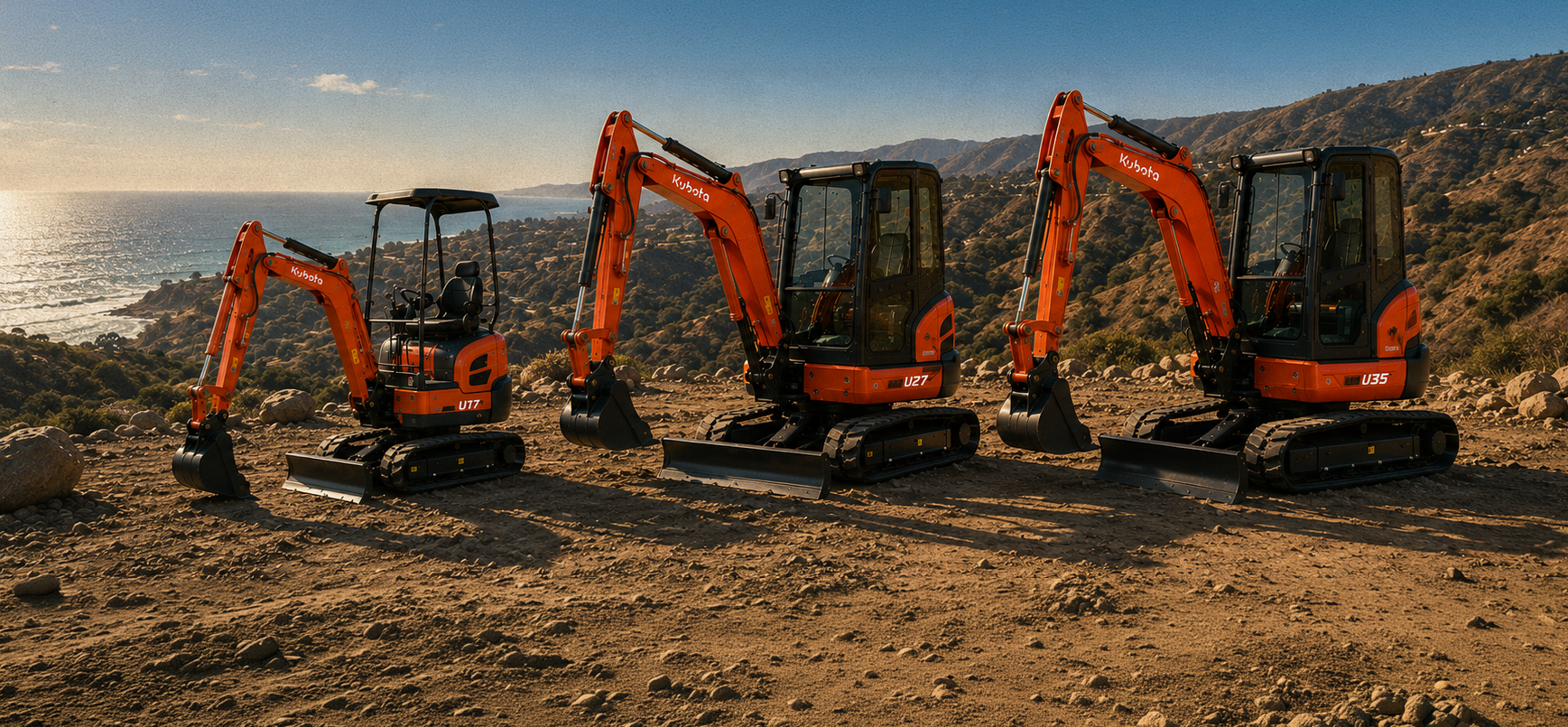
We have never had a customer tell us the thumb was a waste. Not once. Every other attachment here has somebody who wishes he had rented it.
If you have not picked the machine yet, do that first. The tooling list changes completely between a one ton machine and an eight ton machine, and our mini excavator sizing guide handles that first.
The Attachment Fits. The Hydraulics Might Not.
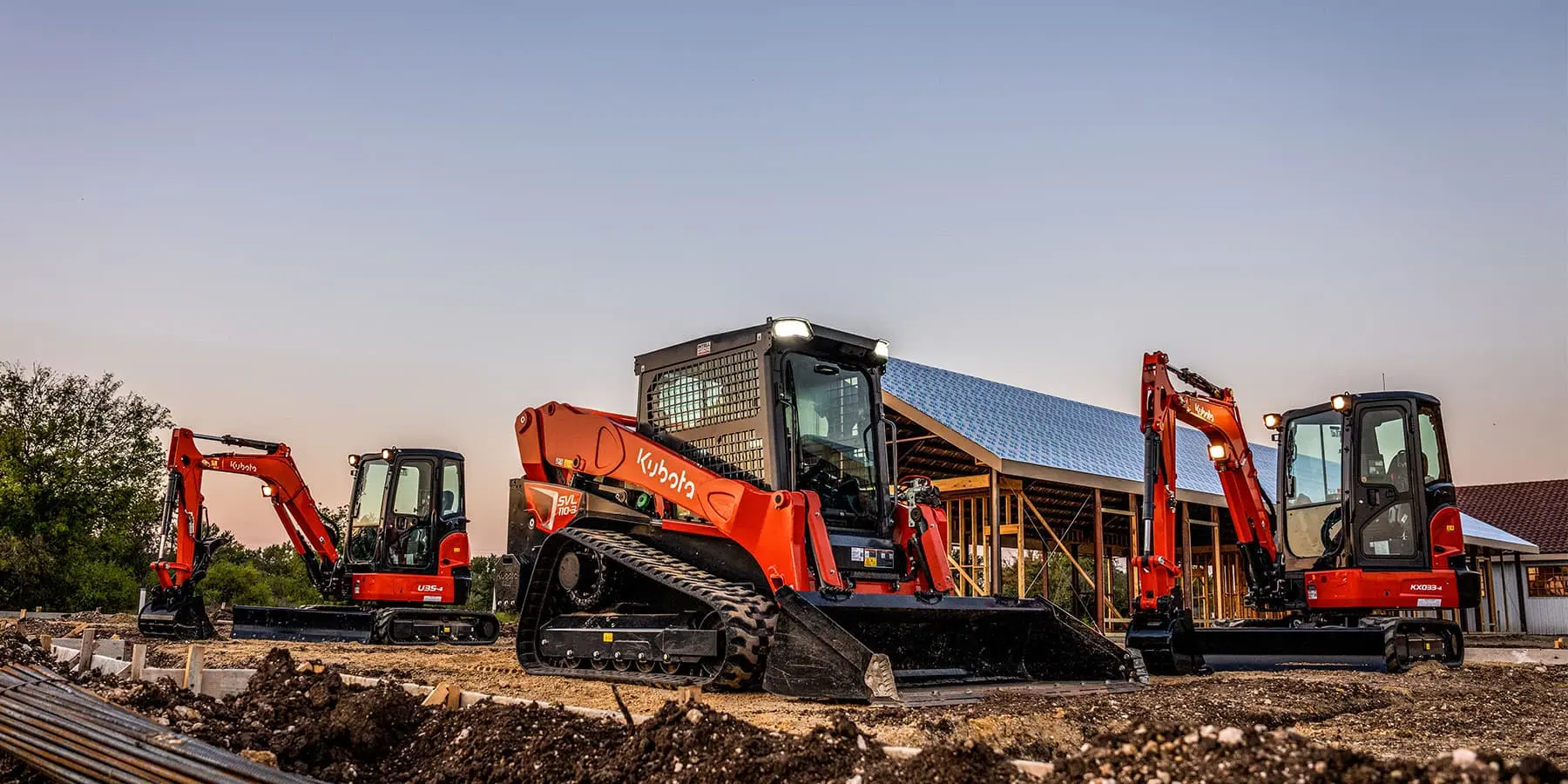
The most expensive mistake we watch people make, and it is almost always made online, at night, on a marketplace listing. The coupler matched. The weight was fine. The machine could not run it.
| Attachment | What it needs | Where people get caught |
|---|---|---|
| Mechanical thumb | Nothing hydraulic | Needs a mounting boss. Without one, this is welding on structure. |
| Hydraulic thumb | First auxiliary circuit | Bucket has to match the thumb. Our most common complaint. |
| Grapple | First auxiliary circuit | Weight at full reach changes how a light machine feels. |
| Auger | First circuit plus case drain | Bit and pilot match the ground, not the hole size you wanted. |
| Breaker | First circuit, correct flow range | Undersupplied breakers heat oil and destroy themselves quietly. |
| Tilt bucket or hydraulic coupler | Second auxiliary circuit | Most small machines have none. This is the tool that does not fit. |
| Compaction plate or wheel | First circuit, or none for a wheel | Trench width matters more than the brand on it. |
That table starts the conversation, it does not end it. Requirements move between model years and machine classes, so confirm your circuits against the manufacturer's spec before money changes hands. Our attachments team will check a serial number against a tool with no obligation to buy it here.
Augers, Caliche and Decomposed Granite
An auger's value depends least on the auger and most on what you are drilling into. Half the reviews online were written by people digging black loam in the midwest. That is not what we have.
So buy the drive head and rent the exotic bits. On this coast the attachment does not fail, the tooling does. An auger you cannot get teeth for locally is out of service every time it needs them.
Which Machine Carries Which Attachment

The gate class
Buckets, a thumb, a small auger, a small breaker. That is the honest list. These machines exist to get through a side gate. Hang a heavy grapple off one and you will spend the day watching the counterweight.
The one that runs everything
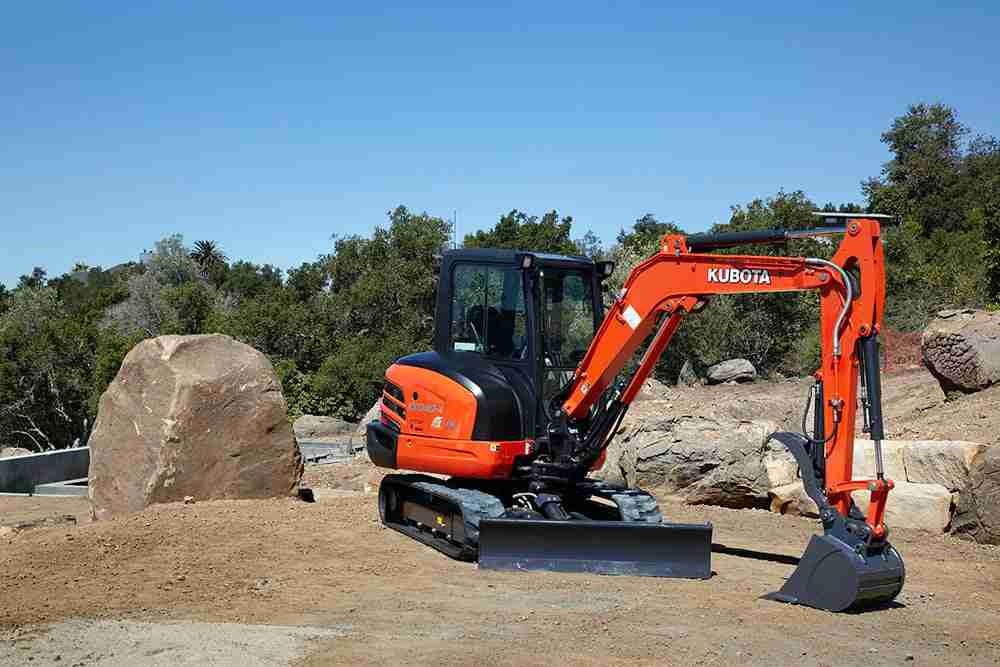
The sweet spot for tooling and the class most contractors should be looking at. Enough flow and weight for a real breaker, grapple and auger, while still fitting the trailer you already own. Buying one machine and tooling it up, buy here.

Production tooling
Where big breakers, mulching heads and tiltrotators start to make sense, because the machine can feed them. Also where buyers find out the truck is the limit.
We keep the range in mini and compact excavators at all three branches. If the class names are the confusing part, compact versus mini excavator untangles the terminology.
The Short Version
The thumb. Hydraulic if the machine has the circuit, mechanical if it does not. The only one here nobody regrets.
Rent the breaker. Every time. Expensive, heavy, and it needs maintenance you will not do while it sits for eleven months.
Buy the auger drive, rent the odd bits. Find out what is under your dirt first.
A grapple, on a machine heavy enough to carry it at reach. At real clearing scale a loader with a mulching head wins, which is a different conversation.
Stop. Buy the machine, run it a season, then buy what the work asked for. It will not be what you think.
Send us the serial number. We will tell you what circuits it has and whether the tool fits.
Talk to someone who runs theseThe Ones That Sit on the Pallet
We make more money selling an attachment than renting one. We are telling you to rent these anyway, because a customer who bought the wrong tool does not come back for the next machine.
| Attachment | Our honest call | Why |
|---|---|---|
| Thumb | Own it | Used most days on most jobs. The only universal answer here. |
| Grapple | Own it if you clear | Pays fast on clearing and demo. Dead weight on a utility crew. |
| Auger drive | Own the drive, rent the bits | The drive is reusable. Tooling is job specific and our ground is hard on it. |
| Breaker | Rent it | High cost, low use, skipped maintenance. Bills cleanly to the customer. |
| Compaction plate | Rent it | Unless you are in the trench weekly, it is idle capital. |
| Tiltrotator | Rent first | Serious money, real learning curve. Prove the gain before you commit. |
That is our read, not a law. A crew that does one thing all day can justify owning something we called a rental, and if that is you, you already know it. The table is aimed at the contractor who does a bit of everything.
What Attachments Have Cost Us
We rent this tooling out, so a different operator learns on it every week and the bill comes to us. Here is where the money actually goes.
Weather is the quiet one. Attachments live outside, seals dry out, pins seize, and a Santa Ana season followed by a wet winter punishes a tool that sat through both. None of this argues against owning the right tools. It argues for owning fewer and looking after them. And what hangs on the machine is part of your trailer math, which towing a mini excavator in California covers.
The Attachment Brochure Is the Least Useful Thing You Will Read Today
Here is the uncomfortable bit, and it undercuts a good deal of what you just read.
Most attachments from reputable manufacturers are fine. You are unlikely to buy a bad grapple. You are quite likely to buy a good grapple that does not suit your machine, your soil or your actual week. And the tables above are our opinion from our yard. Your work might make a liar out of every row.
The question is never which attachment is best. It is whether anyone near you will tell you honestly that the one you want is wrong for your machine.
So stop comparing brochures and ask the questions that predict whether this works out:
- What auxiliary circuits does my machine have, by serial number, and what does it put out?
- Does this attachment need a case drain line, and is one plumbed?
- Where do I get wear parts locally, shelf or order?
- Can I rent this exact tool first and put the rental toward the purchase?
- If I bring it back in two years, does anybody here want it?
Ask us those five, then ask whoever else you are considering the same five. Three branches in Southern California, Sun Valley in Los Angeles, Temecula in Riverside County and Escondido in San Diego, same family since 1952. We are comfortable being judged on the answers. The wider case for smaller machines is in why compact equipment keeps winning.
Straight Answers
What attachments can a mini excavator use?
Buckets of various widths, a thumb, a grapple, an auger, a breaker, a compaction plate or wheel, a ripper, a grading rake, a tilt bucket, and on larger machines a mulching head or a tiltrotator. The practical limit is not the list, it is your machine. Weight class decides what it carries at reach, and the auxiliary circuits decide what it can power.
Is a hydraulic thumb worth it on a mini excavator?
For most owners, yes, and it is the one attachment we almost never hear a complaint about. A thumb turns a digging machine into one that handles brush, rock, pipe and debris, which is most of a demolition or clearing day. Choose hydraulic if the machine already has a first auxiliary circuit and you need to place material with precision. A mechanical thumb is cheaper and fine for loading brush.
Can any mini excavator run any attachment?
No, and that is the most expensive assumption in the category. An attachment can couple to a machine that cannot drive it. Match three things: the auxiliary circuit the tool requires, the flow and pressure the machine actually produces, and whether a case drain return line is present for anything with a hydraulic motor in it. An undersupplied tool runs poorly and quietly damages itself and the machine.
Should I buy or rent a mini excavator breaker?
Rent, unless demolition is a regular part of your business. Breakers cost real money, they need greasing on a schedule most owners skip, and the chisel and retaining pins are consumables. The typical buyer uses one hard for a few days then stores it for a year. Renting keeps it a job cost you bill to the customer.
Why does my auger struggle in Southern California soil?
Usually because of what is under the surface rather than the auger. Decomposed granite drills but abrades teeth and pilot bits quickly. Caliche and hardpan are effectively cemented, so a dirt auger spins and polishes rather than cuts, which calls for rock teeth and a rock pilot. Clay does the opposite and packs the flighting solid so spoil stops clearing. Match the tooling to the ground you have.
What is the difference between first and second auxiliary hydraulics?
The first auxiliary circuit is bidirectional and runs the tool on the end of the arm, so a thumb, grapple, auger or breaker works from it. Most machines have one. The second circuit lets you operate something else at the same time, typically a hydraulic quick coupler or a tilt function, while the primary tool is running. Many smaller machines have none, and adding one later is a valve and plumbing job.
Yes, This Was an Ad
You just read an equipment dealer spend a page telling you to buy fewer attachments and rent the expensive ones. It is still an ad. You worked that out by the third paragraph and kept reading, so we will not pretend otherwise.
Here is the offer instead. Send us the serial number off your machine and tell us what you are trying to do. We will tell you which circuits you have, whether the tool is a fit, and whether to own it or rent it. If the answer is hire a contractor, we will say that too. And if the tool is right but you bought it somewhere else, bring it in anyway.
We have been here since 1952 by being the people you call back, not the people who won one sale.