

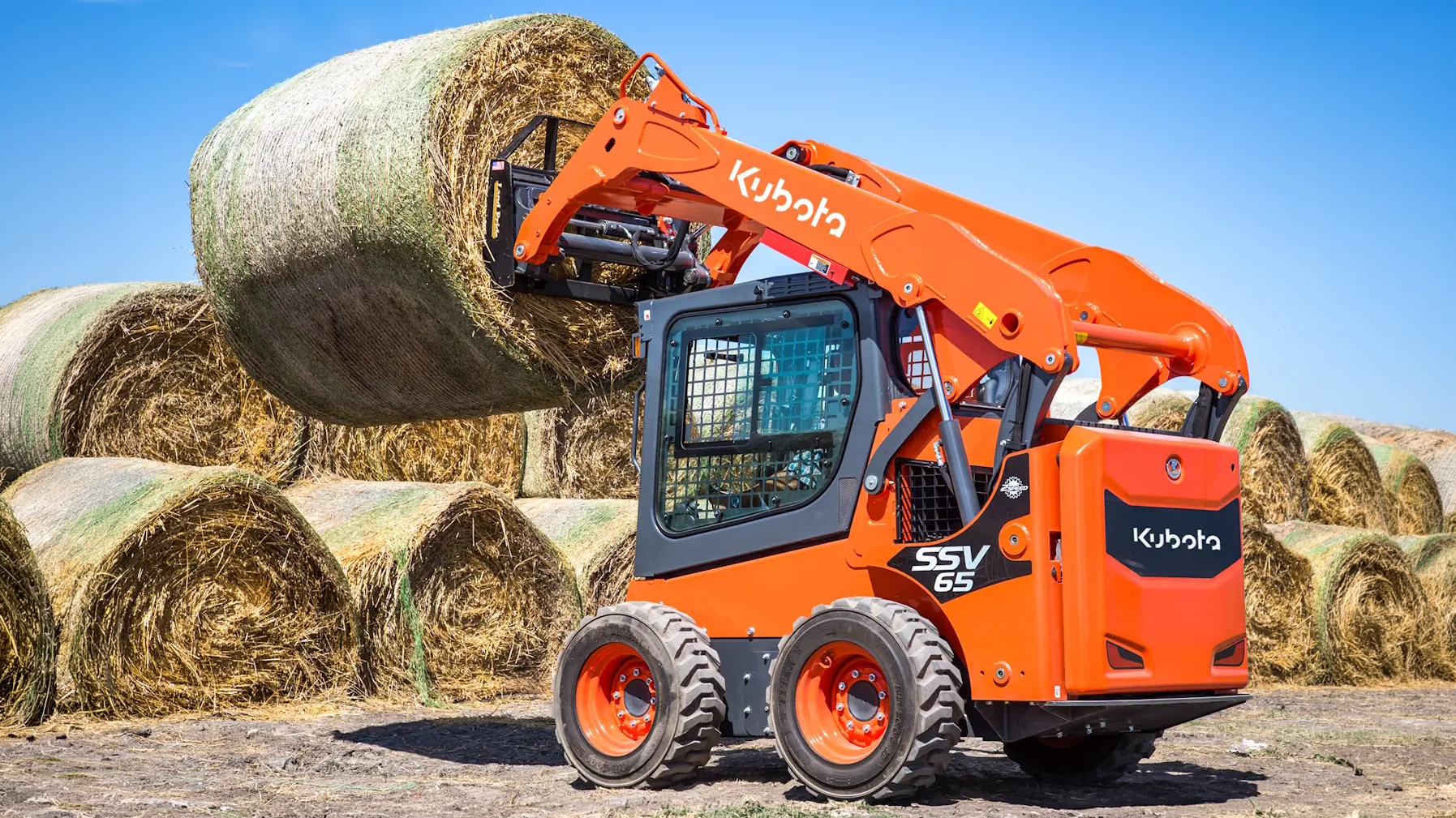
Most Attachments Sit on the Rack Which ones actually pay for themselves, which ones you should rent, and where the money quietly leaks
Disclosure first. We sell attachments. We also rent them out, which means we get them back bent and pay to fix them.
That second half is the only reason this page is worth reading. A dealer who only sells has no reason to tell you most people buy too many of these. Walk any contractor's yard from Sun Valley to Escondido and look at what leans on the fence. A bucket on the machine. Forks nearby, because forks get used. Then a rack of steel that has not moved since the job it was bought for.
The bucket comes with the machine. Everything after runs from a few thousand dollars for simple steel into the tens of thousands for a mulching head, and about half of those purchases are wrong. Not defective. Wrong for whoever signed.
Nobody regrets the forks. Almost everybody eventually regrets the specialty head they bought for one job and swore they would use again.
This covers what to buy, what to rent, and the specs that decide whether the attachment you order works at all on your machine. It does not relitigate tracks versus wheels. That is in the compact track loader guide.
Jump to what you came for

The Attachments That Actually Earn Their Keep
An attachment earns its keep one of two ways. It replaces a rental you were already making monthly, or labor you pay for by hand. If it does neither, it is a tool, not an investment. Five things clear that bar. Notice how boring they are.
| Attachment | Our call | Why |
|---|---|---|
| Pallet forks | Buy | Cheapest thing here, and used on jobs you did not plan for. |
| Grapple | Buy if debris is weekly | Replaces hand loading. Rent twice first. |
| Auger | Soil decides | Fast in dirt. Decomposed granite and caliche eat bits. |
| Four in one bucket | Buy if you grade | Daily use for dirt work. Occasional for everyone else. |
| Brush cutter | Buy for recurring acreage | Annual fuel clearance makes it work. One time does not. |
| Forestry mulcher | Rent, almost always | Highest price, highest wear, highest flow requirement. |
| Breaker or trencher | Rent | Used a few days a year, stored the other three hundred. |
Our opinion from a rental counter, not a law. Trench every week and you should buy the trencher and ignore us. The test is frequency.
The Ones That Sit
Not bad attachments. Good ones that most buyers use a tenth as often as they imagined at the counter. We would rather rent you a mulcher eight times than sell you one that sits.
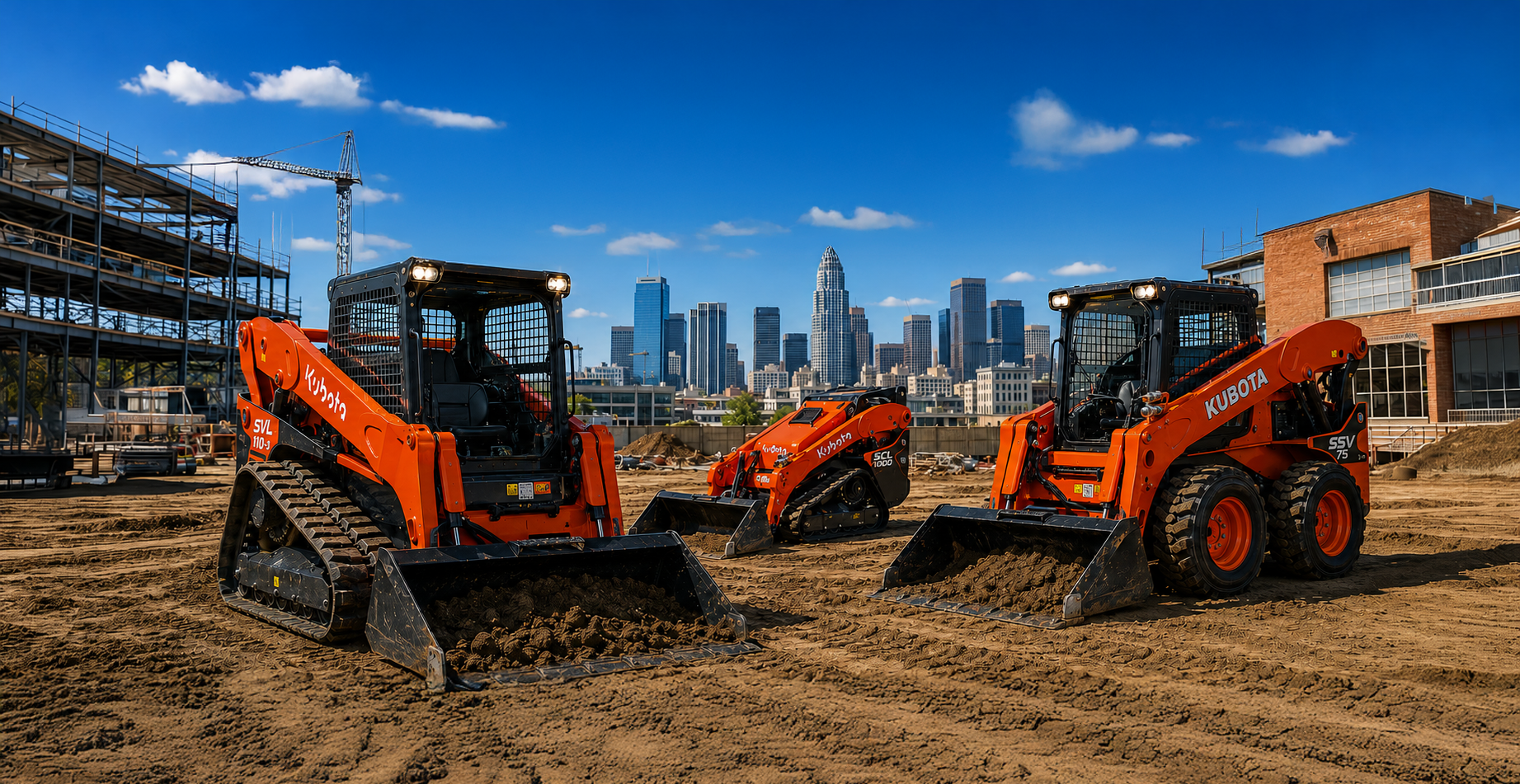
Flow and Pressure Matter More Than the Brand on the Attachment
This is the conversation we have at the parts counter more than any other. Somebody bought an attachment online, bolted it on, and it stalls under load. The attachment is fine. The machine cannot feed it. These do not run on horsepower. They run on flow, in gallons per minute, times pressure.
| Attachment | Standard flow | High flow |
|---|---|---|
| Auger | Yes | Not required. Bigger bits benefit from more flow. |
| Grapple | Yes | Not required. Cylinders, not a motor. |
| Rotary brush cutter | Usually, in smaller decks | Bigger decks want more flow to hold blade speed. |
| Forestry mulcher | No, not realistically | Required, plus a case drain. |
| Cold planer | Narrow heads only | Required for production width. |
| Hydraulic breaker | Yes | Matched to machine weight, not to flow class. |
Treat that as a shape, not a spec sheet. Every manufacturer publishes a required range, and that document beats this table. Bring your serial number and we will read both before you spend anything.
Still choosing the machine? Start at Kubota track loaders and skid steers and order the hydraulics you will want in year three, not week one.
The Quick Coupler Is the Cheapest Expensive Part on the Machine
Nobody shops for a coupler. Everybody eventually pays for one, usually by way of a hydraulic system full of grit.
The interface is two neglected systems. The plate that carries the load, and the couplers that feed it. Each fails in its own boring, avoidable way.
None of it is exciting and none of it comes up in a sales conversation. It is where most attachment repair money goes, on every brand.
Which Machine Should Be Carrying This

Wheeled skid steer
Forks, buckets, breakers, brooms, anything you run on pavement or in a yard. Cheaper to buy, cheaper to own, and it does not care about asphalt. If your work is on hardscape, this is the machine.
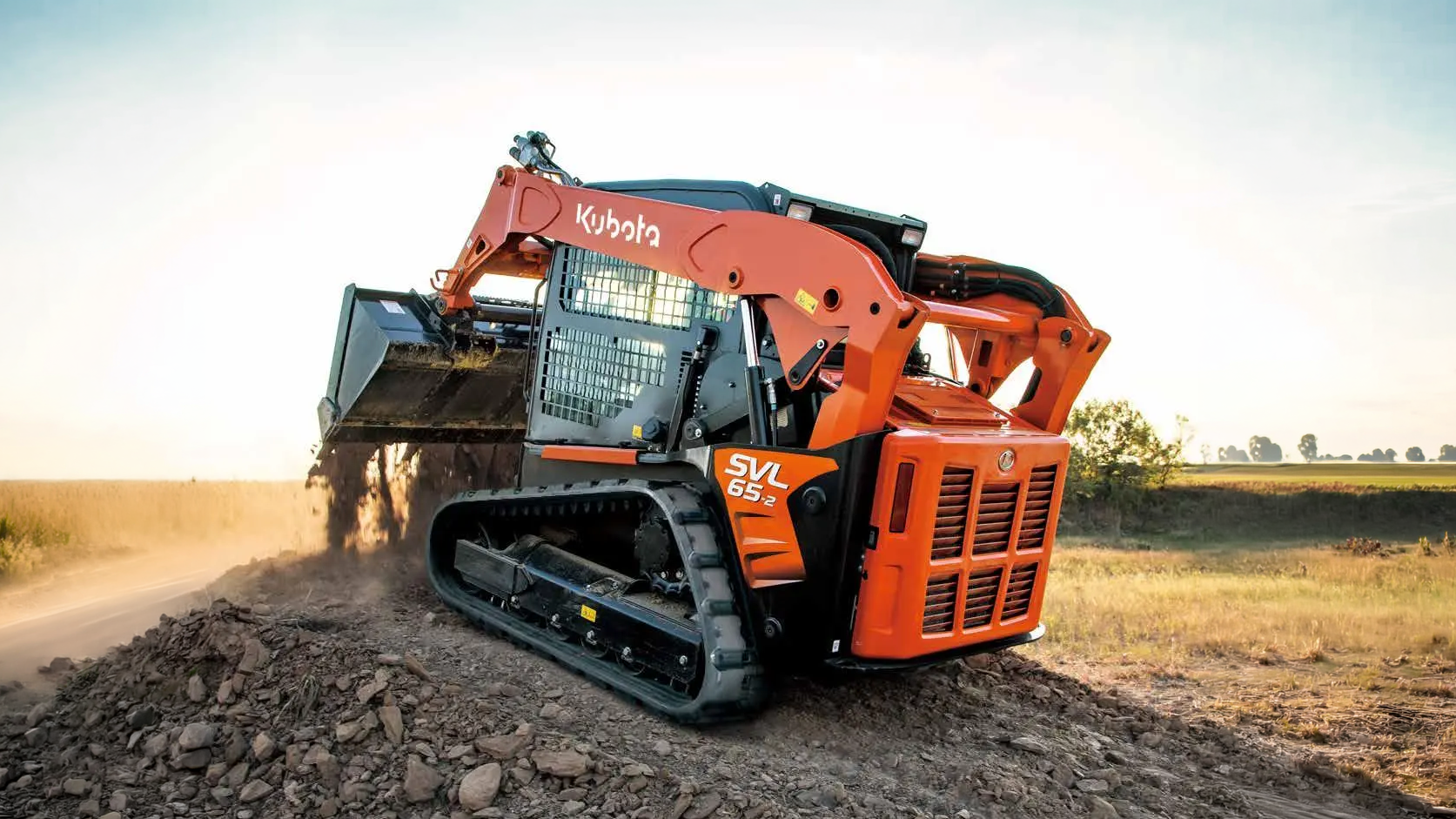
Compact track loader
Mulching heads, grapples on slopes, grading with a four in one, anything heavy on soft ground. Tracks give the big attachments the flotation they need. They also give you an undercarriage bill, which is the trade.

Small frame loader
Fits the side gate, fits the back yard, runs standard flow only. Forks, a bucket, a small auger, a light grapple. Do not order a mulching head for one of these. The machine is the constraint.
The full head to head is in track loaders vs skid steers. Narrowed it to the mid frame volume seller? The SVL75-3 review includes the complaints owners actually have.
The Short Version
Pallet forks, then a four in one bucket if you grade. That is the starter kit, and it covers more of your week than any specialty head.
Buy the grapple. It changes what you can bid, and fuel clearance work comes back every year in this state.
Rent the mulcher. Read brush clearing equipment first and match the machine to your material.
Rent an auger with rock teeth and see what your soil does to it before you own one.
Flow, pressure, or a missing case drain. Bring the serial number to a counter before you buy a second.
Rent the machine and attachment together for a week. That answers both questions for less than the interest on a wrong purchase.
Talk to someone who runs theseRent First, and Here Is What Ours Have Cost Us
We rent attachments across three branches, so a different operator abuses one every week and the bill lands on our desk. The part a catalogue cannot write.
None of that makes attachments a bad purchase. It makes renting a good way to learn what you are signing up for. The break even argument on the machine is in rent or own a skid steer, and current inventory is on our attachments page.
The Attachment Is the Least Important Thing on This Page
Now the uncomfortable bit, which undercuts a lot of what you just read.
The major manufacturers all build good attachments. A grapple from one reputable maker and one from another will both outlive the machine if you treat them the same. The steel is not your risk. Your risk is compatibility, and the week you are down waiting on a part. Two contractors can buy the identical head on the same morning and have completely different years with it.
The variable is whether somebody checked the flow chart against your serial number before you paid, and whether teeth are on a shelf nearby when you need them.
So stop comparing brochures and ask the questions that predict the next three years:
- What is the auxiliary flow and pressure on my machine, by serial number, and does this attachment sit inside that window?
- Does my machine have the case drain and the electrical harness this attachment needs?
- Do you stock the wear parts, meaning teeth, bits, chains and couplers, or is everything ordered?
- Can I rent this exact attachment first, and does any of that rental apply if I buy?
- Who do I call when it does not work on a Friday, a person or a queue?
Three branches in Southern California. Sun Valley in Los Angeles, Temecula in Riverside County, Escondido in San Diego. Same family since 1952. Ask us those five, then ask whoever else you are considering. We are comfortable being judged on the answers.
Straight Answers
What are the best skid steer attachments to buy first?
Pallet forks, then a multipurpose bucket if you move and shape dirt, then a grapple if you handle debris most weeks. Those three cover most of what a loader does for a small crew. Mulchers, breakers and trenchers are better rented until you can point at a pattern of use rather than one upcoming job.
Do I need high flow hydraulics for a skid steer mulcher?
Realistically, yes. Forestry mulching heads are built around high flow auxiliary hydraulics, and most also need a case drain line to protect the motor seals. High flow is ordered with the machine rather than added later, so check your loader before buying the head. If yours is standard flow, rent a machine and mulcher together.
Will any attachment fit my skid steer?
Mechanically, usually. The universal quick attach plate is shared across skid steers and compact track loaders from every major brand, so the attachment will hang on the machine. Hydraulically is a different question. Flow, pressure, a case drain port and the electrical connector all have to match, and that is where bad purchases go wrong.
Should I rent or buy a skid steer attachment?
Rent anything you cannot point at a recurring need for. The test is frequency, not capability. If it replaces a rental you were already making most months, or labor you pay for by hand, buying makes sense. If the reason you can give has a start date attached, rent it for that job.
What size auger do I need for a skid steer?
Match the bit diameter to the hole you dig most often, then match the drive unit to your machine's auxiliary flow. Bigger bits need more torque and flow in hard ground. The bigger decision in Southern California is tooth type. Decomposed granite, caliche and hardpan need rock teeth and a pilot bit rated for them. Dirt teeth polish rock all afternoon without making a hole.
Do Kubota skid steers take other brands of attachments?
Yes. Kubota skid steers and compact track loaders use the standard universal quick attach interface, so attachments from other manufacturers mount normally. The question that matters is hydraulic rather than mechanical. Confirm the flow and pressure your machine delivers, whether it has a case drain, and which electrical connector is fitted, then check those against what the attachment needs.
Yes, This Was an Ad
You just read an attachment dealer spend a couple of thousand words telling you to buy fewer attachments. It is still an ad. You saw that coming from the first line, so we will not pretend otherwise now.
Here is the offer instead. Bring your model and serial number to any of our three branches and we will read your flow, pressure and ports against whatever you are considering, before any money moves. If the numbers do not work, we will say so.
Then rent the thing. Put it on your dirt, your material, a real job. If it earns its keep, come back and we will quote one. If not, you spent a rental instead of a loan, and we would rather have that customer twice a year for a decade.
We have been here since 1952 by being the yard people call back, not the yard that moved a mulcher once.