

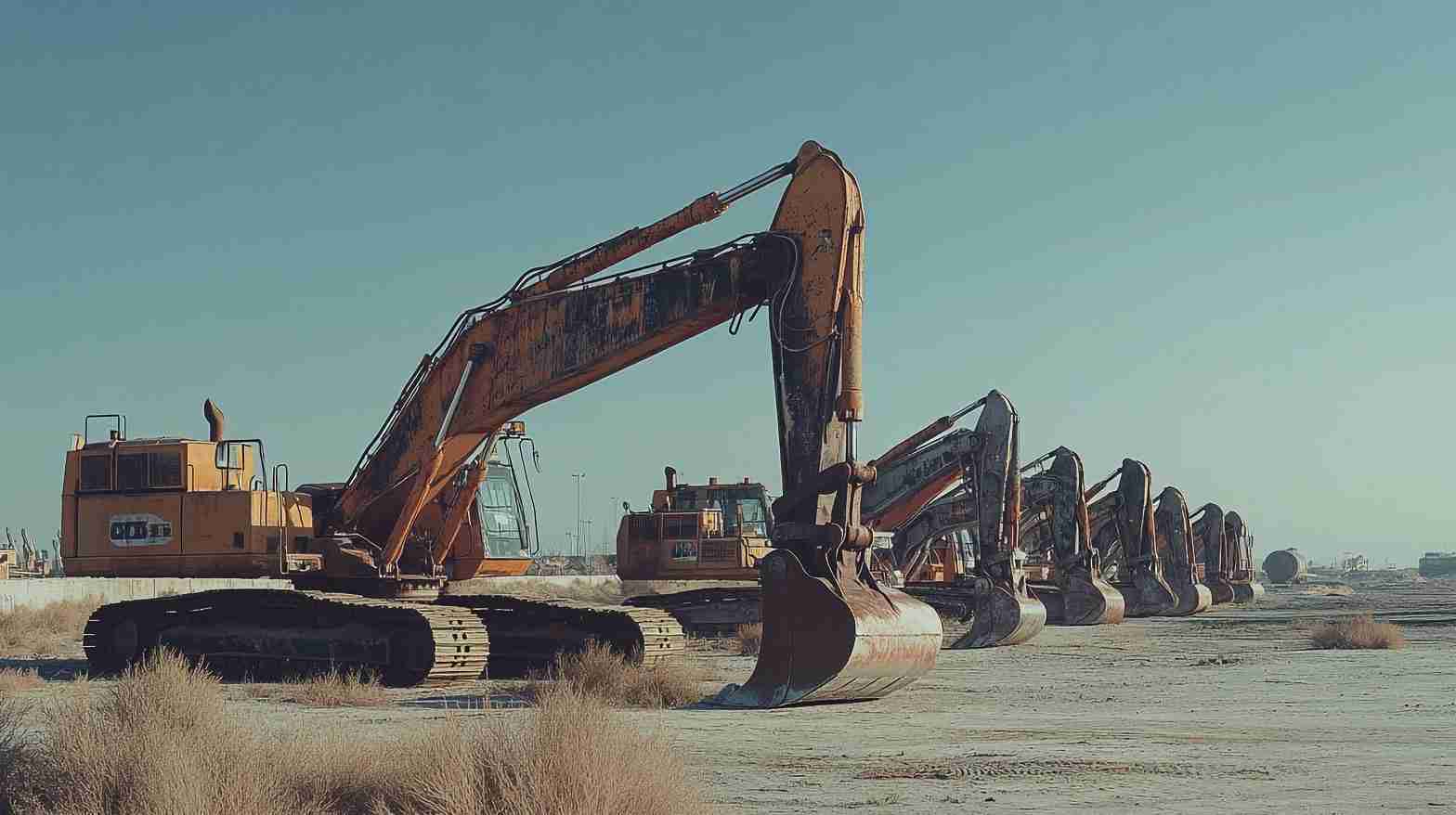
Auction vs. Dealer: Where Should You Buy Used Equipment? A dealer's honest take on construction equipment auctions, including the part where some of you should skip us and go bid
Disclosure. We are a dealer. We sell used machines, so we have every reason to tell you auctions are a minefield. Some of them are. Some of them are the smartest place you could buy. Here is how to tell which.
Short answer: Buy at a construction equipment auction if you can inspect and repair machines yourself and can absorb a bad one. Buy from a dealer if this is your first machine, you need financing, or you cannot afford downtime. The auction price looks lower, but premiums, fees, transport and repairs close much of the gap.
The hammer price is the start of the bill, not the end of it.
We have watched customers save real money at auction. We have also watched customers haul home a heavy equipment auction bargain that needed a pump, two cylinders and a set of tracks before it did a day of work. Both stories are true. The difference was almost always the buyer, not the auction.
Jump to what you came for
How Equipment Auctions Actually Work
Every auction company writes its own terms, and the terms are the contract. Read them before you register, not after you win. The general shape is the same almost everywhere.
Online and onsite
Onsite auctions run on a yard with a live auctioneer, usually with online bidding alongside. Pure online auctions run on a timed clock, and the machine may be sitting at a seller's yard hundreds of miles away. Convenient, and an easy way to buy something you never saw.
Unreserved vs. reserve
At an unreserved auction, the machine sells to the highest bidder no matter how low the price goes. At a reserve auction, the seller sets a minimum, and if bidding does not reach it, nothing sells. Unreserved sales are where the real deals happen, and also where sellers dump machines they could not sell any other way.
As is, where is
This is the phrase that matters most. It means no warranty from the auction, no returns, and the machine is your problem from the moment the hammer drops. If the engine knocks on the trailer, you own a knocking engine.
Inspection windows
Most auctions offer a preview period before the sale where you can walk the lot, check fluids and sometimes start or run the machine. Use every minute of it. Bring someone who knows hydraulics. Our used equipment inspection checklist is written for exactly this, and our guide on what used equipment hours really tell you will keep you from trusting the meter too much.
The Fees That Sit on Top of the Hammer Price
Buying equipment at auction means paying more than the number you bid. Always.
Buyer's premium and documentation fees
Most auctions add a buyer's premium, a percentage of the hammer price, and many add a flat documentation or administrative fee per lot. Rates vary by company, by sale and sometimes by price bracket. Find the exact schedule in the terms before you bid and build it into your maximum.
Sales tax
Expect sales tax on the total unless you hold a valid resale certificate or another exemption. Ask how the auction calculates it, because some charge it on the hammer plus the premium.
Payment deadlines
Auctions usually want payment in full within a few business days, often by wire. If your financing is not lined up before the sale, you can lose the machine and your deposit.
Pickup deadlines and storage
You get a short window to remove the machine. Miss it and storage charges start.
Transport
Hauling is on you. A mini excavator on your own trailer is one thing. A larger machine on a hired lowboy is another, and the bill grows with distance and permits.
Title and lien status
Many off-road machines do not carry a DMV title the way a truck does. You get a bill of sale. Ask whether the auction guarantees clear title, and consider your own lien search. Check the serial plate too. Our Kubota serial number lookup guide shows how to confirm the year and model actually match the listing.
What a Dealer Adds, and What That Costs You
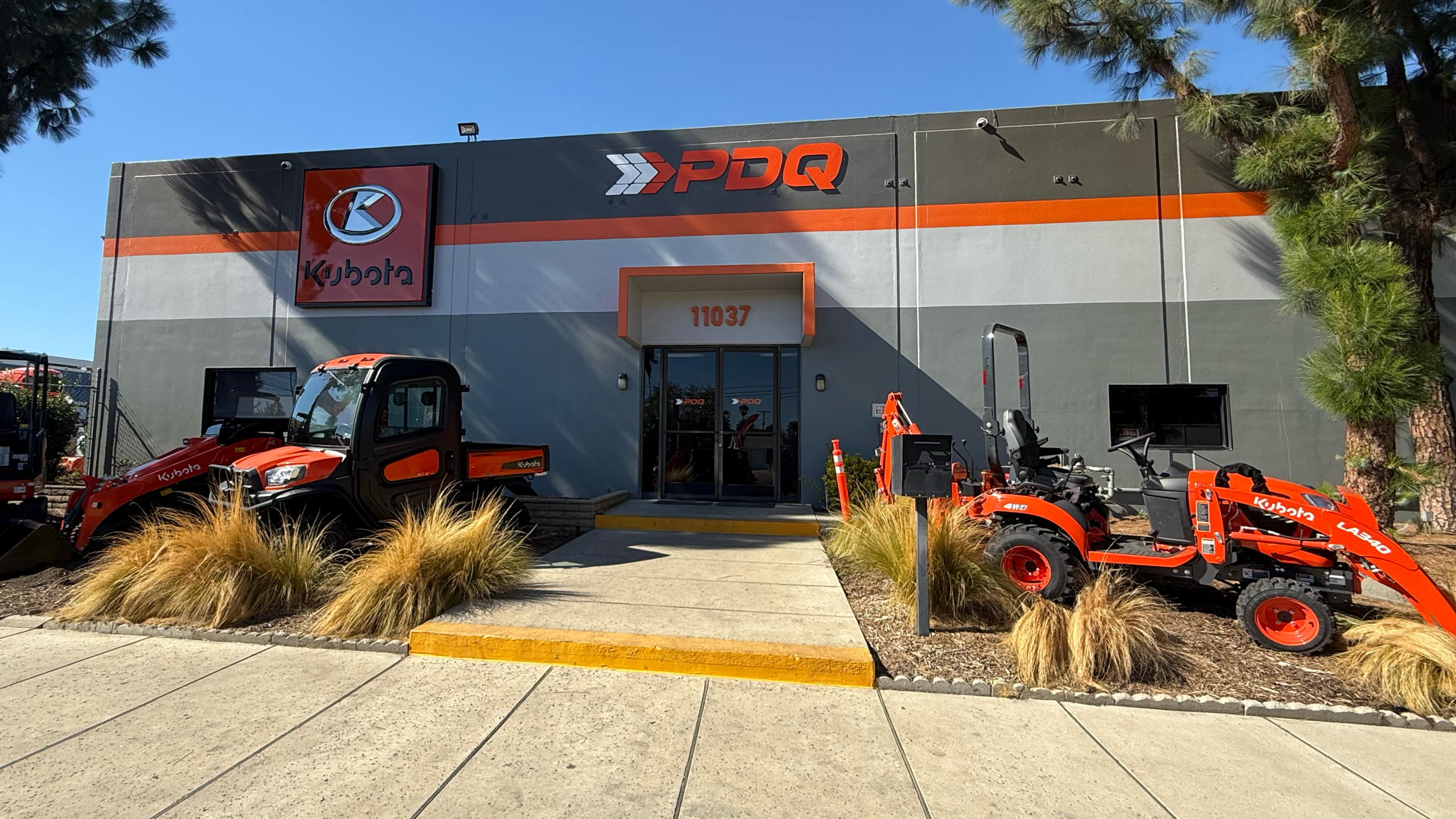
A dealer buys machines, often at the same auctions you are looking at, fixes what needs fixing, and sells them at a markup. That markup is real. Here is what it is supposed to pay for.
Inspection and reconditioning
Warranty and service support
Financing and trade-ins
Parts, service and a demo
You get a shop that knows the machine and a parts counter that stocks it. You can usually run the machine before you sign. Read our piece on demoing equipment before you buy for what to test.
The cost of all this is simple. You pay more up front. On a clean, popular machine, the dealer price can run well above what the same unit brought at auction. Whether that gap is worth it depends on how much of that work you can do yourself.
Private Party Sales
Plenty of used heavy equipment for sale never goes near an auction or a dealer. A contractor retires, a landscaper downsizes, a homeowner finishes the project. Private sales can be the best value of all, or the worst.
The good part
You can meet the owner, ask how it was used, see where it lived, and often run it as long as you want. A one owner machine with service records from a careful operator is worth more than any condition report.
The risky part
No premium, but also no protection. Nobody checks the title or the liens unless you do. Never wire money for a machine you have not seen.
Auction vs. Dealer vs. Private Sale
| Factor | Auction | Dealer | Private party |
|---|---|---|---|
| Price | Usually lowest hammer | Highest | Often in between |
| Risk | Highest, as is | Lowest | High |
| Inspection | Short preview window | Run it, demo it | Depends on seller |
| Financing | Bring your own | Arranged in house | Bring your own |
| Warranty | None | Sometimes, ask | None |
| Speed | Fast once you win | Fast, delivered | Varies |
| Paperwork | Bill of sale, fees | Handled for you | All on you |
| Transport | Your problem | Often arranged, ask | Your problem |
Notice the auction wins one row. It is the biggest row for a lot of buyers, which is exactly why auctions exist. Just know what you are trading for it.
The Total Cost Math
Round, hypothetical numbers. Swap in your own.
Say you want a used compact track loader. The same model, same year, similar hours, shows up at auction and on a dealer lot. For the sake of the math, assume a 10 percent buyer's premium. Real rates differ, so use the actual terms.
| Line item | Auction, goes well | Auction, goes badly | Dealer |
|---|---|---|---|
| Price | $40,000 | $40,000 | $52,000 |
| Buyer's premium and doc fee | $4,300 | $4,300 | $0 |
| Transport | $1,200 | $1,200 | Ask |
| First repairs and service | $2,500 | $11,000 | Done before sale |
| Downtime while fixing | A week | A month | None |
| Total | $48,000 | $56,500 | $52,000 |
What the table says
When it goes well, the auction buyer saves about $4,000. When it goes badly, a failed drive motor or a tired undercarriage, the auction buyer pays more than the dealer price and loses a month of work on top. The real question is which column you can survive.
The repair line is the whole game
If you turn your own wrenches, that $11,000 might be $5,000 in parts and your weekends. If you pay a shop, it is the full number. That single fact decides most auction vs. dealer arguments.
Who Should Buy at Auction, and Who Should Not
Go to the auction if
Skip the auction if
Southern California Specifics
Distance adds up fast
A machine that sells across LA County, out in Riverside County or down in San Diego County can be a long, slow haul through traffic to wherever you work. Price the haul before you bid, and if you plan to tow it yourself, read our mini excavator trailer and California towing guide first.
California emissions on diesel equipment
California has its own rules for off-road diesel equipment, and fleets can have reporting obligations. Machines from out of state show up at auctions all the time. Before you bid on any diesel unit, ask how it is labeled and registered for California use, and ask what paperwork comes with it. If nobody can answer, factor that into your bid or walk away. We are not giving legal advice here.
Heat, dust and hills
Inland Empire and Riverside County heat, plus LA County dust, are hard on cooling systems, filters and seals. Machines that worked hillside jobs in north San Diego County or the foothills often wear undercarriage unevenly. Look at radiators and track wear with that in mind.
The Short Version
Know which buyer you are
Fleet owner with a shop, go bid. First machine or one machine business, buy where you get support.
Add the fees before you bid
Premium, doc fee, tax, transport and first repairs. Your max bid is what is left after all of them.
Use the inspection window
As is means as is. Check it in person or with someone you trust, or bid like it needs work.
Check paperwork early
Liens, serial plate, and how a diesel is labeled for California use. Answer those before the hammer, not after.
Seven Questions to Ask Before You Bid or Buy
- What is the buyer's premium, the doc fee and the sales tax on this lot, in dollars?
- Is it unreserved or does it have a reserve?
- Can I start it, run the hydraulics and walk it during the preview?
- When is payment due, and when must it leave the yard before storage starts?
- Is title clear, and does the serial plate match the listing?
- How is this diesel machine labeled and registered for California use?
- What will it cost to haul it home, and what will I fix first?
Straight Answers
Is it cheaper to buy construction equipment at auction?
The hammer price is usually lower than a dealer price. After the buyer's premium, documentation fees, sales tax, transport and first repairs, the savings shrink, and a machine with hidden problems can end up costing more than buying from a dealer.
What does as is, where is mean at an equipment auction?
It means the machine is sold in its current condition with no warranty and no returns, and the buyer is responsible for removing it from wherever it sits. Any problem found after the sale belongs to the buyer.
What is a buyer's premium at a heavy equipment auction?
It is a fee the auction adds on top of the winning bid, usually figured as a percentage of the hammer price. Many auctions also add a flat documentation fee. The exact rates are in each auction's terms, so read them before bidding.
Can I finance equipment bought at auction?
Sometimes, but you usually need the loan approved before the sale because payment is due within days. Some lenders are cautious about as is auction machines. Dealer purchases are generally easier to finance in one step.
Should I buy my first excavator at auction?
For most first time buyers, no. Without experience judging hydraulics, undercarriage and engine condition, the risk of buying a machine that needs expensive repairs is high. A dealer or a well documented private sale is usually safer.
Do used diesel machines need anything special in California?
California has its own rules for off-road diesel equipment, and fleets may have reporting requirements. Before buying, especially a machine from out of state, ask how it is labeled and registered for California use and what paperwork comes with it.
Fine, Here Comes the Pitch
We just spent a few thousand words telling some of you to go to an auction instead of our lot. We meant it. We also hope the rest of you noticed who told you.
If you are not the fleet owner with a shop, call us. Tell us the machine, the job and the budget. We will show you what we have, what was done to it, and how it compares to what the same thing is bringing at auction. You can visit any of our three branches and run it yourself.
Since 1952 we have noticed the cheapest machine on the lot is rarely the cheapest machine to own. We would say that, of course. Doesn't make it wrong.