

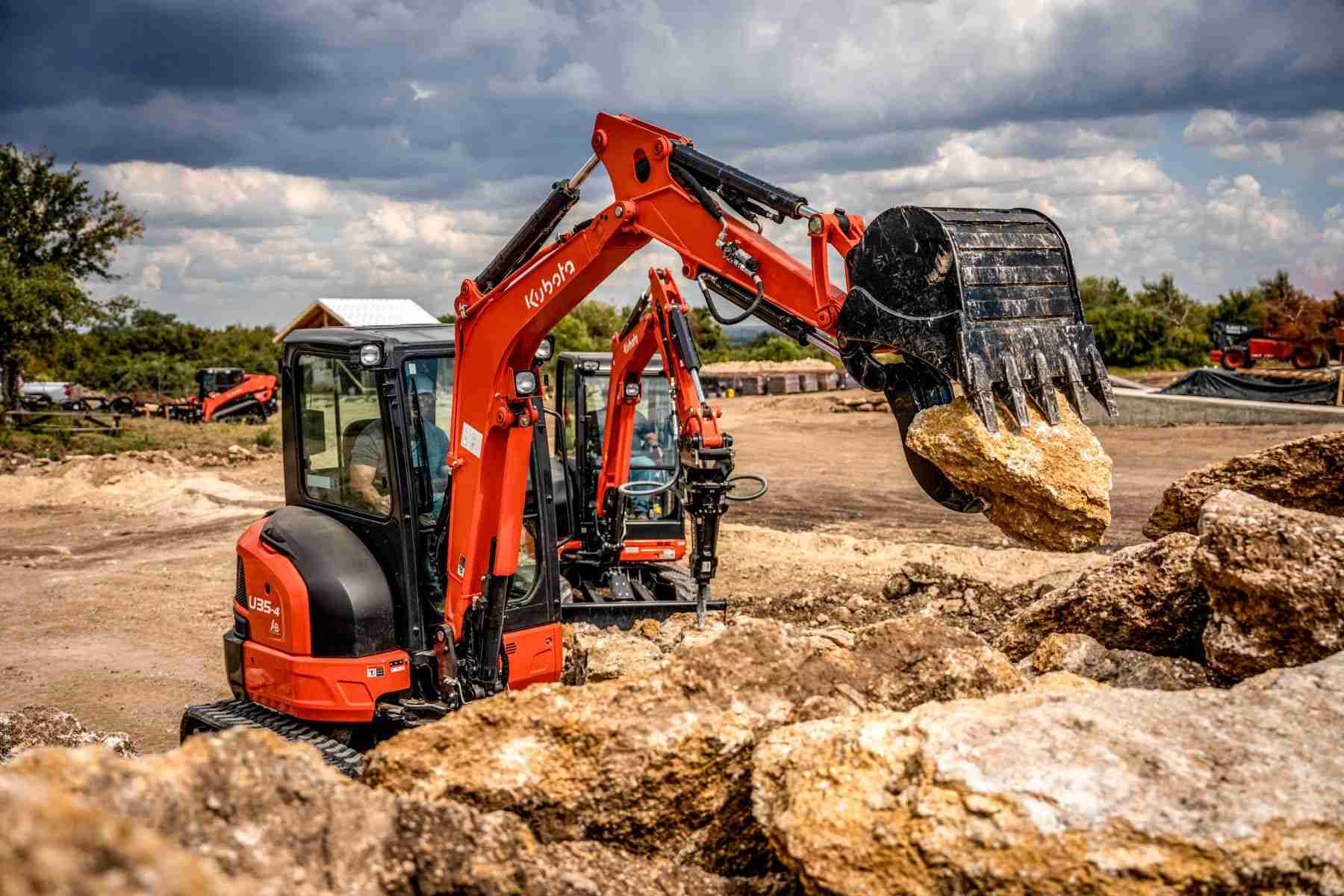
Demo Before You Buy: What to Test Beyond Driving Around the Lot A real equipment demo plan by machine type, so you find the problems in an hour instead of the first month
Disclosure. We sell and rent the machines you would be demoing, so we want the demo to end in a sale. This guide is how to make sure the sale, if it happens, is the right one.
Short answer: A good equipment demo means running the machine on dirt, with the attachment you will actually use, doing the job you actually bought it for. Test the operator station, the hydraulics and the machine's limits, and score two machines side by side. A lap around the paved lot tells you almost nothing.
Everything runs nice on asphalt. Your job site is not asphalt.
Most buyers get in, drive a circle, curl the bucket twice, say "feels good" and go talk price. Then they find out in week two that they cannot see the bucket edge, the seat kills their back, or the auger they already own is too much for the auxiliary flow. None of that shows up on a lap.
Below is the demo plan we would use as the buyer. It works at any dealer's yard or on a rental.
Jump to what you came for
What to Bring to an Equipment Demo
The attachment you will actually run
Your trailer and tow vehicle, if you can
Your operator
Dirt, not pavement
Ask to test on dirt, ideally on a slope and in a pile. Pavement hides traction problems, ride problems and stability problems. If a dealer will not let you run it on dirt with your attachment, that tells you something. That includes us. Ask.
The Operator Station Test
Spend ten minutes here before you move a single yard of dirt.
Comfort sounds soft until it is August in the Inland Empire and you are on hour seven.
Getting in and out
Climb in and out at least five times. With a loader, do it with the arms down and the attachment on the ground, the way you are supposed to. You will do this dozens of times a day.
Visibility
Seat and controls
Adjust the seat and armrests to fit the actual operator. Then check the control pattern. On loaders, ISO means the left stick drives and steers and the right stick runs the arms and bucket. H pattern means each stick drives one side like a tank, with the left also raising the arms and the right tilting the bucket. Excavators come in ISO and SAE. Ask whether the pattern is switchable on that model and how: a switch in the cab, a valve under a panel, or not at all. Your operator's habit matters more than which pattern is better. Then feather the joysticks. Jerky ones make finish work miserable.
Heat, AC and noise
If the machine has a cab, run the AC for the whole demo. In Riverside County and inland San Diego County summer afternoons push past 100 degrees, and a weak AC is a real productivity problem. Close the door and listen at working RPM. If you are shouting to the salesperson through the glass, think about eight hours of that.
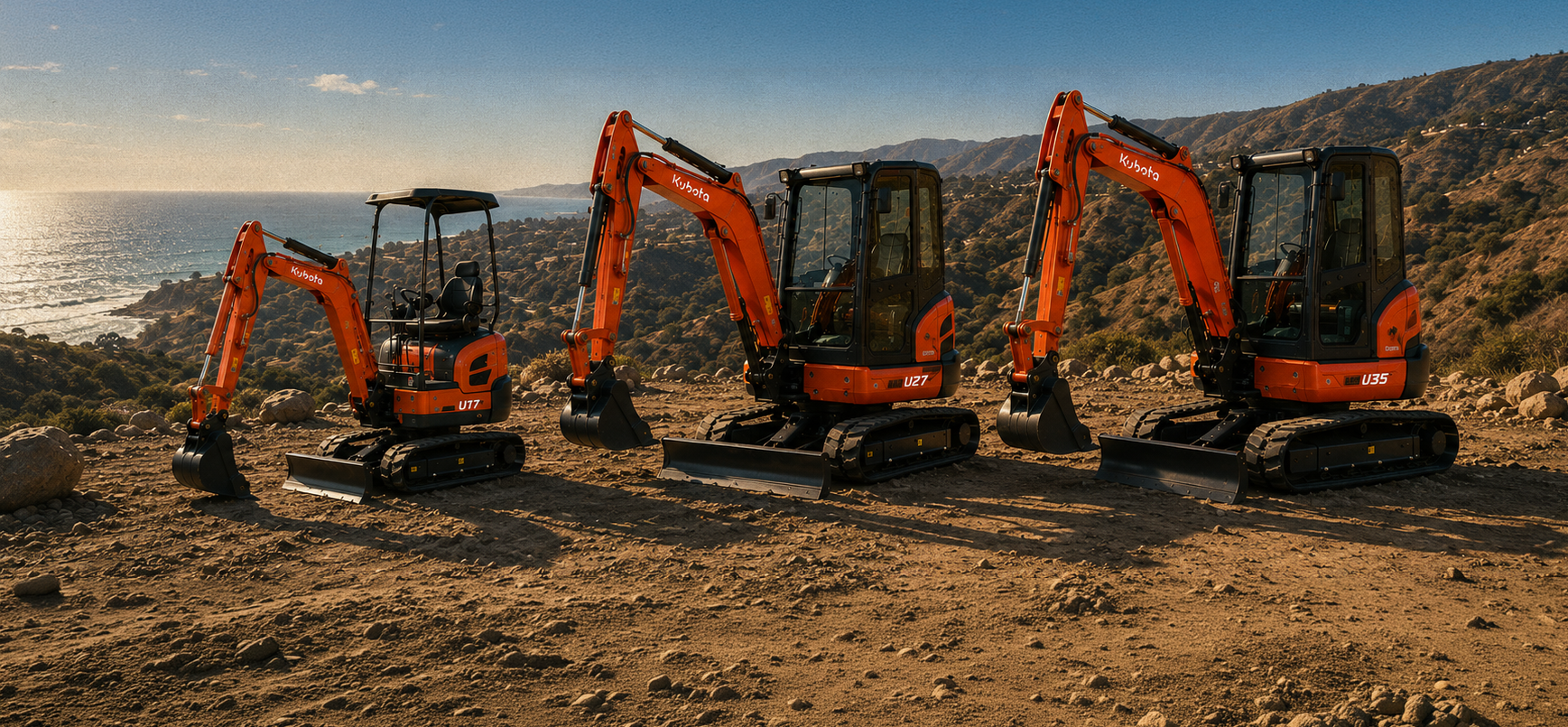
How to Demo a Mini Excavator
Before you demo a mini excavator, write down the deepest trench, the tightest gate and the heaviest thing you lift on a normal job. If you have not picked a size yet, start with our mini excavator sizing guide so you are not demoing the wrong class.
Dig depth and reach at your real job
Dig a real hole to the depth you actually need. Spec sheet max depth assumes a straight vertical wall nobody digs in practice. Then reach out and load a truck at your real dump height.
Tail swing and tight spaces
Thumb, blade and stability
Travel speed and auxiliary hydraulics
Travel up and down a slope in high and low range. Then hook up whatever runs on the auxiliary circuit: breaker, auger, compactor plate, tilt bucket. Make sure the couplers match and the attachment runs at its normal speed.
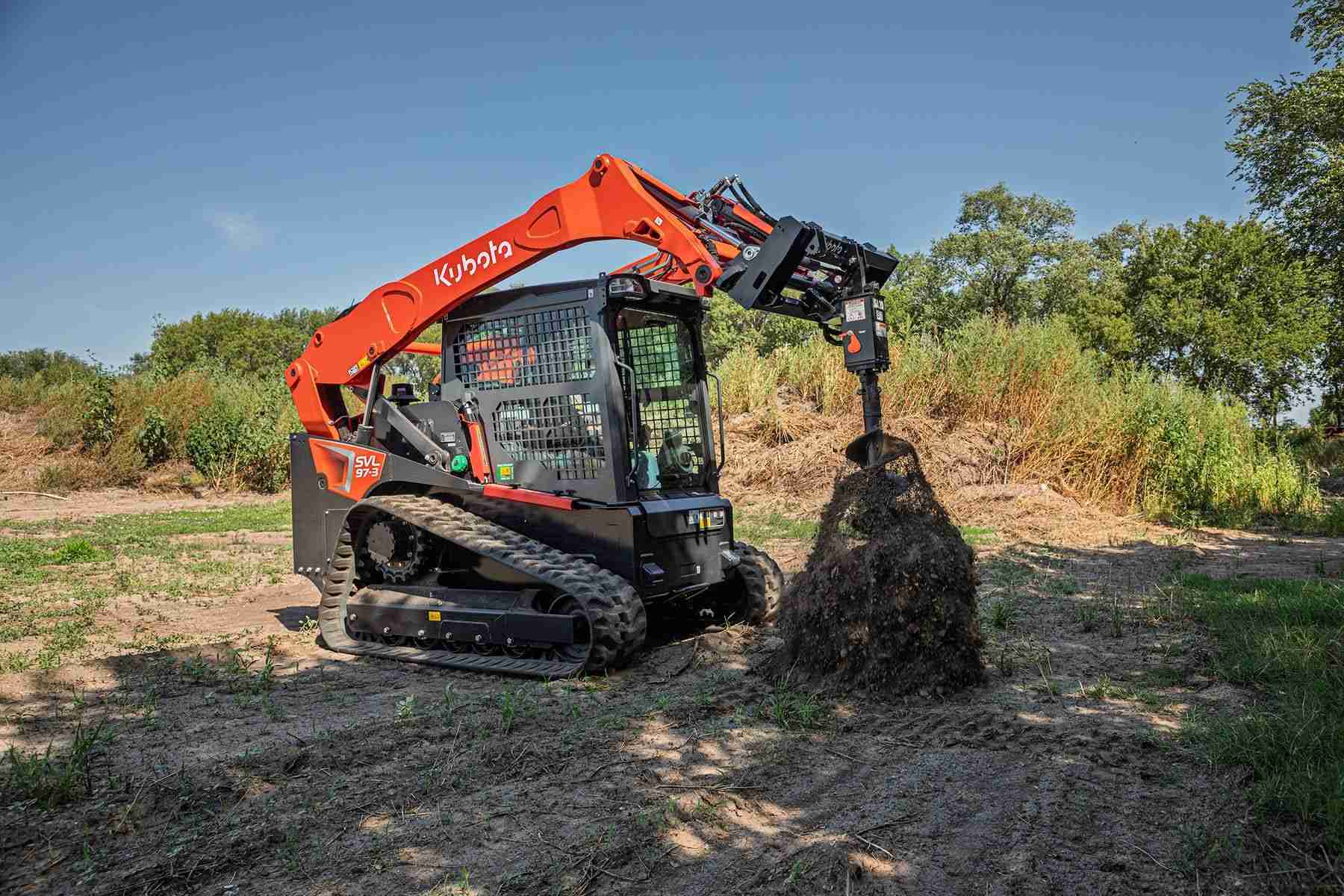
Skid Steer and Track Loader Demo
A skid steer demo on pavement is basically useless. Get on dirt. If you are still deciding between wheels and tracks, read track loaders vs skid steers first.
Lift to full height and look
Raise the arms all the way and look at the bucket, the side mirrors and the area around the machine. If you load tall dump trucks, dump into one.
Push into a pile
Grade with float and ride rough ground
Put the bucket in float and back-drag a pad. Good float lets the bucket follow the ground without you fighting it. Then drive across rough ground at speed, loaded and empty.
Quick attach, flow and capacity
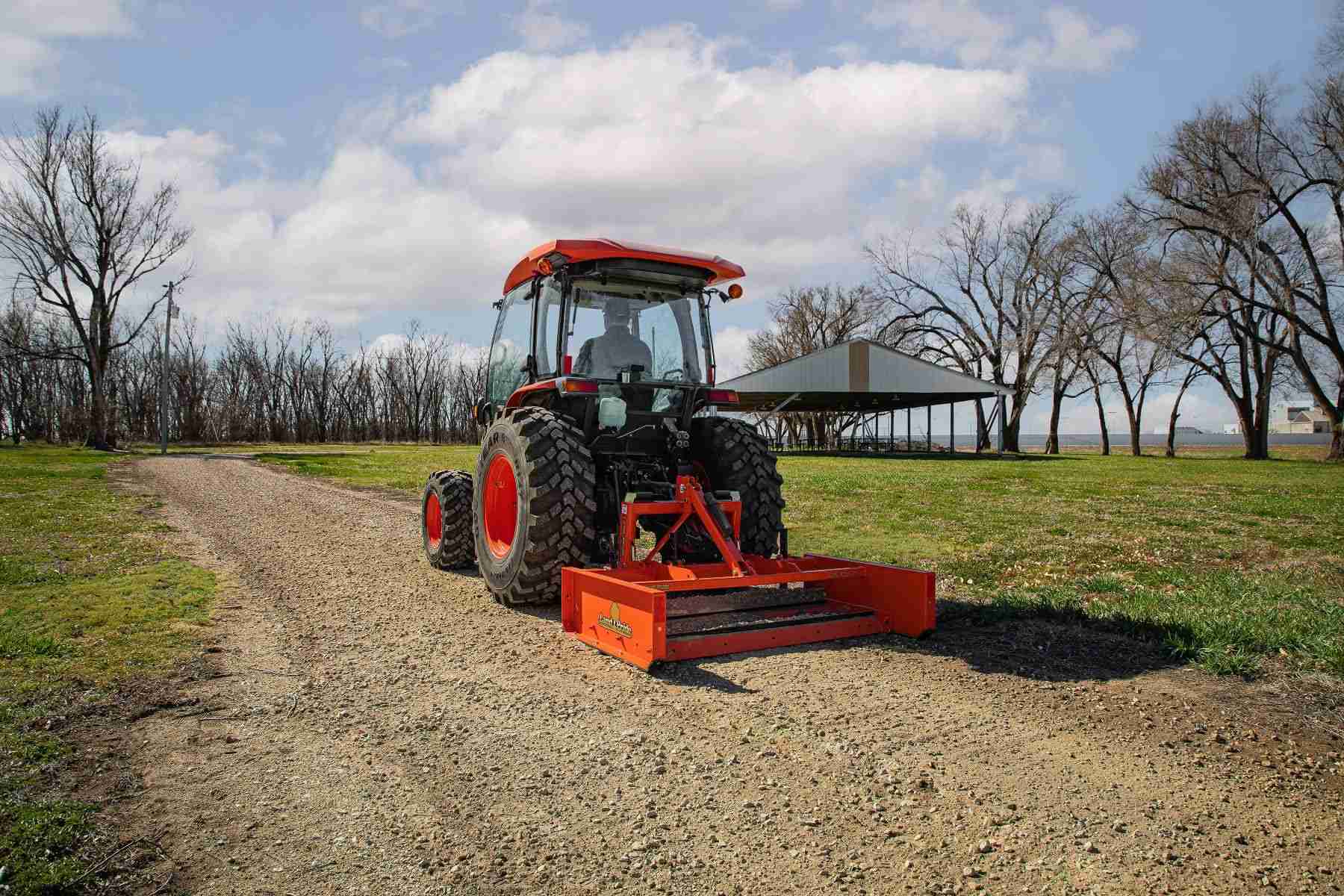
Compact Tractor Test Drive
Tractor buyers get the worst demos of all, usually a loop around the yard with nothing on the back. If you have not settled on a size, read what size tractor do I need before you test.
Loader
Fill the loader bucket with real material and lift it to full height. If the rear feels light with nothing on the hitch, that is a ballast question to settle before you sign.
Three point hitch and PTO
HST pedals vs gear
A hydrostatic transmission drives with pedals, a gear drive with a clutch and shift lever. HST is easier for loader work and back-and-forth jobs. Gear can make sense for long steady pulls. Either way, run the pedals for twenty minutes, not two.
Trailer Fit, and Renting as an Extended Demo
Weigh the whole package
The machine weight on the brochure is not what goes on the trailer. Add the bucket, the thumb or the attachment, fuel, and sometimes a cab. Check it against your trailer rating and your truck's tow rating. California has its own rules on this, and our mini excavator trailer and towing guide lays them out.
Rent it for a week
An hour in a yard is still an hour in a yard. If you are on the fence, rent the exact model for a week on a real job. You will learn more from five days in your own dirt than from any demo. Our rental rates guide explains how daily, weekly and monthly pricing compares, and the rentals catalog shows what is in the fleet. Ask whether any rental cost can go toward a purchase. Do not assume it can.
Consider buying the rental
Sometimes the machine you rented is for sale when it rotates out of the fleet. You already know how it runs. Read buying used rental equipment for the tradeoffs, and use our used equipment inspection checklist before you pay for any used machine, including ours.
If you are shopping auctions, you mostly do not get a real demo at all. That is a big part of the tradeoff in auction vs dealer. Sometimes the auction still wins on price.
A Scorecard for Comparing Two Machines
Memory is a bad judge. The last machine you ran usually wins. Score each line from 1 to 5 right after you get out of the seat.
| Test | Machine A | Machine B |
|---|---|---|
| Entry and exit | __ | __ |
| Visibility to bucket edge | __ | __ |
| Rear visibility | __ | __ |
| Seat and control comfort | __ | __ |
| Control pattern fits operator | __ | __ |
| Cab AC and noise | __ | __ |
| Power into a pile or digging | __ | __ |
| Stability with real load | __ | __ |
| Ride on rough ground | __ | __ |
| Runs your attachment properly | __ | __ |
| Fits your trailer and tow rating | __ | __ |
| Dealer support close to your jobs | __ | __ |
The last line matters more than people think. A machine that breaks down in Escondido and gets serviced from two counties away costs you days. Check where the nearest branch is on our locations page, and do the same for whoever else you are looking at.
If the scores come out close, buy the one your operator scored higher. They are the ones who have to sit in it.
The Short Version
Dirt, your attachment, your operator
Those three things turn a lap around the lot into a real demo. Ask for all three.
Sit in it for ten minutes
Visibility, seat, control pattern, AC and noise. You will live with them every day.
Test the limits, not the brochure
Dig to your real depth, push a real pile, lift your real load over the side.
Rent before you commit
A week on your own job beats any hour in a yard. Score both machines on paper.
Seven Things to Do on Every Demo
- Run it on dirt, on a slope if possible, never only on pavement.
- Hook up the attachment you will actually use and check that the couplers and flow match.
- Put your real operator in the seat and ask whether the control pattern is switchable.
- Check visibility to the bucket edge and to the rear.
- Lift your heaviest real load and compare it to the rated capacity with the attachment on.
- Load it on your trailer, or at least weigh the full package against your tow rating.
- Fill in the scorecard before you talk price.
Straight Answers
Can I test drive heavy equipment before buying?
Usually yes. Most dealers will set up a demo if you ask ahead. Ask to run it on dirt with the attachment you plan to use, and bring the person who will operate it. If a dealer refuses, treat that as information.
What should I test when I demo a mini excavator?
Dig to the depth your jobs need, swing a full circle near a wall to check tail swing, lift a load over the side, try the thumb and blade, travel up a slope and run every attachment that uses the auxiliary hydraulics.
How long should an equipment demo take?
Plan on at least an hour per machine, including ten minutes just in the seat. For a big purchase, renting the same model for a week on a real job is the best extended demo you can get.
What is the difference between ISO and H pattern controls?
On a skid steer or track loader, ISO uses the left joystick to drive and steer and the right joystick to run the arms and bucket. H pattern drives each side with its own stick like a tank, with the left stick also raising the arms and the right stick tilting the bucket. Some machines can switch, so ask before you buy.
Should I rent equipment before buying it?
If you are unsure about size, brand or features, yes. A week of rental on your own job shows problems a short demo will not. Ask whether any rental cost can apply to a purchase rather than assuming it does.
Do I need to bring my own trailer to a demo?
You do not have to, but it helps if you plan to haul the machine yourself. Loading it once shows whether the deck, ramps and tie downs work and whether the total weight fits your trailer and truck ratings.
Fine, This Was a Sales Pitch
A dealer wrote a long article telling you to come try machines at a dealer. We noticed too.
Call the branch closest to your job and tell us what you are deciding between and what attachment you run. We will set up a demo on dirt with it, or tell you honestly that a rental week is the better test.
Since 1952 the best sales tool we have found is letting people run the machine until they find what they do not like about it.