

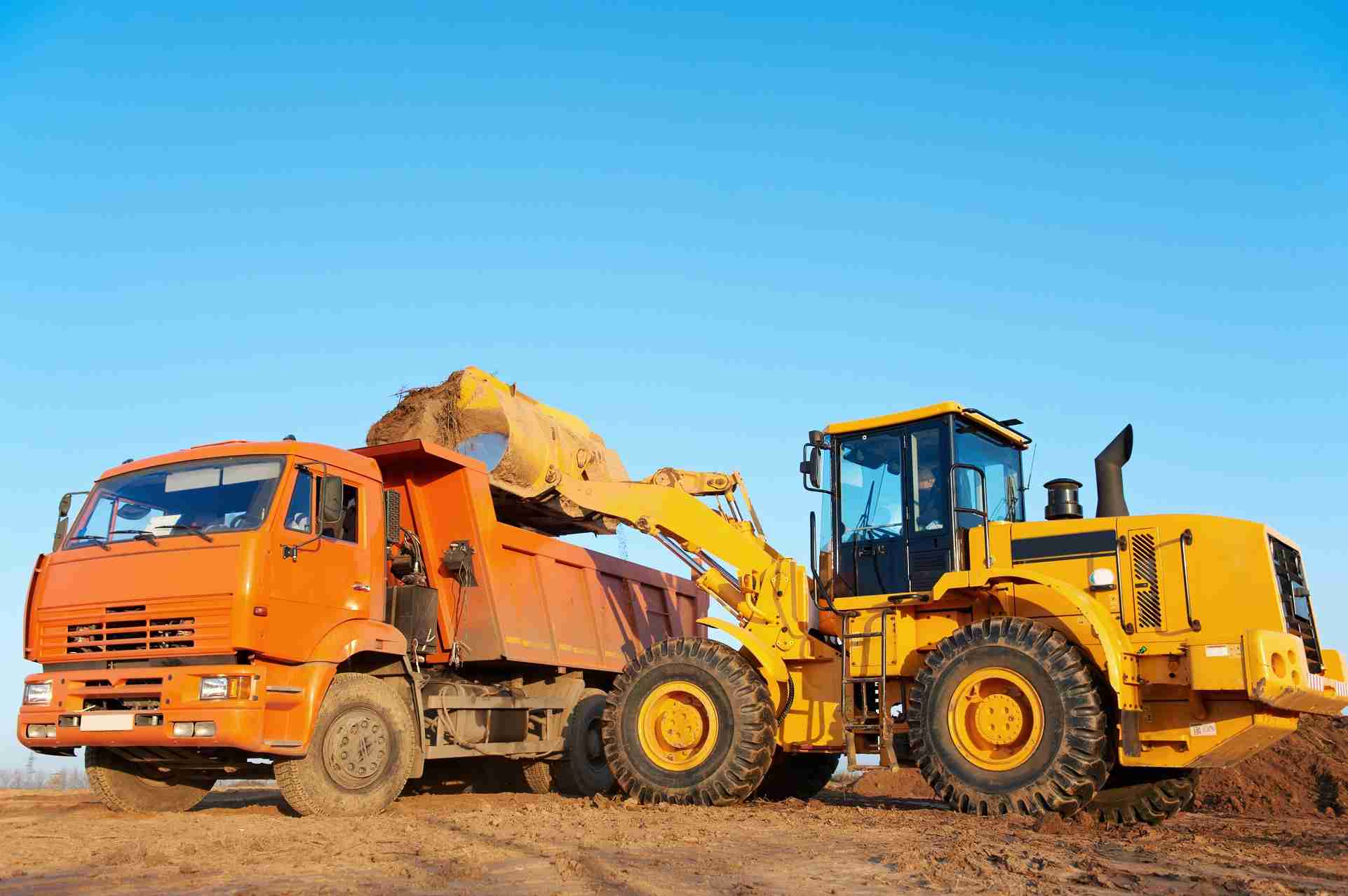
Dirt Doesn't Disappear: Planning Spoil Removal Before You Dig Swell, weight, truckloads and where the pile actually goes, worked out before the first bucket comes up
Disclosure. We rent the excavators, loaders and dump trucks this page talks about, so we profit when your dirt removal plan needs more of them. Sometimes it needs fewer. We will say so when it does.
Short answer: Dirt removal starts with math, not a machine. Measure the hole, add roughly 20 to 30 percent for swell, check the weight against your truck's payload, and decide where every load goes before you dig. Most jobs run out of truck, dump space or time long before they run out of excavator.
Everybody budgets for the digging. Almost nobody budgets for the pile.
Here is how it usually goes. The digging goes fine. By lunch there is a mountain of dirt where the patio furniture used to be, the side gate is buried, and nobody has called a truck. The excavator sits on the clock while everyone stares at the pile. This guide covers how much you will really have, what it weighs, where it goes and how to keep the digger busy.
Jump to what you came for
Dirt Gets Bigger When You Dig It
Soil in the ground is packed. Once a bucket breaks it loose, air gets between the clods and it takes up more room. That is swell. In the ground it is measured in bank cubic yards. In the truck it is loose cubic yards. They are not the same number.
The rule of thumb
For ordinary soil, plan on roughly 20 to 30 percent more volume once it is dug. A hole that measured 10 cubic yards in the ground fills something like 12 to 13 yards of truck bed. Rule of thumb, not lab result.
Southern California soils swell differently
Then there is the weight
Volume tells you what fits. Weight tells you what the truck may legally carry. A cubic yard of typical soil in the ground weighs somewhere around a ton and a quarter to a ton and a half. Wet clay and rock run heavier. A dump truck often hits its legal payload before the bed looks full, so check both numbers on every truck you plan to use.
How Many Truckloads Is That, Really?
Here is the math with round, hypothetical numbers. Swap in your own measurements.
A worked example: a backyard pad
Say you are cutting a pad 30 feet by 40 feet, 2 feet deep. That is 2,400 cubic feet. Divide by 27 and you get about 89 bank cubic yards. Add 25 percent swell and you are hauling roughly 111 loose yards.
Now the weight. At roughly 1.3 tons per bank yard, that is around 115 tons of dirt. If a big tandem dump truck carries, for the sake of the example, 12 loose yards or about 13 tons, whichever runs out first, you are looking at roughly 9 to 10 loads. Put the same dirt in a smaller truck that holds about 5 loose yards and it becomes 20-plus loads. Same hole. Twice the trips.
| Job | In the ground | In the truck | Small truck, about 5 yd | Tandem dump, about 12 yd |
|---|---|---|---|---|
| Utility trench, 100 ft long, 1 ft wide, 2 ft deep | About 7 yd | About 9 yd | 2 loads | 1 load |
| Patio base, 20 by 20 ft, 1 ft deep | About 15 yd | About 19 yd | 4 loads | 2 loads |
| Pool, 15 by 30 ft, 5 ft average depth | About 83 yd | About 104 yd | 21 loads | 9 loads |
| Building pad, 30 by 40 ft, 2 ft deep | About 89 yd | About 111 yd | 23 loads | 10 loads |
The table assumes the truck fills by volume. Wet clay or rock hits the weight limit first, which means more loads. Round up.
Small jobs are different
Under 10 yards or so, a trailer run or the back of the yard may be enough. Do not book a fleet for a wheelbarrow job.
Where Does the Dirt Actually Go?
This is where dirt removal budgets go sideways. Hauling is the visible cost. The destination bites.
Option one: keep it on site
The cheapest yard of dirt is the one you never haul. Some can go back as backfill or raise a low corner. Two catches. Clay often makes poor backfill under anything structural, and your inspector or engineer decides what goes under a slab, not you and not us. And fill that matters goes down in lifts and gets compacted. Our sibling guide on picking a plate compactor, rammer or roller covers that part.
Option two: give it away
Clean fill has value to somebody. Neighbors, landscapers and contractors sometimes take it free, especially DG and sandy loam. Clay full of roots is a harder sell, and you still have to load and deliver it.
Option three: a dump site or recycler
Landfills, transfer stations and soil recyclers all take dirt, and each one sets its own rules and fees. Call ahead and ask:
When the dirt is not just dirt
Stained soil, a fuel smell, buried drums, old oil tanks, ash or chunks of old roofing are a stop sign. That soil may need testing. Hire a specialist, not a dump truck. Stop, keep it separate, and call someone qualified.

Who Loads the Trucks
The digger is not always the best loader. It depends on how far the hole is from the truck.
Excavator loading straight into the truck
If the truck can back up next to the dig, the excavator swings and dumps. One machine, one operator, no double handling. Fastest setup there is, if the truck has room, a level spot and the machine can clear the side of the bed. Our mini excavator sizing guide covers dump height and reach.
Loader carrying spoil to the truck
In a typical tight SoCal backyard, the truck lives on the street and the hole lives behind the house. A skid steer or track loader shuttles dirt to the truck. Two machines, usually two people, but the excavator never stops digging. Our sibling guide on when an excavator and loader make a better team walks through that tradeoff in detail.
Skid steer or track loader
Either way, check the loader's dump height against the side of the truck. A loader that cannot clear the rail is a very expensive way to spill dirt on a truck fender.
Staging, Access and Haul Routes
Walk the site with the trucks in mind.
Where the pile sits
Keep spoil back from the edge of any trench or excavation. A pile at the lip loads the wall and rolls back in. A common rule is at least 2 feet back, and deeper trenches bring more rules. Check Cal/OSHA requirements for your job, and our sibling guide on planning a trench from dig to backfill covers the trench side.
Where the truck sits
A loaded dump truck can crack a driveway, crush a sprinkler line or sink into a soft shoulder. Measure the gate, look up for wires and branches, and look down for septic tanks, irrigation and pavers. Our equipment delivery checklist covers the same access questions.
The street and the dust
Hot, dry SoCal dirt makes dust and tracks onto the road. Cities and air districts can have dust and track-out rules, so check yours. A water truck or a hose on the haul path helps. Water trucks and dump trucks are among our most rented items for exactly this reason. On hillside lots, ask whether a loaded truck can stop and turn safely on that grade.
Permits and street use
Some cities want permits for grading, hauling or trucks parked in the street. Check with your city or county. We will not guess.

Timing Trucks So the Excavator Never Waits
An excavator waiting on a truck is a rental you are paying for to sit still.
The math is simple. Time how long it takes to load one truck. Time the round trip to the dump site and back, including the line at the gate. Divide the round trip by the load time. That is roughly how many trucks you need to keep the digger busy.
A worked example
Say loading takes 10 minutes and the round trip takes 50. Divide 50 by 10 and you get 5 trucks to keep the excavator digging nonstop. With one truck, the excavator digs for 10 minutes and waits for 40. Most small crews will not run five trucks. Fine. Just decide on purpose.
The stockpile option
If you cannot match trucks to the dig, stockpile. Dig everything into a pile on site, then haul it out over a day or two with one truck and a loader. The excavator goes back sooner. It costs space and a second handling, but on a big lot it is the cheap way.
How the rental clock fits in
PDQ's posted rental policies define a day rate as 24 hours in your possession with up to 8 hours of use, and a week rate as 7 consecutive days with up to 40 hours. Use over 8 hours a day on hour-metered items is billed as overtime. The signed rental contract is what governs. A slow truck cycle burns hours, and a week can beat three separate days. Our guide on daily, weekly and monthly rental math runs those numbers.
The trucks themselves
PDQ's posted rental policies also say proof of insurance is required for truck rentals, along with a valid California driver's license. Larger dump trucks may need a commercial license, so ask what the truck you want requires before you show up. Or hire a hauler with trucks and drivers. For a 100-yard pool dig, that is often smarter. For the pool side of things, see our sibling guide on pool excavation equipment and access.
The Short Version
Find the destination first
Before you rent anything, know where the dirt is going and what that place charges and accepts. It is the cost people forget.
Add swell, then check weight
Roughly 20 to 30 percent more volume once dug. Clay and rock can run higher, and heavy loads hit payload first.
Load direct if the truck can reach
Excavator straight into the truck is fastest. If the truck lives on the street, add a loader.
Match trucks to the dig or stockpile
Round trip divided by load time gives the truck count. If you cannot hit it, pile it and haul later.
Seven Questions to Answer Before You Dig
- How many bank yards am I digging, and how many loose yards is that with swell?
- How much of it can stay on site, and has my inspector or engineer approved it as fill?
- Where is the dump site or recycler, what do they accept, and do they charge by weight or load?
- Can a loaded truck reach the dig, or do I need a loader to carry spoil to the street?
- How long is the round trip, and how many trucks keep the excavator busy?
- Did I call 811 at least two working days before digging, and locate private lines myself?
- Do I have the right license and insurance for the truck, or should I hire a hauler?
Straight Answers
How do I get rid of a large pile of dirt?
Reuse what you can on site, offer clean fill to neighbors or contractors, and haul the rest to a landfill, transfer station or soil recycler. Call ahead to confirm what each site accepts and how it charges.
How much does dirt expand when you dig it?
As a rule of thumb, ordinary soil grows roughly 20 to 30 percent in volume once it is dug. Clay, caliche and rocky ground can swell more. Plan truck capacity on the loose volume, not the hole size.
How many cubic yards of dirt fit in a dump truck?
It depends on the truck. A large tandem dump might carry somewhere around 10 to 14 loose yards, while smaller trucks hold far less. Heavy wet clay or rock often reaches the legal payload before the bed is full, so check both volume and weight.
How much does a cubic yard of dirt weigh?
Typical soil in the ground runs roughly a ton and a quarter to a ton and a half per cubic yard. Wet clay and rocky soil weigh more, dry sandy soil a bit less. Use the heavier figure when you plan truck loads.
Is it cheaper to keep dirt on site than haul it off?
Usually yes, because you skip trucking and dump fees. But fill under slabs or structures must meet what your inspector or engineer requires, and it has to be placed in lifts and compacted, which adds equipment and time.
Can I dump dirt with concrete or roots in it?
Some sites accept mixed loads at a higher fee and some refuse them. Keep clean soil, concrete and green waste in separate piles when you can, and call the site first. Stained or smelly soil needs testing and a specialist.
Fine, You Caught Us Selling Trucks
A rental company just wrote 2,000-some words about why you need more trucks than you thought. We noticed too. The math still holds.
Send us the size of the hole, the soil, and how far the dump site is. We will tell you what to rent, how many trucks make sense, and when a hauler with their own fleet is the better deal. You can also check our posted rental policies before you call.
We have been renting dump trucks in Southern California since 1952. The dirt has never once hauled itself.