

Protecting Driveways and Finished Surfaces During Equipment Work Ground protection mats, plywood, track choice and the turning habits that decide whether the driveway survives the job
Disclosure. We rent and sell the machines that crack driveways. We would rather you protect the concrete before the job than call us afterward asking whether the damage waiver covers your neighbor's pavers. (It is about our equipment, not their pavers.)
Short answer: Protect driveways and finished surfaces from heavy equipment by laying ground protection mats (or doubled plywood for light, short jobs) along the travel path, choosing rubber tracks or turf tires over steel tracks, and turning gently instead of spinning in place. Keep machines off curb edges, septic systems and sprinkler lines, and photograph every existing crack before the first machine shows up.
Concrete does not care how careful you meant to be. It cares about weight, edges and turning.
Most surface damage on a residential job is not dramatic. It is a corner snapped off a driveway slab, a black arc on stamped concrete, a crushed sprinkler lateral nobody knew was there, or a lawn rutted to the subsoil. All of it is preventable, and almost all of it is cheaper to prevent than to fix.
Jump to what you came for
What Actually Gets Damaged, and Why
A residential driveway was built for cars, not concentrated, twisting loads.
Slab edges and corners
The middle of a slab is supported on all sides. The edges and corners are not. Residential driveways are often thin, and a heavy machine rolling onto an unsupported edge, or a dump truck backing over the apron, is how corners break off. Expansive clay under the slab, common across LA County and the Inland Empire, makes it worse because the support underneath may already be uneven.
Surface scuffs and scrapes
Skid steers turn by dragging their tires sideways. Track machines do the same with their tracks. On concrete that leaves black marks and fine scrapes. On sealed or colored concrete it can strip the finish.
Soft asphalt in summer
Asphalt softens in the heat. On a hot afternoon in Riverside County, an excavator turning in place or a backhoe putting its stabilizers down can leave dents and ruts that do not come back out.
Lawns, irrigation and anything buried
Grass ruts quickly when the ground is wet and compacts badly when it is dry. Sprinkler laterals sit shallow. A single pass with a loaded machine can crush a line you will not find until the next watering cycle floods a corner of the yard.
Ground Protection Mats vs Plywood vs Nothing
The right answer depends on the machine, the surface and how many trips you will make.
Ground protection mats are heavy duty plastic panels, usually high density polyethylene or a similar composite, with a traction pattern on the surface. They spread the load over a wider area, give tires and tracks something to grip and keep the machine from touching the finished surface directly. Many are made in panels around 4 by 8 feet and can be linked together into a roadway.
Plywood is the cheap substitute everyone reaches for. It works for some jobs. It also cracks, slides on wet concrete, delaminates once it gets wet and turns into a hazard when a track catches the edge.
| Factor | Composite mats | Plywood (doubled, staggered) | Nothing |
|---|---|---|---|
| Load spreading | Good | Fair, breaks under concentrated loads | None |
| Turning a skid steer on it | Tolerates it | Shreds and slides | Scuffs the surface |
| Wet conditions | Unaffected | Slippery, swells | Ruts on lawns |
| Reuse across jobs | Many jobs | One or two | Not applicable |
| Upfront cost | Highest | Low | Free, until it isn't |
| Handling | Heavy, often two people | One person | Nothing to handle |
When plywood is enough
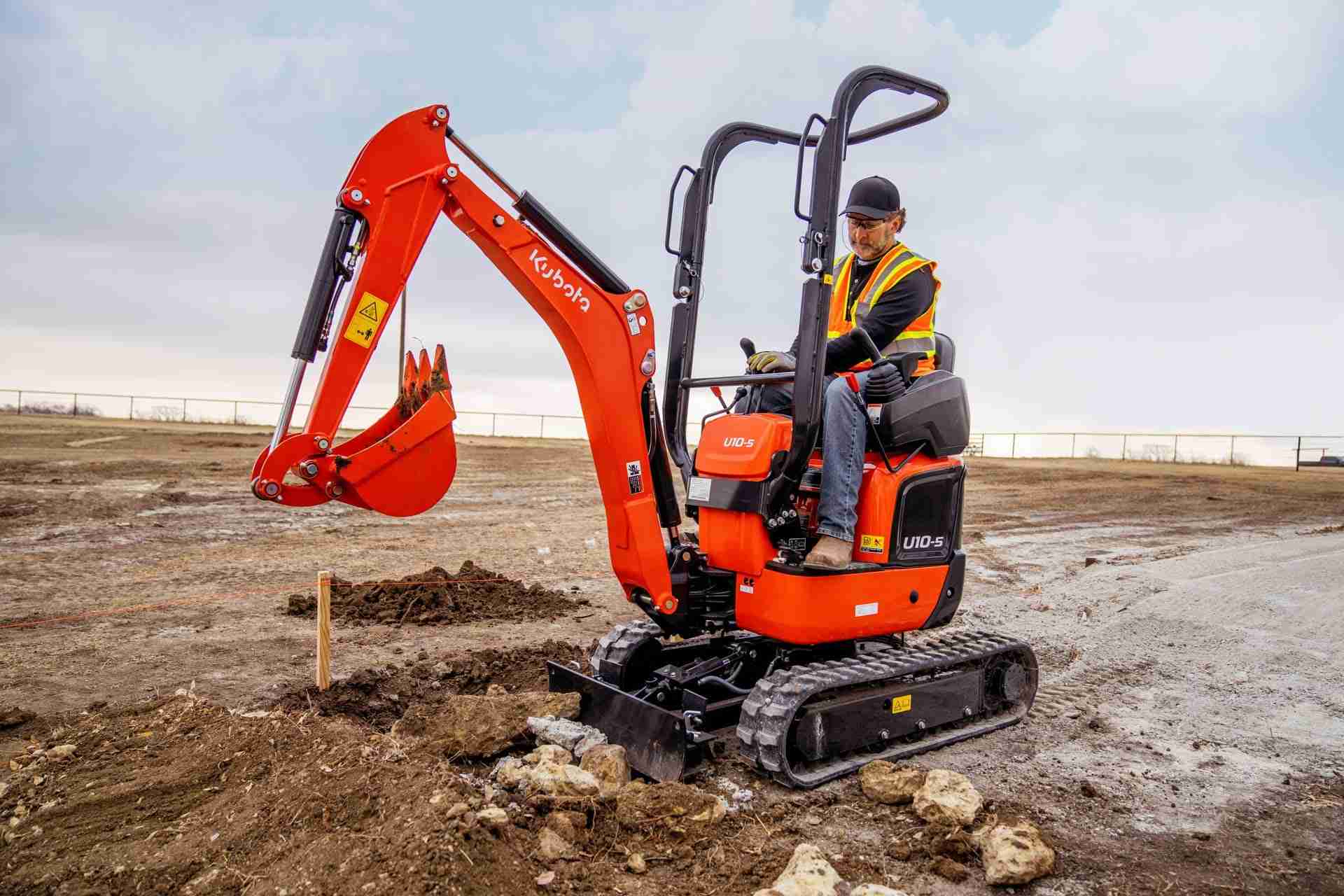
A walk-behind trencher or a small plate compactor crossing a lawn once or twice. A wheelbarrow route. A micro excavator walking straight across a driveway without turning. Lay two layers with the seams staggered and do not steer on it.
When you need real mats
Anything that will turn on the surface, make repeated loaded trips, or cross soft ground. Track loaders hauling spoil from a backyard dig to the street, mini excavators working near the edge of a driveway, any job where rain is possible.
Where to get them
Our rental categories do not list ground protection mats, so we are not going to tell you we have them. Ask when you call. Specialty rental houses and some landscape suppliers rent them, and contractors who do a lot of backyard work tend to own a set.
Tracks, Tires and How You Turn
Rubber tracks vs steel tracks
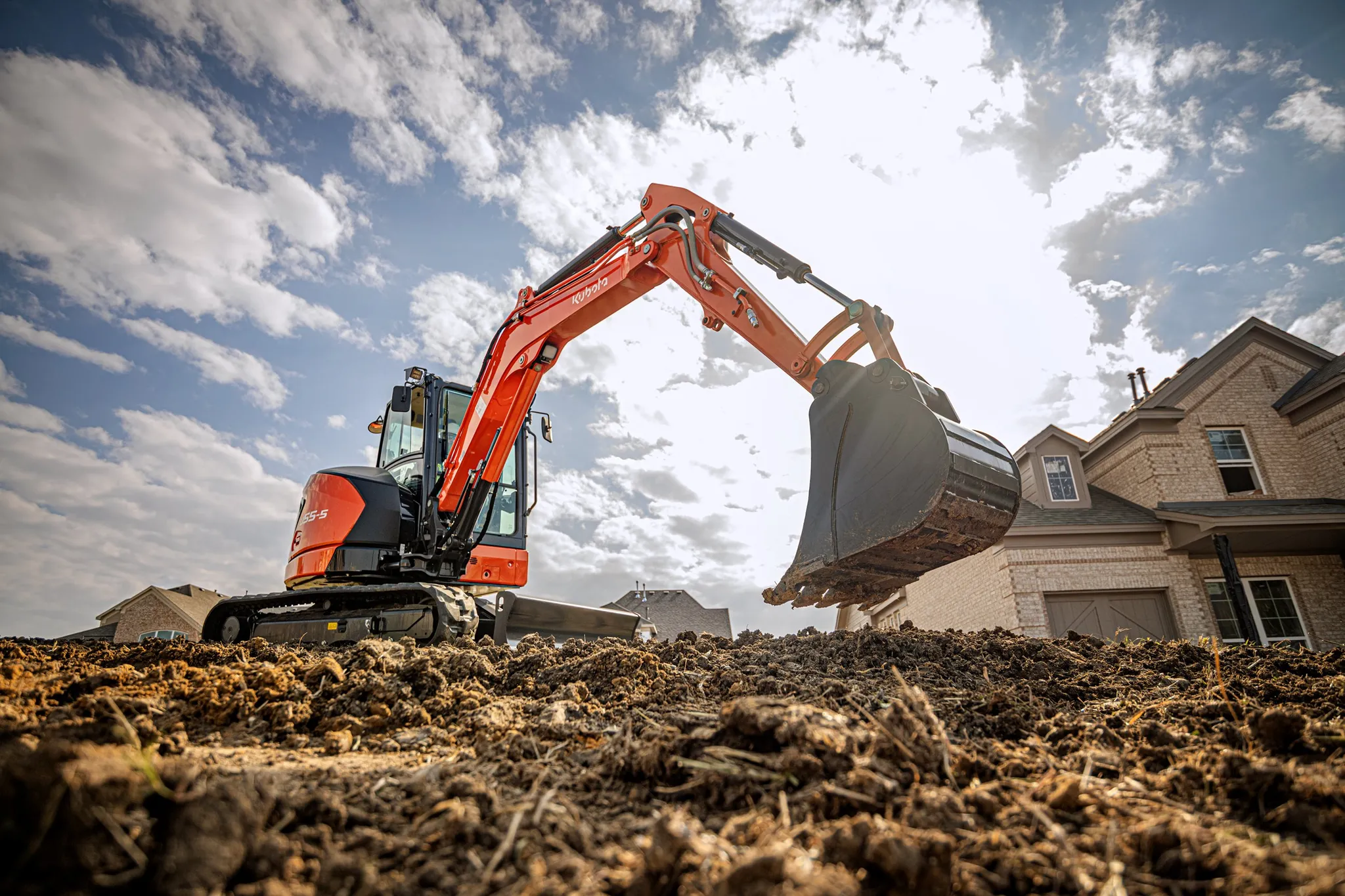
Steel tracks belong on dirt and rock. On pavement they gouge and chip. Most compact excavators and track loaders in residential work run rubber tracks, and that is what you want near finished surfaces. Rubber still marks concrete when it twists, but it does not chew it up.
Tires and pressure
Wheeled machines put their weight on four small contact patches. Lower ground pressure means less rutting on lawns. Turf tires and correct inflation per the manufacturer help on grass. Do not guess. Check the tire sidewall and the operator's manual.
Skid steer vs track loader
A skid steer turns by skidding. That is in the name. On concrete it leaves marks, and on lawns it tears turf with every turn. A compact track loader spreads its weight over a longer footprint and usually does less lawn damage, though it still scuffs when it pivots. Our track loader vs skid steer comparison covers the rest of that decision.
Pavers, Stamped Concrete and Decomposed Granite
Pavers
Pavers handle weight reasonably well when the base under them is good. They do not handle twisting. A machine turning on pavers can shift them, open the joints and push the edge restraint out. Mat the whole route and do not turn on them at all if you can avoid it.
Stamped and colored concrete
The structure is the same as plain concrete. The finish is not. Sealers scuff, color can scrape, and matching a repair is close to impossible. If a path crosses stamped concrete, mat it every time, even for a quick trip.
Decomposed granite and gravel
DG ruts and loosens under wheels, especially when wet. The good news is that it can usually be regraded and compacted afterward. Our guide to grading a decomposed granite driveway covers the fix if a machine chews one up.
Working near a pool deck or patio that is staying put while other things change? The same rules apply. Our pool excavation equipment guide covers getting a machine through a side yard without wrecking everything along the way.
Document Every Crack Before You Start
Old driveways have cracks. The question later is who made them.
Whether you are the homeowner, the contractor or the person who rented the machine, you want a record of the site before work starts.
What to photograph
Who pays when something breaks
On a rental, PDQ's posted rental policies say responsibility for the equipment stays with you from delivery to return, and missing or damaged rental items are charged for replacement. The damage waiver, a 15 percent fee on the rental rate unless an approved certificate of insurance is on file, is about the rented equipment. It is not property damage coverage for a driveway. The signed rental contract governs, and it lists exceptions. Our damage waiver vs insurance guide explains the difference. For your neighbor's driveway, talk to your own insurance.
A Sample Protection Plan for a Backyard Dig
Say you are digging out a backyard in a typical LA County tract home. Mini excavator, compact track loader, a dump truck at the curb. Here is a reasonable plan.
Before delivery
Walk the route from the street to the work area. Photograph it. Flag sprinkler heads, valve boxes and any known lines. Decide where the delivery truck parks and where the machines unload. Our delivery checklist covers access, slope and overhead clearance. PDQ's posted rental policies say delivery and pickup are available, with rates that vary by equipment and location. Ask about anything specific and read the rental policies page.
Day one
Lay mats from the curb to the backyard, overlapping at turns. Ramp the curb. Put a mat where the excavator will sit if it is near hardscape. Fence off the septic area and the pool equipment if they apply.
During the job
Keep the loader on the mat path. Turn wide. Keep buckets low and clean, because dirt on the mats becomes grit that scratches the surface underneath. Sweep the driveway at the end of each day. Where the dirt goes matters too. Our guide to planning spoil removal before you dig covers staging trucks so they do not sit on the driveway apron all day.
After
Pull the mats, sweep, and photograph the same route again. Compare against the before shots while everyone is still on site. If you are breaking out old concrete as part of the job, our concrete demolition equipment list has its own set of protection steps.
The Short Version
Mat the route, not just the spot
Lay ground protection mats from the street to the work area. Plywood only for light, straight, short trips.
Rubber tracks, wide turns
Keep steel tracks off pavement. Do not spin a skid steer or track loader on finished surfaces.
Find what is buried
Sprinklers, septic and pool lines are not marked by 811. Locate and flag them before machines arrive.
Photograph first
Shoot every existing crack with a reference and share the photos before work starts.
Questions to Ask Before the Machine Shows Up
- What does the loaded machine weigh, and does it run rubber or steel tracks?
- Where will the delivery truck park and unload, and does it cross the driveway apron?
- Who is supplying ground protection mats, and how many do we need to cover the route?
- Where are the sprinkler lines, septic system and pool or spa plumbing?
- Is any of the concrete stamped, colored or recently poured?
- Who pays if a surface gets damaged, and does anyone's insurance actually cover it?
Straight Answers
How do I protect my driveway from heavy equipment?
Lay ground protection mats along the full travel path, keep machines off slab edges and corners, use rubber tracks instead of steel, and make wide turns instead of spinning in place. Photograph existing cracks before work starts.
Can I use plywood instead of ground protection mats?
For light machines making a few straight passes, two staggered layers of plywood can work. Plywood breaks under concentrated loads, slides when wet and shreds when a machine turns on it, so use real mats for heavier or longer jobs.
Will a mini excavator crack my driveway?
It can, especially at slab edges and corners or on thin or poorly supported concrete. Rubber tracks, mats, a smaller machine and gentle turns reduce the risk a lot, but no method makes it zero.
Do rubber tracks damage concrete?
Rubber tracks rarely break concrete, but they do leave scuffs and black marks when the machine pivots or counter-rotates. Wide turns and mats under turning areas prevent most of it.
Where can I rent ground protection mats?
Specialty rental companies, some landscape and contractor suppliers, and some general equipment rental stores carry them. Call ahead to confirm availability and how many panels you need to cover your route.
Does the rental damage waiver cover damage to my driveway?
Generally no. A rental damage waiver relates to the rented equipment, not to your property or a neighbor's. Read your rental contract and check with your own insurance for property damage.
We Would Still Like to Rent You the Machine
Yes, a company that rents heavy equipment just wrote a page about how heavy equipment wrecks driveways. We noticed too. It is an ad, just one that admits the product is heavy.
Tell us what you are moving, where it has to travel and what it crosses on the way. We will tell you which machine is the lightest one that does the work, and when the honest answer is a walk-behind and a wheelbarrow. You can also browse what we rent on the PDQ Rentals site.
Concrete is patient. It waits until the last day of the job to tell you that you skipped the mats.