

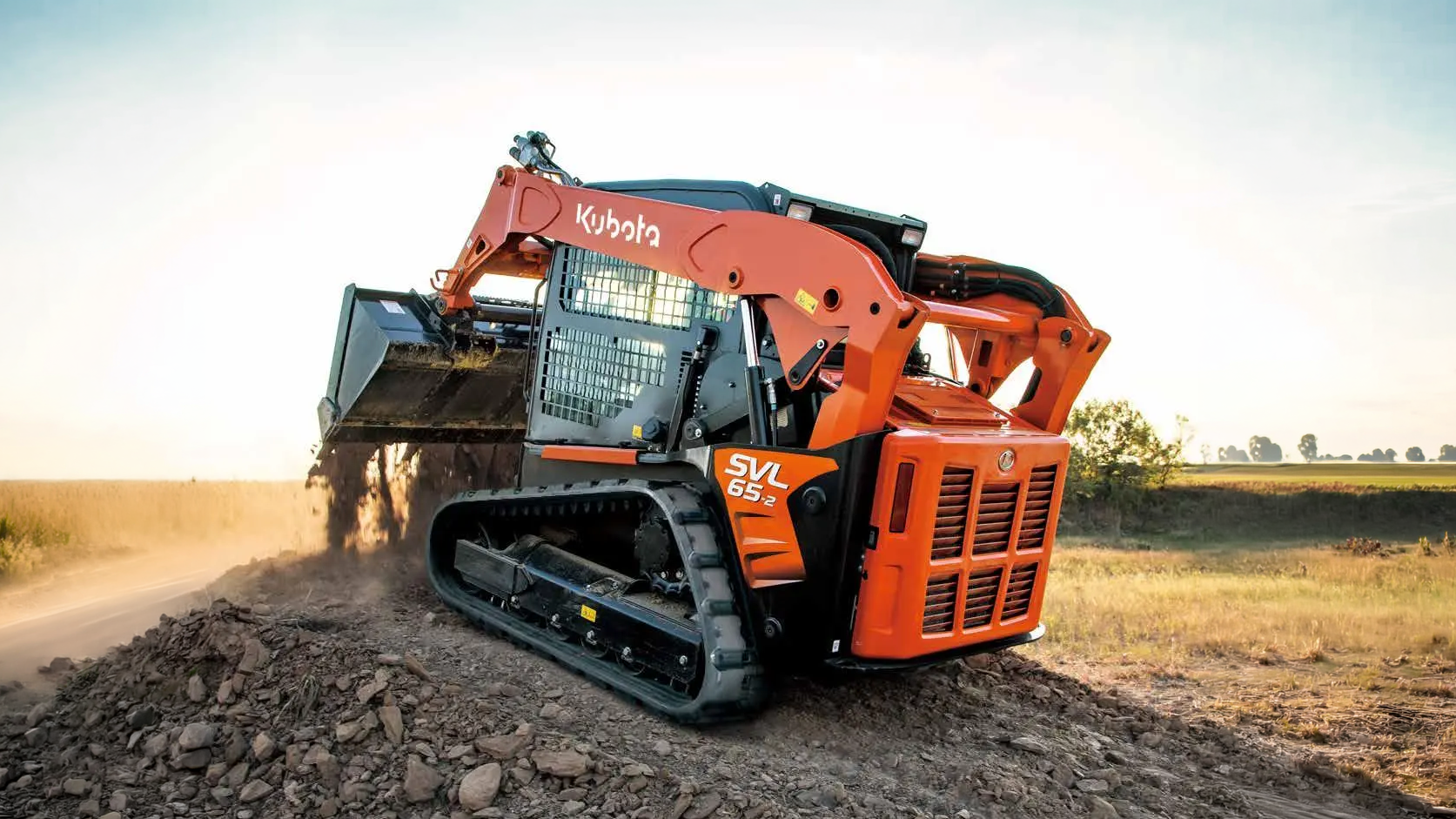
The Compact Track Loader Took Over How a specialty machine became the default on almost every job site, and whether it should be yours
Disclosure before anything else. We sell compact track loaders. We also rent them, which means we pay to fix them.
Keep that in mind for the next ten minutes, because we are about to tell you why this machine won, and a dealer telling you why the thing he sells is popular is not exactly a shock ending.
So we will do the other half too. There is a section below on what tracks cost you, and a section on when the machine you actually want is the cheaper wheeled one we make less money on.
Here is the short history. Twenty years ago a compact track loader was a specialty rig. You bought one if you worked in mud. Everyone else bought a wheeled skid steer, because it cost less and nobody wanted to think about undercarriage. Now walk any residential site between Sun Valley and Escondido and count what is parked there. The rubber track machine is not the exception any more. It is the machine, and the wheeled one is the specialty purchase.
You are about to spend somewhere between fifty and ninety thousand dollars on the most common machine in the trade. Popular is not the same as correct.
Jump to what you came for
Just How Popular Did It Get?
Popular enough that the compact track loader is now described as the most popular construction equipment category in the country. Here is the actual data, and then the reason you should not let any of it decide your purchase.
| Measure | Figure | What it actually tells you |
|---|---|---|
| New CTLs financed | 56,157 | Up 1.2% on the year before. Steady growth on an already enormous base, not a bubble. |
| Kubota share of new financed units | 27.1%, or 15,197 machines | More than a quarter of everything financed. We are a Kubota dealer, so treat that line with the suspicion it deserves. |
| Best selling model | Kubota SVL75-3, 6,814 units | One mid frame machine accounted for more than one in nine CTLs financed in the country. |
| Next two | Cat 255, then Kubota SVL97-3 | The mid frame class is where the volume sits, across every brand. |
| Fastest growing brand | Caterpillar, up 18.8% | Cat's 255 and 265 are taking real share. Anyone telling you this is a one horse category is selling you something. |
Source: Equipment World Market Pulse, built on EDA equipment finance data. These are financed units, so cash purchases and large fleet deals are not in the count.
The most financed machine in America is still the wrong machine if it spends your week on asphalt.
The rest of this page is about which one is right for you, starting with why the category grew in the first place. If you want the mid frame volume seller in detail, that is our SVL75-3 review, complaints included.

Why the Compact Track Loader Won
Nobody talked contractors into this. Four things changed on the job, and the machine matched them better than the alternative did.
Put those together and the tracked machine stopped being the wet weather option. It became the machine you buy first, and the wheeled one became the second machine you add later for a specific reason.
What Tracks Actually Cost You
Everything above is true. So is all of this, and this is the part that decides whether you were right.
None of that is a reason to skip the machine. It is a reason to buy the right one, and sometimes the right one has wheels.
Do You Want a CTL At All?

Compact track loader
Soft ground, slopes, grading, and a different attachment every week. Buy this if the job site is dirt more often than it is pavement, and if you want one machine to carry the most tools.

Wheeled skid steer
Cheaper to buy, cheaper to own, faster across a yard, and it does not care about asphalt. If you work hardscape, run a rental yard, or spend the day moving pallets, this is the honest answer and we will sell you one.

Mini excavator
Different tool entirely. If most of your day is digging down rather than moving across, a loader is the wrong shape. A lot of people buy a track loader and then rent an excavator every month, which is the tell.
We wrote the full head to head in track loaders vs skid steers, including the cost per hour math. If you have already narrowed it to brand, Bobcat vs Kubota leads with the four things Bobcat does better.
Which Size Compact Track Loader You Actually Need
Buyers get this backwards. They pick a model, then work out whether they can haul it. Do it the other way around. Start with the gate you have to fit through and the trailer in your yard, then take the largest machine that clears both.
| Class | Roughly | Who it is for |
|---|---|---|
| Small frame | Under about 2,000 lb rated capacity | Landscaping, backyard access, residential lots with a side gate. Fits where the bigger machine has to stop at the driveway. |
| Mid frame | 2,000 to 2,700 lb | The volume class and the right default for most buyers. General contracting, site work, one machine that covers the week. |
| Large frame | 2,700 to 3,500 lb | Production work, heavy attachments, mulching heads, high flow hydraulics. Real capability, real trailer requirements. |
| Vertical lift path | Most mid and large frames | Loading trucks and stacking pallets. Reach is best at full height. |
| Radial lift path | More common small frame | Digging, grading and backdragging. Reach is best at mid height, which is where a loader spends its day. |
If you are torn between two classes, the smaller one is usually the better buy, because the haul is what people regret rather than the horsepower.
Once you have the class, the model conversation is short. Our SVL75-3 review walks through the mid frame in detail, including the complaints owners actually have.
The Short Version
Buy the compact track loader, mid frame. This is the machine the whole category was built around and you will use all of it.
Buy the wheeled skid steer. You will save money twice, once at purchase and again every year you are not buying tracks.
Small frame, and measure the gate before you shop. The machine that cannot get to the back yard is worth nothing on that job.
You want a mini excavator, not a loader. Start with what size mini excavator you need.
Rent. The undercarriage on a machine that sits is still aging, and you are financing an asset that works ten weeks a year.
Come put an hour on both. A wheeled machine and a tracked one, back to back on the same dirt, settles this faster than another week of forum threads.
Talk to someone who runs these
What Track Loaders Have Cost Us
This is the part a review site cannot write. We rent these machines, so a different operator abuses one every week and the bill comes to us. Here is where the money actually goes, across every brand in the yard.
None of this makes a track loader a bad purchase. It is the stuff you learn in year two, and we learned it on our own money. If the number that worries you is the one on the loan, how Kubota financing actually works covers the 0% offers and the Section 179 math.
The Spec Sheet Is the Least Important Thing on This Page
Here is the uncomfortable part, and it undercuts most of what you just read.
Kubota, Bobcat, Cat, Takeuchi, Deere and New Holland all build a good compact track loader. Not one of them is going to fail you over a horsepower rating or a breakout figure. We know, because several brands are sitting in our yard right now. The iron is not your risk.
Your risk is the week it is down. Two contractors can buy the identical machine on the same morning and have completely different five years with it, and the variable is not the machine.
It is who services it and how fast they get to you. That is a local question and it has nothing to do with the badge.
So stop reading spec tables and start asking the four questions that actually predict your next five years:
- Where is the nearest shop that works on this machine, and how far is that from your yard?
- Do they stock tracks, filters and wear items, or does everything get ordered?
- What is the real turnaround on a warranty repair this month, not in general?
- When you call, do you get a person who knows equipment or do you get a queue?
We are at three branches in Southern California. Sun Valley in Los Angeles, Temecula, and Escondido in San Diego. Same family since 1952. Ask us those four questions, then call whoever else you are considering and ask them the same four. We are comfortable being judged on that.
Straight Answers
What is a compact track loader?
A compact loader that runs on rubber tracks instead of wheels. It uses the same skid steer style controls and the same universal attachment coupler, so it takes the same buckets, forks, augers and grapples. The tracks spread its weight over a much larger area, which is why it works on soft ground where a wheeled machine sinks or spins.
Is a compact track loader better than a skid steer?
Better on dirt, worse on pavement. Tracks give you flotation, traction and grading control, and they cost you a premium at purchase plus an undercarriage bill for the life of the machine. If most of your work is on soft or sloped ground, the track loader wins easily. If you spend the week on asphalt and concrete, the wheeled machine is the cheaper and smarter buy.
How long do compact track loader tracks last?
It depends almost entirely on how the machine is run and where. Rubber tracks are a consumable, not a warranty item. Hard counterrotation, asphalt, rock and dirt packed into the undercarriage shorten their life dramatically. Three point turns, clean frames and correct track tension extend it just as dramatically. Two identical machines can be thousands of dollars apart over five years on operator habits alone.
What size compact track loader do I need?
Start with access and hauling, not with horsepower. Measure the tightest gate or side yard you have to fit through, then check what your truck and trailer can legally carry with an attachment on board. Take the largest machine that clears both. Small frame under about 2,000 lb rated capacity suits residential and landscaping, mid frame between 2,000 and 2,700 lb is the right default for general contracting, and large frame is for production work and heavy attachments.
Should I buy a compact track loader or rent one?
Rent if you need one for a handful of jobs a year. A machine that sits still ages, still carries insurance and still costs you loan payments. Buy once the machine is on a job most weeks, or once your rental invoices for the year start approaching a payment schedule. Renting first is also the cheapest way to find out whether you wanted tracks or wheels.
Do compact track loaders work on pavement?
They work, but it is the most expensive place to run one. Asphalt, concrete and rock grind rubber, and Southern California heat makes it worse. If your week is mostly hardscape, a paved yard or pallet work, a wheeled skid steer will do the same job for less money and you will not be buying tracks on a schedule.
What is the best selling compact track loader?
The Kubota SVL75-3, by a clear margin. It moved 6,814 new financed units in the United States between May 2025 and April 2026, ahead of the Cat 255 and the Kubota SVL97-3. Kubota took 27.1 percent of all new financed compact track loaders in that period, or 15,197 machines out of 56,157 total. Those figures come from EDA equipment finance data and count financed units only, so cash and large fleet purchases are not included.
We Are Not Going to Close You
You just read a track loader dealer explain why track loaders are popular. You saw that coming from the first paragraph, and you read it anyway, so we will skip the pitch.
Here is the offer instead. Come to any of our three branches and run a tracked machine and a wheeled one back to back on the same ground. Load a bucket with each. Grade with each. Then tell us which one you want and we will quote that one, even when it is the cheaper machine.
If the answer turns out to be an excavator, we will say so. If the answer is that you should rent for a season before you sign anything, we will say that too, because a customer who bought the wrong machine does not come back in five years.
We have been here since 1952 by being the yard people call back, not the yard that won an argument once.