

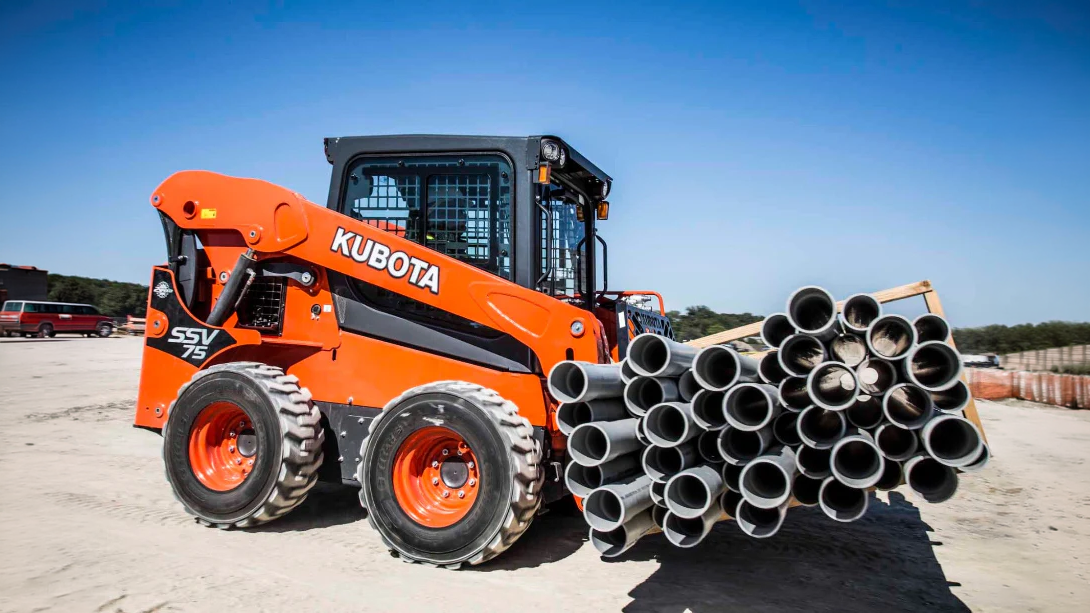
The Wheeled Machine Nobody Cross Shops Why the SSV75 keeps getting skipped, what an undercarriage actually costs, and the one question that settles wheels against tracks
Disclosure. We sell both the SSV75 and the SVL track loaders, and we make more money on the track loaders. Keep that in mind while we spend the next few thousand words arguing that a lot of you should buy the wheeled one.
Here is the situation as we see it from the sales floor. Roughly nine out of ten people who come in looking for a compact loader ask about a track loader by name. They have seen them on jobsites, the tracks look capable, and the machine photographs well. Then we ask what surface they work on, and about a third of them describe concrete, asphalt, gravel yards and hardpan.
Tracks are the right answer for soft ground. Southern California is not, mostly, soft ground.
The SSV75 is the machine that keeps getting skipped in that conversation, and the reason is almost never that somebody weighed it up and rejected it. It is that they never considered it at all.
Jump to what you came for
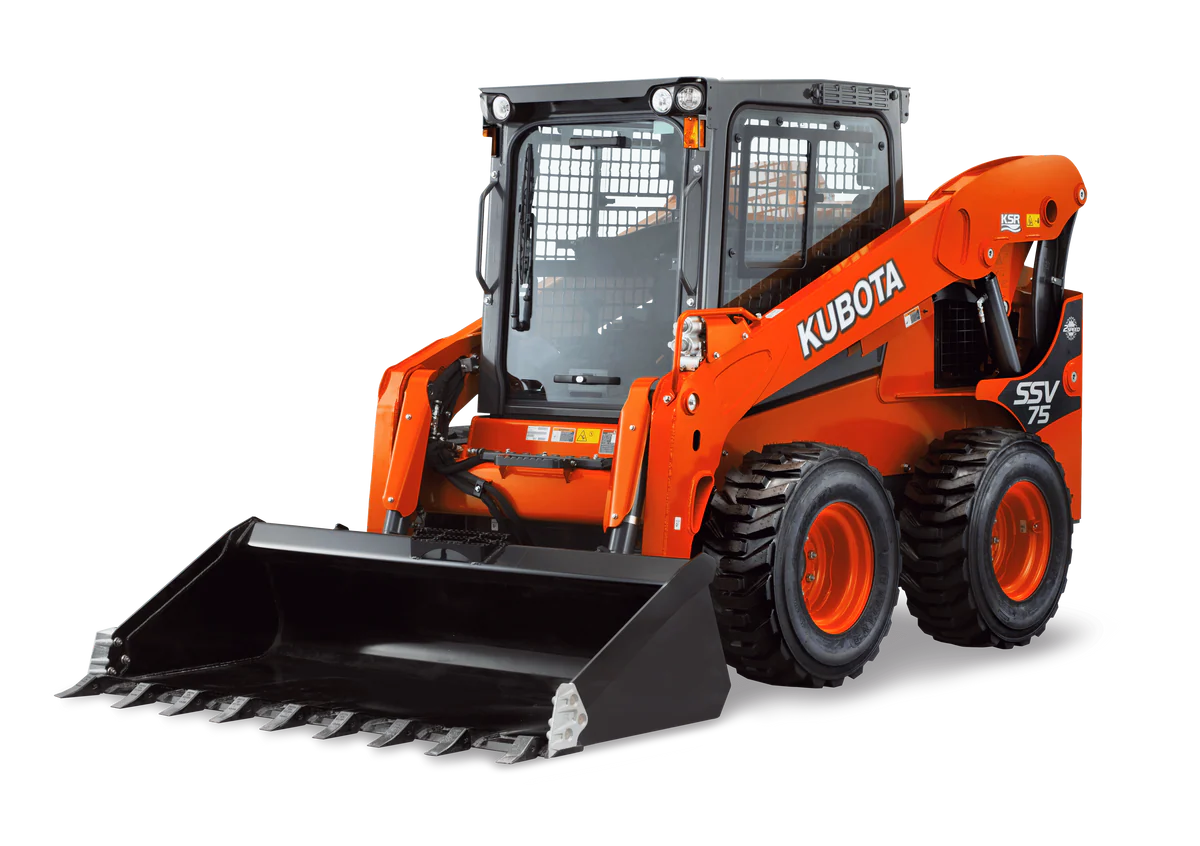
A Seventy Four Horsepower Skid Steer That Nobody Cross Shops
The SSV75 is Kubota's vertical lift wheeled skid steer in the seventy four horsepower class. Vertical lift matters, because it means the bucket or forks rise in a straight line rather than arcing out and back, which is what you want for loading trucks and placing pallets at height.
In capability terms it lands in the same conversation as the SVL75 track loader. Similar power, similar operating capacity class, similar attachments, same quick coupler. The difference is entirely in what it stands on.
And that difference, which sounds like a detail, changes the purchase price, the running cost, the surfaces you can work on and the resale. It is the whole decision.
Wheels Against Tracks, Without the Marketing
Both are good. They are good at different things, and almost every buyer has a clear answer once they stop thinking about which looks more capable and start thinking about what they drive on.
| Factor | Wheeled skid steer | Compact track loader |
|---|---|---|
| Soft, wet or sandy ground | Sinks and spins. This is the weakness. | Floats. No contest. |
| Hard surfaces and pavement | Faster, cheaper, no surface damage | Tracks wear quickly and scuff turns on concrete. |
| Slopes | Less grip, more care needed. | Better traction and stability |
| Wear cost per hour | Tires, and they are cheap | Undercarriage, and it is not. |
| Travel speed | Quicker across a yard | Slower, and moving is not free. |
| Purchase price | Lower | Higher, for the same class of power. |
Read that table honestly and it is not close in either direction. If your ground is soft, buy tracks and do not think about it again. If your ground is hard, the wheeled machine wins on nearly every line that costs money.
The Undercarriage Is the Real Price Difference
The gap between a wheeled machine and a track machine on the purchase order is the smaller half of the gap.
A compact track loader's undercarriage is a wear system. Rubber tracks, rollers, idlers, sprockets and the tensioning components all wear together, and they wear faster on abrasive hard surfaces than on the soft ground the design is meant for. At some point in the machine's life you are looking at a significant undercarriage spend, and on a machine worked on concrete and gravel that point arrives sooner than the brochure implies.
Tires are not free either. They are just an entirely different order of magnitude, and you can change one in a yard on a Tuesday.
None of this is an argument that track loaders are a bad buy. They are an excellent buy for the work they are designed for. It is an argument that buying one for hard surface work is paying a premium to get a worse result, which is a strange thing to do on purpose.
Why This Comes Up More Here Than Elsewhere
Southern California is unusually good territory for a wheeled machine and most buyers here have never been told so.
The ground is dry for most of the year. A great deal of the work is hardscape, concrete, demolition, gravel yards, equipment yards and paved sites. Landscape contractors here spend a large share of their hours on driveways and streets rather than on saturated turf. Those are all wheeled machine conditions.
The exception is real and worth naming. Once the rains arrive, soft ground appears quickly, slopes get slick, and a wheeled machine that was perfectly happy in September is a liability in February. If a meaningful part of your year is winter work on unpaved ground, weight that heavily, because it is the scenario where tracks stop being a preference and start being the only thing that works.
The Honest Downsides of Going Wheeled
We have been fairly enthusiastic so far, so here is the other side, from owners.
Who Should Buy Which
Hard surfaces, yards, hardscape, demolition, pavement
Concrete and asphalt work, equipment and material yards, demolition and cleanup, gravel, and anyone whose machine spends most of its hours on a surface somebody has already built. Lower to buy, materially cheaper to run, faster between tasks.
Soft ground, slopes, grading, winter work, land clearing
Anywhere flotation and traction decide whether the work happens at all. Site prep on raw ground, hillsides, wet season work, forestry and mulching. The undercarriage cost is the price of going places the wheeled machine cannot.
Mixed crews running more than one machine
Once you are running two loaders, having one of each covers more ground than two of the same. It is also how a lot of outfits end up buying the wheeled machine, having never intended to.
The Short Version
Pick by the surface, not by the look
Hard ground, buy wheels. Soft ground, buy tracks. Almost every one of these conversations resolves in one question and most buyers have never been asked it.
The undercarriage is the hidden cost
Running a track loader on concrete and gravel consumes its most expensive component doing a job a wheeled machine does better. Price the wear, not just the machine.
Attachments carry across
Same standard quick attach, so choosing wheels does not strand your grapples, forks or brooms. That removes the argument people most often raise.
Winter work is the tiebreaker
If a real share of your year is wet season work on unpaved ground, buy tracks regardless of what the rest of the year looks like. That is the scenario with no substitute.
Five Questions Worth Asking Any Dealer
- Given the surfaces I have just described, which of these two would you actually put me on?
- What does an undercarriage replacement cost on the track machine, and what shortens its life fastest?
- What is the price difference between these two as configured, before we talk about running costs?
- Do my existing attachments run on both without changes?
- What does the wheeled machine give up on the two or three worst days of my year, and can I live with that?
Three branches. Sun Valley, Temecula, Escondido. Same family since 1952. Tell us the surface before you tell us the machine and the conversation gets much shorter.
Straight Answers
What is the Kubota SSV75?
The SSV75 is Kubota's vertical lift wheeled skid steer loader in the seventy four horsepower class. Vertical lift geometry means the bucket or forks rise in a straight line rather than arcing, which suits truck loading and pallet work at height. It uses the same standard skid steer quick attach as Kubota's track loaders, so attachments carry across.
Should I buy a Kubota SSV75 or an SVL track loader?
Pick by the surface you work on. On hard ground, pavement, gravel yards and hardscape, the wheeled SSV75 is faster, cheaper to buy, cheaper to run and does less surface damage. On soft, wet or sandy ground and on slopes, a track loader floats and grips where a wheeled machine cannot, and there is no substitute for that.
Is a wheeled skid steer cheaper to run than a track loader?
Generally yes, and the gap is wider than the purchase price suggests. A track loader's undercarriage is a wear system covering rubber tracks, rollers, idlers, sprockets and tensioners, and replacing it is a significant expense. Tires wear too, but they are a different order of magnitude and can be changed on site.
Do tracks wear faster on concrete?
Yes, noticeably. Abrasive hard surfaces wear rubber tracks and undercarriage components considerably faster than the soft ground the design is intended for, and counter rotating on concrete both scuffs the tracks and marks the slab. A track machine that spends most of its hours on pavement is consuming its most expensive component unnecessarily.
What are the downsides of a wheeled skid steer?
It will get stuck in mud, sand and soft fill where a track machine would keep working. It rides rougher over broken ground, which shows up as operator fatigue on long days. It concentrates ground pressure on four contact patches, so it marks finished turf more than a wide track machine. The resale pool is also smaller, though that means you buy in cheaper too.
Can I use the same attachments on an SSV75 and an SVL?
Yes. Both use the standard skid steer quick attach, so grapples, pallet forks, augers, brooms and buckets move between them without modification. Hydraulic flow requirements still need checking per attachment, but choosing wheels does not strand an existing attachment collection.
Is a wheeled skid steer a good choice in Southern California?
It suits a lot of the work here better than buyers expect. The ground is dry for most of the year and a large share of local work is hardscape, concrete, demolition and paved or gravel yards, all of which favour wheels. The exception is wet season work on unpaved ground and slopes, where tracks are the only thing that works.
Yes, This Is an Ad
You just read an equipment dealer explain brush clearing. You knew what this was from the first line and read it anyway, so we will not pretend otherwise now.
What we are offering is the site walk. Send photos, or have us out, and we will tell you which of the four approaches your lot needs. Sometimes a rental. Sometimes one implement you use every spring. Sometimes your slope is too steep for any of it and you want a hand crew, in which case we will say so, because a customer who bought the wrong attachment does not come back for the tractor.
And if you are clearing ahead of the wet months, do the drainage in the same trip.
We have been here since 1952 by being the yard people call back, not the yard that sold somebody a mulcher they use twice.