

Clear It Before the Rain Rotary cutter, flail, mulcher or grapple, and what clearing costs when somebody quotes it honestly
Disclosure first. We sell these machines and attachments, and we rent them out, so we get paid whichever way you go.
Which is why we can tell you most people reading this should not buy any of it. Hire it out, or rent for a weekend.
You have a lot with brush on it. A canyon side in Escondido, a back five in Temecula, a weed abatement notice on a Los Angeles hillside. The dry months made it a fire problem. The wet months make it a different one, because brush you left becomes the debris that plugs your culvert.
Four approaches cover almost every clearing job in Southern California. A rotary cutter on a tractor. A flail mower. A forestry mulcher on a loader. Or cut it, grapple it and haul it off. They are not interchangeable and nowhere near each other on price.
This is a choice between a rental invoice you could put on a credit card and an attachment purchase well into five figures.
Drainage, slopes and storm access are a separate job with their own page. Read storm prep with compact equipment for that. This page is the machines and the money.
Jump to what you came for

Nobody Can Quote Your Lot From a Photo
Every request starts the same way. How much to clear two acres. Two acres is not a unit of work. It is a unit of area, and what hides inside it varies by a factor we would be embarrassed to print. Walk it and get four things straight.
Anyone who quotes your acreage sight unseen is padding for the worst case, or about to find it on your dime.

Rotary Cutter, Flail, Mulcher, or Grapple
People shop this backwards. They pick the machine that looks capable, then find out what it will not cut. Match the tool to the material first.
| Approach | Material it suits | The honest catch |
|---|---|---|
| Tractor brush cutter | Grass, weeds, light brush | Leaves it all on the ground and throws debris. Wants even terrain and enough PTO horsepower. |
| Flail mower | Same material, near houses and vehicles | Slower, dearer, more wear parts. Buys a cut that does not send a rock through a window. |
| Forestry mulcher | Standing brush, small trees | Priciest here, usually high flow, and rock eats the teeth. Overkill on a grass lot. |
| Grapple and haul | Anything that has to be physically gone | The only one that clears rather than lays down. You pay for handling, then again at the gate. |
| Excavator and thumb | Roots, stumps, grubbing | A different job. Mowing and mulching leave the root system, and the regrowth will say so. |
None of these is best. They solve different problems, and most properties need two in sequence.
How each mounts, and what your machine has to produce hydraulically, is covered in skid steer attachments and compact tractor implements.
What Land Clearing Actually Costs
We are not printing a per acre number, and you should be suspicious of the pages that do.
Not to protect anything. A per acre figure on a page like this is a guess dressed as data, and every one we have seen is either too wide to use or specific and wrong. Here is what actually moves the price.
Rough ordering, cheapest first, everything else equal: tractor and rotary cutter on open ground, then flail mowing, then mulching in place, then cut and grapple and haul, which pays twice. Above all of it sits anything steep, anything permitted, and anything a machine cannot reach.
Get a fixed price after a site walk. A per acre rate quoted over the phone is a number somebody will renegotiate once they see your hill.
Which Machine Carries the Tool

Compact tractor and a rear cutter
The answer for recurring maintenance on open ground. You probably own the tractor, the implement is the cheapest tool here, and the job comes back every year. Weak on steep ground, useless on a trunk.
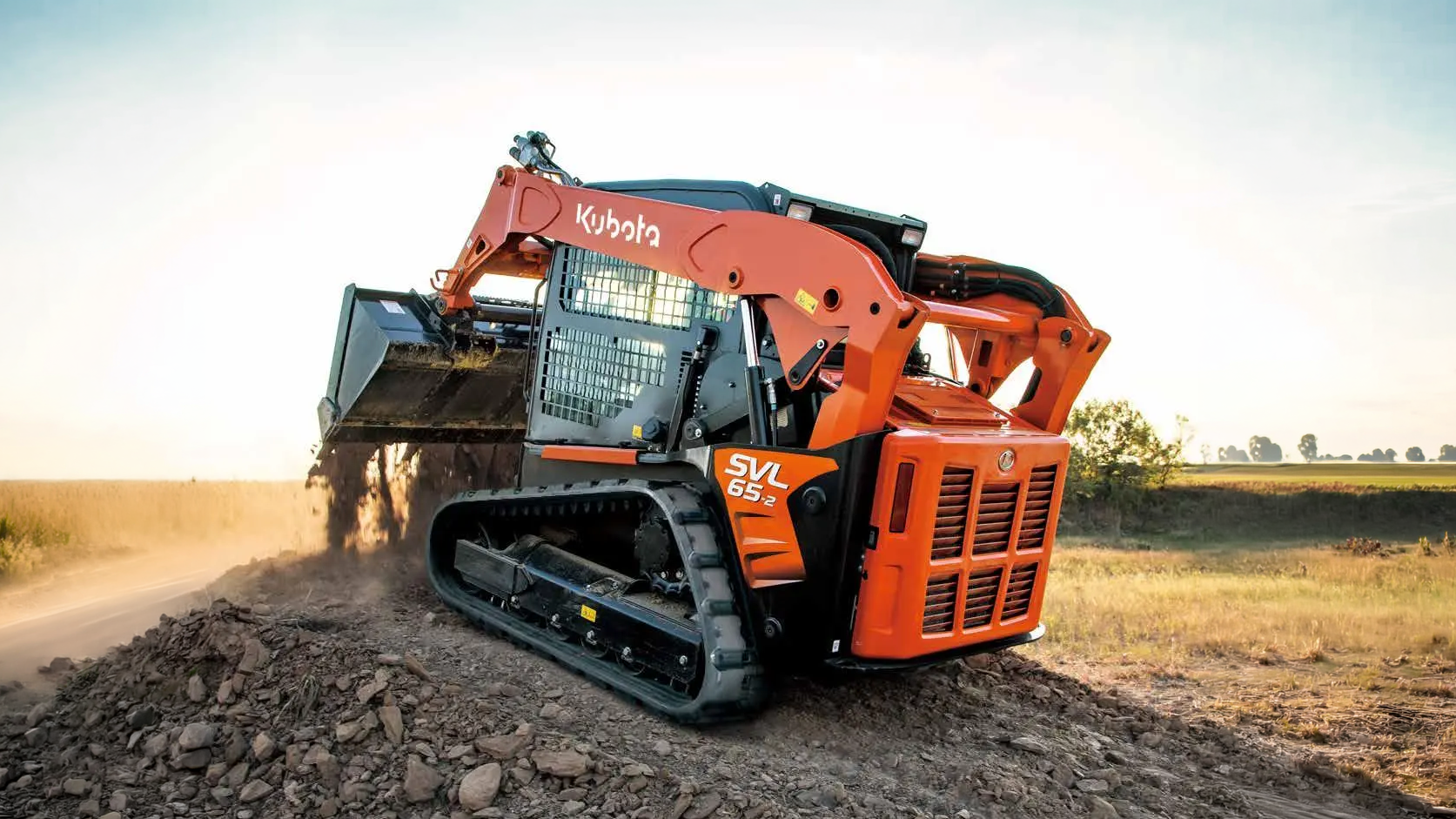
Track loader with a mulcher or grapple
The production answer. Holds a slope, carries the heaviest attachments, and mulches standing material into chips so nothing gets hauled. Confirm flow before you commit to a head.

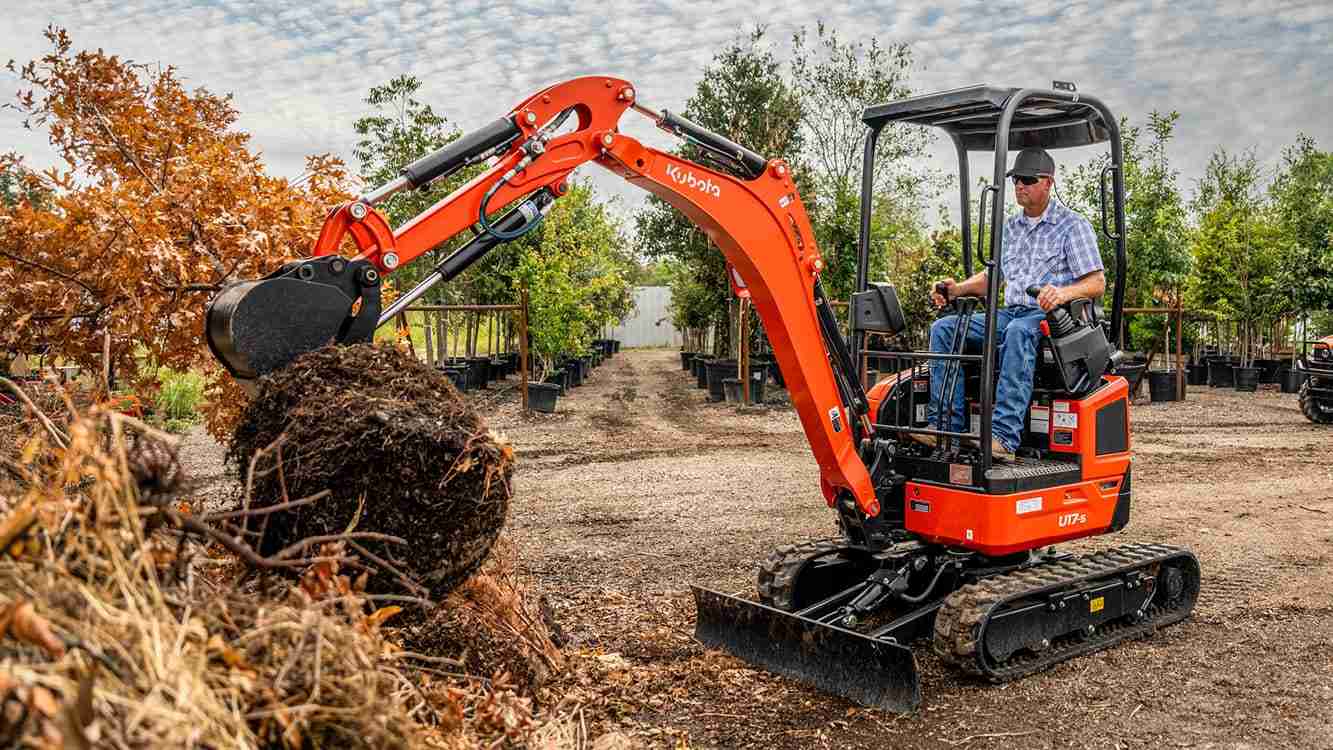
Mini excavator with a thumb or grapple
Roots, stumps and stacking. It reaches over a slope from stable ground, worth a lot on a canyon lot, and it is the only one here that gets material out of the dirt.
Still deciding between loader types? Start with the compact track loader guide.
The Short Version
Hire it out. A contractor with the right head finishes in a day what costs you a weekend and a rental fee, and he carries the insurance.
Buy the rotary cutter. Cheapest tool here, it lasts, and the job never stops coming back. The one purchase on this page that reliably pays.
Flail mower. Pay the premium instead of spending the afternoon apologizing for a rock.
Rent the mulcher and the machine together. Buying a head you run four days a year is how attachments end up under a tarp.
Now buy the mulcher. At that utilization it earns. See how landscaping crews build a Kubota fleet.
Send photos of the worst part of the lot and the gate you have to get through. We will tell you which of the four it is, including when it is none of them.
Talk to someone who runs theseThe Debris Is the Line Item Everyone Forgets
Cutting brush is the fun part and not the expensive part. What happens to the pile is where the budget goes, and nobody asks until there is a pile. Mowing leaves material on the ground, which a fire district will often accept. For a lot you are about to build on, it will not do.
Budget the disposal before the machine. It is the half of the job with no attachment to shop for.
Clearing Before the Rain Is a Different Job Than Clearing After
Dry ground is the easy version. Machines go where you point them, a wheeled tractor holds a slope it has no business holding, and you can stage a pile anywhere. That window closes the first week the ground stays wet. Then wheels stop working on any grade, material gets heavier and mulches worse, and ruts cut across a wet slope become the channels water follows.
The homeowner version of all this is in our storm prep guide. Read it alongside this one. They are halves of the same weekend.
The Attachment Comparison Is the Least Useful Thing on This Page
Here is the bit that undercuts most of what you just read.
Every attachment above is built well by several manufacturers, and the differences between the good ones will not decide how your job goes. What decides it is whether the tool matches your material, whether the machine can run it, and when you clear.
We have never seen a clearing job go badly because somebody picked the wrong brand of cutter. We have seen plenty go badly because the head wanted more flow than the loader made.
Skip the brand argument. Ask these five instead.
- What flow and pressure does my machine produce, and does this attachment need standard or high flow?
- Given my stems and my soil, which of the four approaches would you use, and why not the other three?
- Is the debris staying or leaving, and what does the leaving version cost?
- Do you stock wear parts for this attachment, or does everything get ordered?
- If I rented instead, how many days a year would I run it before buying makes sense?
That last one is the question a dealer is not supposed to raise. We rent and we sell, so we would rather you ask it now than resent the answer in two years. The rent versus own arithmetic is in the break even math on a skid steer.
Three branches. Sun Valley, Temecula, Escondido. Same family since 1952. Ask us all five, then ask somebody else the same five.
Straight Answers
What equipment is best for clearing brush?
It depends on stem size, not acreage. Grass, weeds and light woody growth are a rotary cutter job on a compact tractor. The same material near houses or vehicles is a flail mower job, because a flail throws far less. Standing brush and small trees are a forestry mulcher job on a skid steer or track loader. Anything that has to leave the property needs a grapple and a truck.
How much does land clearing cost per acre?
Anyone giving you a per acre number without walking the lot is guessing. Price is driven by stem density and size, slope and access, rock in the soil, and above all whether the debris stays or gets hauled. Hauling adds trucking plus tonnage at the disposal gate and is usually the largest swing between two quotes. Rough ordering, cheapest first, is tractor mowing, flail mowing, mulching in place, then cut and haul.
What is the difference between a brush cutter and a forestry mulcher?
A brush cutter mows material down and leaves it lying on the ground in pieces. A forestry mulcher grinds standing brush and small trees into chips where they stand, so there is nothing to gather. The mulcher handles much larger material, costs far more to buy and run, and usually needs high flow hydraulics and a loader heavy enough to carry it.
Can a compact tractor clear brush?
Yes, within limits. A compact tractor with a rear rotary cutter handles grass, weeds and light woody brush well, and for annual weed abatement it is the most economical tool there is. It struggles on steep ground, will not cut anything with a real trunk, and has to match your PTO horsepower and tire track.
Should I rent or buy brush clearing equipment?
Rent unless the job repeats. A rotary cutter is cheap enough and used often enough that owning one makes sense if you maintain open ground every year. A forestry mulcher head is the opposite. It is expensive, needs a specific machine to run it, and if you clear a few days a year it spends its life under a tarp losing value.
When should I clear brush before the rainy season?
While the ground is still dry. Dry ground means machines reach the work, material mulches better and you can stage debris anywhere. Once the soil is saturated, wheels stop working on any grade, cut material gets heavier, and ruts across a wet slope become channels that water follows. Clear the access route and the drainage lines first.
Yes, This Is an Ad
You just read an equipment dealer explain brush clearing. You knew what this was from the first line and read it anyway, so we will not pretend otherwise now.
What we are offering is the site walk. Send photos, or have us out, and we will tell you which of the four approaches your lot needs. Sometimes a rental. Sometimes one implement you use every spring. Sometimes your slope is too steep for any of it and you want a hand crew, in which case we will say so, because a customer who bought the wrong attachment does not come back for the tractor.
And if you are clearing ahead of the wet months, do the drainage in the same trip.
We have been here since 1952 by being the yard people call back, not the yard that sold somebody a mulcher they use twice.