

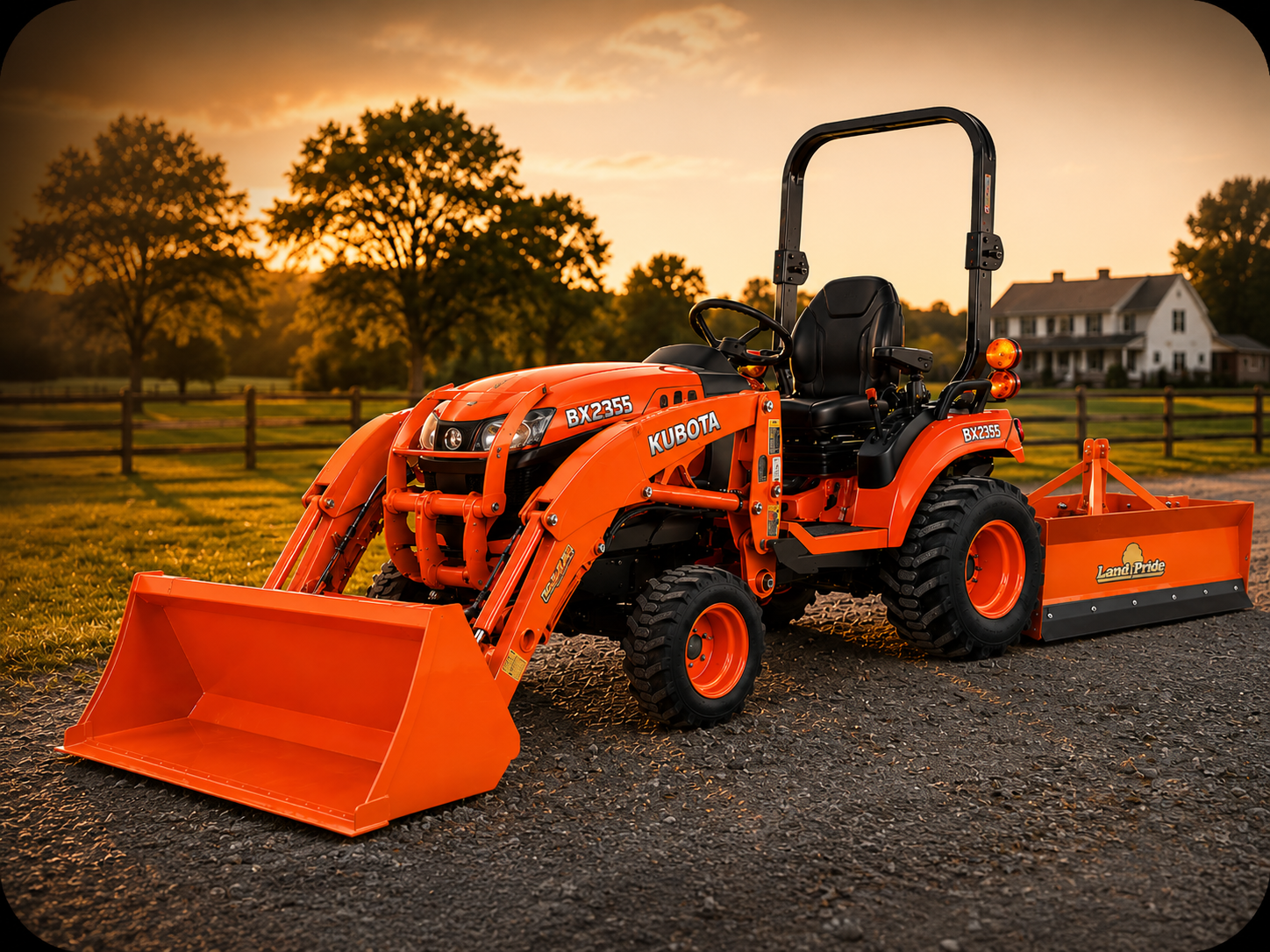
Thinking About Buying a Tractor This Winter? Here's What Most First-Time Buyers Overlook. The implements, the gate, the trailer, the shed and the shop down the road. The tractor is the easy part.
Disclosure. We sell Kubota tractors, so we have every reason to tell you winter is a great time to buy one. Read this with that in mind. Most of it is about what to figure out before you buy, from anybody.
Short answer: The best time to buy a tractor is when you have done the homework, and winter gives you the time to do it. First-time buyers usually overlook the cost of implements, what the loader can really lift, whether the tractor fits through their gate, how they will haul and store it, and where they will get it serviced. Sort those out first and the month you buy matters much less.
Nobody regrets the tractor. They regret the trailer they did not budget for and the gate they did not measure.
Somebody buys a few acres in Riverside County or a hillside lot in San Diego County. By November they are picking a tractor online by horsepower and color. Price is the one number they already thought about. This page is the rest.
Jump to what you came for
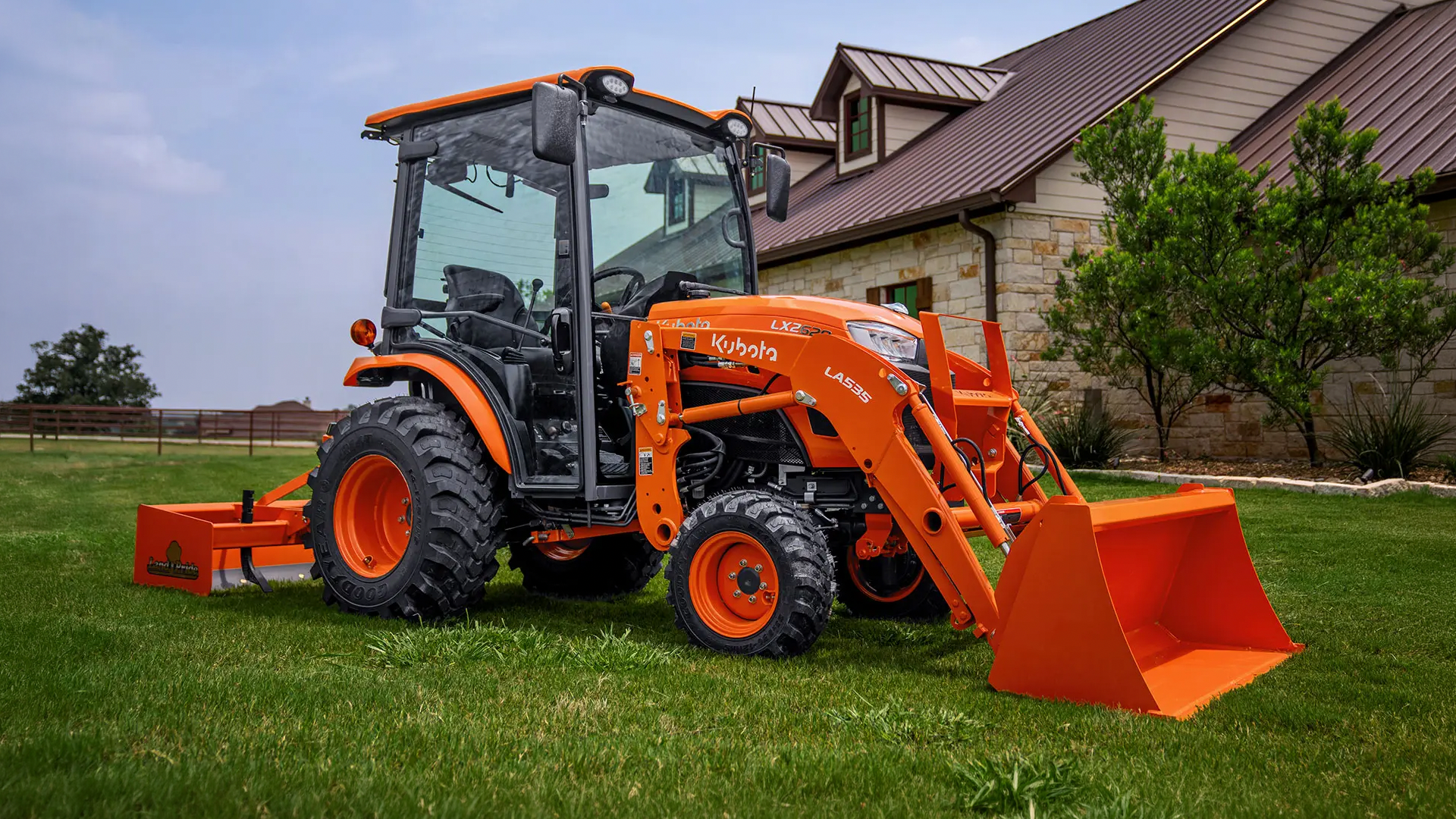
Why Winter Can Be a Good Time to Buy
We will not tell you winter has the best deals. Sometimes there are year end programs, sometimes not. Anybody promising a winter discount before checking current programs is guessing.
The real reason is time
In most of Southern California the growing season and the weed season start in spring. A lot of cities and fire agencies set weed abatement deadlines in late spring or early summer (check yours, they vary). Buy in March and you learn a new machine the week the grass is knee high. Buy in December and you get slow months to learn the controls and make your mistakes on low stakes jobs.
You get to see it on wet ground
Winter shows you the low spot, the rutted driveway and the slick slope. Watching a tractor work your own ground after a rain tells you more about tires and size than a spec sheet. Our guide on how compact tractors actually handle a muddy property covers what traction you can and cannot buy.
What winter does not change
Wet clay does not care when you bought the tractor. Stay off saturated ground, never run a machine on a soaked slope or during a storm warning, and do not let a new toy talk you into a job that can wait for dry weather. Ruts made in mud bake hard by June.
Implements Cost Money Too
A bare tractor drives around. Everything useful happens through the loader on the front, the 3-point hitch on the back (the three arms that lift and lower an implement) and the PTO (power take-off, the spinning shaft that drives a mower or tiller). Each of those jobs needs a tool, and each tool has a price tag that is not on the tractor.
The usual first-year list
| Item | Usually budgeted | Usually forgotten |
|---|---|---|
| Tractor | Yes | No |
| Loader and bucket | Yes | No |
| Rear ballast or box blade | Rarely | Often |
| Third function valve for a grapple | Rarely | Often |
| Trailer and hitch setup | Sometimes | Often |
| Covered storage | Rarely | Often |
| First service and filters | Rarely | Almost always |
This is why tractor packages exist. A package bundles the tractor with a set of implements that are sized to it, so the box blade is not too wide and the mower matches the PTO. Read how Kubota tractor packages are put together before you shop piece by piece. And look through which compact tractor attachments earn their keep so you know what is worth adding later.

Size It for the Property, Then Measure the Gate
The tractor has to fit the land, the gate and the job. Usually in that order of how often people forget.
Acres are not the whole story
Acreage is a starting point, not an answer. Two acres of flat pasture and two acres of hillside oak in San Diego County are different jobs. Slope, rock, brush, how much you mow and how much dirt you move all push the size up or down. Sub-compacts like the BX series are the smallest class. Compacts (B, LX and L series) step up in size, weight and loader capacity. Our tractor sizing guide walks through the decision by job.
The gate wins every argument
Measure every gate, side yard and barn door the tractor has to go through. Measure it with the loader on, the mower deck on, and the widest implement you plan to own. Measure the height too if it lives in a garage or under a carport. Southern California backyards are tight, and a tractor that is 6 inches too wide for the side gate is a tractor that lives in the driveway.
Bigger is not automatically safer
A heavier machine is steadier with a load, but it sinks deeper in wet clay and needs a bigger trailer. For mowing and light grading around a house, the small machine is often right. For brush and rock on rocky Inland Empire ground, a sub-compact lives at its limit.
Loader Capacity vs What You Will Actually Lift
Every loader has a rated lift capacity on the spec sheet. First-time buyers read that number and assume it means they can lift that much in any position. It does not work that way.
Where the number comes from
Capacity is measured at a specific point and height, and makers do not all measure at the same spot. Load farther out or lift higher and you get less. Ask where the published number is measured, and compare like with like.
Things you will want to lift
Ballast is part of the loader
Rear ballast is needed when you use a front loader. That can be a box blade on the 3-point, a ballast box, or liquid-filled rear tires. It is not optional, and it is one of those line items that never makes the first budget. Read the operator's manual for what your tractor needs.
Tires Are a Bigger Decision Than They Look
Tires get picked last, in about ten seconds. They decide whether you can work in February and whether the lawn survives.
| Tire | Good at | Bad at |
|---|---|---|
| R1 agricultural (tall, widely spaced lugs) | Most traction in mud and loose dirt | Tears up lawns |
| R4 industrial (shorter, closer lugs) | The in-between choice most loader tractors wear | Not the best at either extreme |
| R3 turf (shallow tread) | Gentle on grass | Worst in mud |
Pick for the ground you have most
Mostly lawn: turf. Dirt, gravel, decomposed granite and some slope: R4. Wet clay and no grass to protect: R1. No tire does all three well. Our guide on tractor tires and ballast goes deeper, including liquid fill.
Four-wheel drive is not a magic word
Four-wheel drive and ballast help. They do not make a saturated field workable, and weight works against you on wet ground.
Hauling and Storage Nobody Planned For
Delivery gets it home once. Every trip after that is on you.
Trailer and tow vehicle
Storage out of the weather
Southern California sun cooks seats, hoses and tires, and winter rain finds every gap. Budget for a carport, a shed or at least a fitted cover, and measure the opening with the loader on.
Machines that sit
Hobby tractors sit for weeks. A battery maintainer and a full diesel tank go a long way. The manual has a storage section.
Get Seat Time and a Demo
Sitting on a tractor on a lot tells you the seat is comfortable. It does not tell you if you can see the bucket edge or if the hydrostatic pedal (the forward and reverse pedal on most compact tractors) feels natural.
What to pay attention to
Read our guide to getting a demo before you buy. If you are not sure you need a tractor at all, renting a machine for a weekend project is a fair way to find out what kind of work you really do. We will say it plainly: some people find out they need a mower and a contractor, not a tractor.
Still fuzzy on the jobs? Read what a compact tractor can actually do in a backyard.
Service, Parts and the Money Questions
You are not just buying a tractor. You are buying whoever fixes it.
Service and parts close by
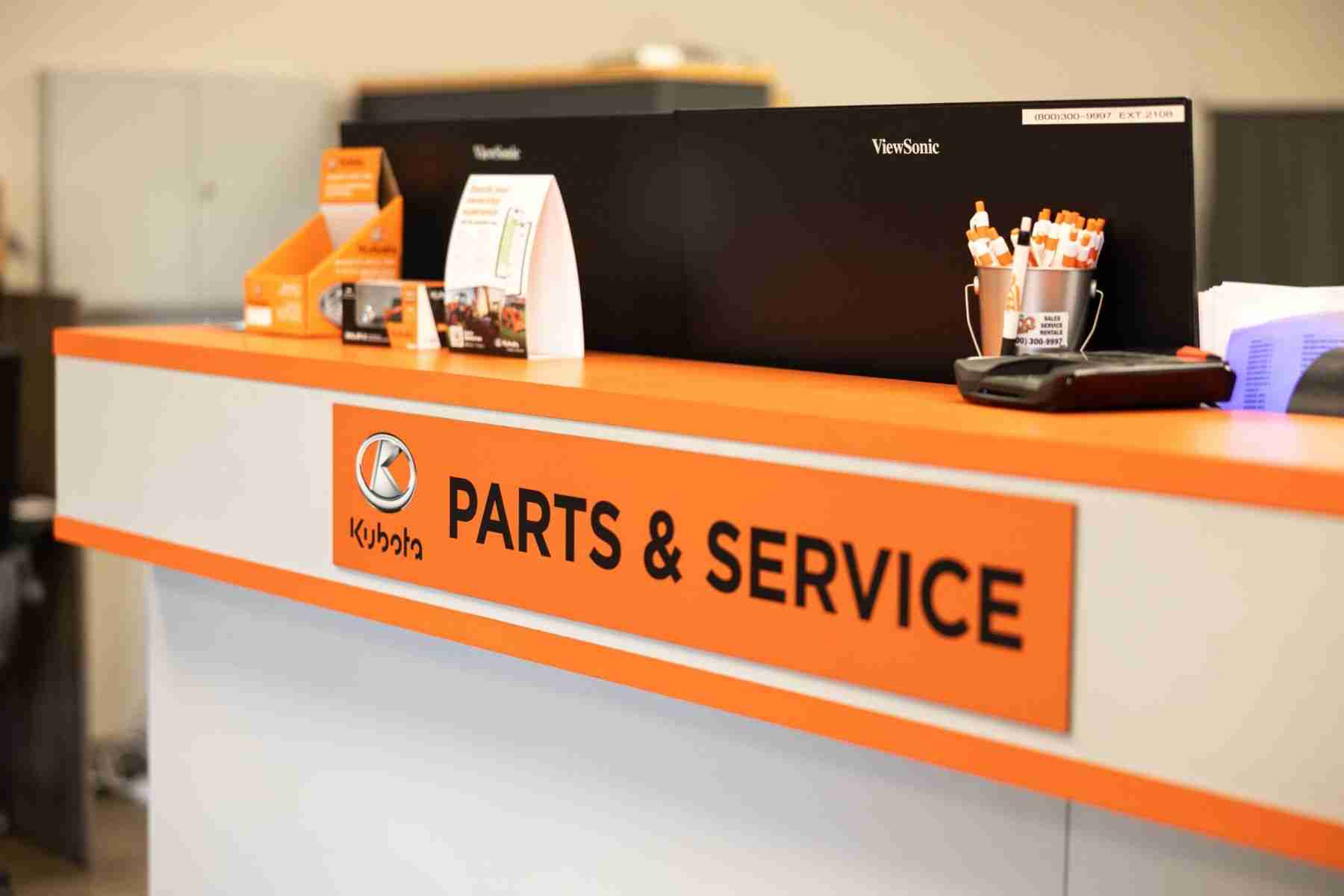
Tractors need filters, fluids and the odd repair. If the nearest shop is two hours away in LA County traffic, a simple repair becomes a lost week. Ask where warranty work gets done, how the tractor gets there, and whether filters are on the shelf. PDQ has a service department and a parts counter, and the specifics of coverage are in our Kubota warranty guide.
Financing changes, so ask for the current offer
Financing offers change. We are not going to quote a rate or a term here because it may be wrong by the time you read it. Read how Kubota financing works, then ask for the current programs in writing and compare the total cost, not just the monthly payment.
The tax angle only if it applies
If the tractor is for a business, Section 179 may let the business deduct some or all of the cost. If it is for mowing your own yard, it does not apply, and nobody should tell you otherwise. Our Section 179 guide explains it, and your tax preparer gets the final word.
The Short Version
Budget for the whole setup
Tractor, loader, ballast, the first implements, a trailer plan and covered storage. The tractor alone is not the real number.
Measure before you shop
Gates, side yards, garage openings and trailer ratings. Size for the property and the job, not the horsepower.
Pick tires on purpose
Turf for lawn, R4 for mixed ground, R1 for mud. There is no tire that does everything.
Use winter to learn
Get seat time, watch it on wet ground, and be ready before spring weeds. Do not buy on a promised deal.
Seven Questions to Ask Before You Buy a Tractor
- What does the complete setup cost, with loader, ballast and the implements I actually need?
- How wide and tall is the tractor with the loader and my widest implement on, and will it clear my gates?
- Where is the published loader capacity measured, and what can it lift at full height?
- Which tire type fits my ground, and can I change later?
- What will the tractor and trailer weigh loaded, and can my tow vehicle handle it?
- Where does service and warranty work happen, and are filters and common parts in stock nearby?
- What financing programs are running right now, in writing, and what is the total cost?
Straight Answers
When is the best time to buy a tractor?
After you have measured the property, priced the implements and planned hauling, storage and service. In Southern California, winter gives you time to learn the machine before spring weeds.
Are tractors cheaper in winter?
Not reliably. Seasonal programs come and go. Ask for current offers in writing and compare total cost.
What do first-time tractor buyers forget to budget for?
Implements, rear ballast for the loader, a trailer and tow setup, covered storage and the first service.
What size tractor do I need for my property?
It depends on the jobs, the slope, the ground and your gate widths more than the acreage. Sub-compacts suit mowing and light work around a house, while compacts handle more loader work, brush and grading.
Which tractor tires are best for a homeowner?
Turf tires are best if you mostly mow a lawn, R4 industrial tires suit mixed dirt, gravel and loader work, and R1 agricultural tires give the most traction in mud but tear up grass.
Do I need a trailer if I buy a compact tractor?
Only if you move it yourself. Then the trailer and tow vehicle must be rated for the whole loaded weight, and you should check California towing rules for your setup.
Fine, You Caught Us Selling Tractors
A tractor dealer just wrote a long page telling you to take your time buying a tractor. We know how that looks. It is still an ad.
Send us your gate widths, your ground and the three jobs you want done first. We will tell you which tractor and implements fit, and when the honest answer is a smaller machine or no tractor at all.
Since 1952 we have sold a lot of tractors. The customers who come back are the ones we talked out of the wrong one.