

Your Backyard Needs a Makeover. What Can You Actually Do With a Compact Tractor? More than you think, less than the brochure implies, and none of it starts until you measure the side gate
Disclosure. We sell Kubota tractors, so we have every reason to tell you a tractor is the answer to your backyard. Sometimes it is. Sometimes it is a shovel, a rented machine or a contractor, and we will say so.
Short answer: A sub-compact or compact tractor can grade and level a yard for sod or pavers, spread base rock and mulch, dig trenches and planter holes with a backhoe, drill fence post holes, till garden beds, move pallets and rock, and clear brush. It cannot fit through most 36 inch side gates, dig a real pool, or haul dirt off your property without a truck.
A tractor is a very good shovel with a seat. It is a very bad dump truck.
Most homeowners who call us have a list. Level the back slope for a lawn. Put in a fence. Build raised beds. Some of that is tractor work. Some of it is not.
Jump to what you came for
First Question: Can It Even Get Back There?
Southern California backyards are small, fenced and reached through a narrow side yard. That is where a lot of tractor plans die.
Measure the gate, then measure the path
Measure the narrowest point between the street and the work area. The gas meter, AC condenser, hose bibs and low eaves all count. Then compare that number to the overall width on the spec sheet of the machine you are looking at, with the loader bucket and tires it will actually wear.
Most tractors with a front loader will not go through a standard 36 inch side gate. If that is your only access, a tractor is probably the wrong machine, and plenty of backyards get done with smaller walk-behind machines instead.
Sub-compact or compact
If you are unsure which class fits, our guide to what size tractor you need works through it by acreage and job.
Grading and Leveling for Sod, Pavers or a Patio
This is where a small tractor earns its keep.
Getting a yard flat for sod or a paver base is miserable work with a rake. A tractor with a box blade does it in an afternoon.
Box blade or land plane
A box blade is an open-bottomed box with a cutting edge and adjustable teeth (called scarifiers) that loosen hard ground. It cuts high spots, carries the dirt and drops it in the low spots. A land plane is a longer frame with angled blades that shaves and fills in long passes, leaving a smoother finish. We compare them side by side in our land plane vs box blade guide.
Slope it away from the house
Any grading near the house should leave the ground falling away from the foundation. A commonly cited guideline is a drop of about 6 inches in the first 10 feet. Confirm with your city or a contractor for new work. If your yard already holds water every winter, read why your backyard turns into a swamp before you grade, because flattening a yard can make drainage worse.
Do not try to engineer a slope, a retaining wall or drainage that crosses onto a neighbor's lot. Those need a civil engineer, a licensed grading or landscape contractor, or a call to the city or county.

Digging With a Backhoe: Irrigation, Planters and Trees
A tractor loader backhoe (people call it a TLB) is a tractor with a loader on the front and a small digging arm on the back. On a residential lot it digs trenches for irrigation and drain lines, holes for trees and planters, and small stumps.
Call 811 first, every time
Call 811 (DigAlert serves Southern California) at least two working days before you dig. The utilities mark their lines. They generally do not mark the private lines on your property: sprinkler mains, power to a detached garage or shed, landscape lighting, and pool and spa lines. Find those yourself, and dig by hand near anything you are unsure about. A backhoe finds a buried line faster than any locator, and that is not a compliment.
Trenches have limits
Irrigation and small drain trenches are usually shallow and narrow, which is right in a small backhoe's range. Anything deep enough that a person would climb into it is a different job. Cal/OSHA has rules for trenches 5 feet and deeper, including protective systems, so check the requirements for your job or hire a contractor. If the real project is a long run of trench, our trenching equipment guide covers machines built just for that.
For a closer look at a compact TLB, see our Kubota B2601 guide.
Fence Post Holes
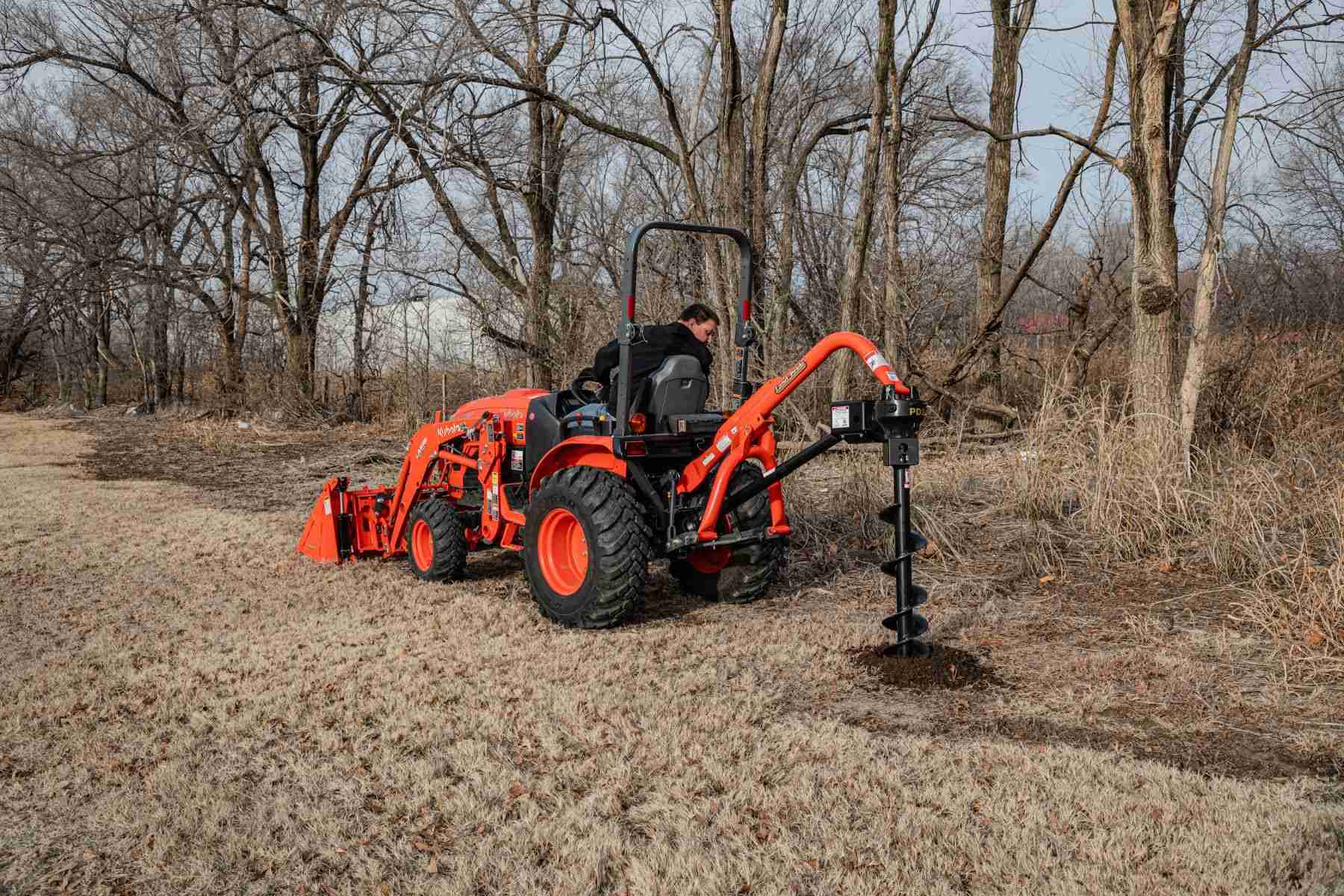
A post hole digger is an auger driven by the tractor's PTO (power take-off, the spinning shaft at the back of the tractor that runs implements). It drills in seconds what a manual digger takes minutes to do.
Where it shines
Long runs of fence on open ground. A pasture fence, a dog run, a property line on a larger lot.
Where it struggles
Same rule as the backhoe: call 811 first and find the private lines.
Moving Base Rock, Mulch, Pallets and Rock
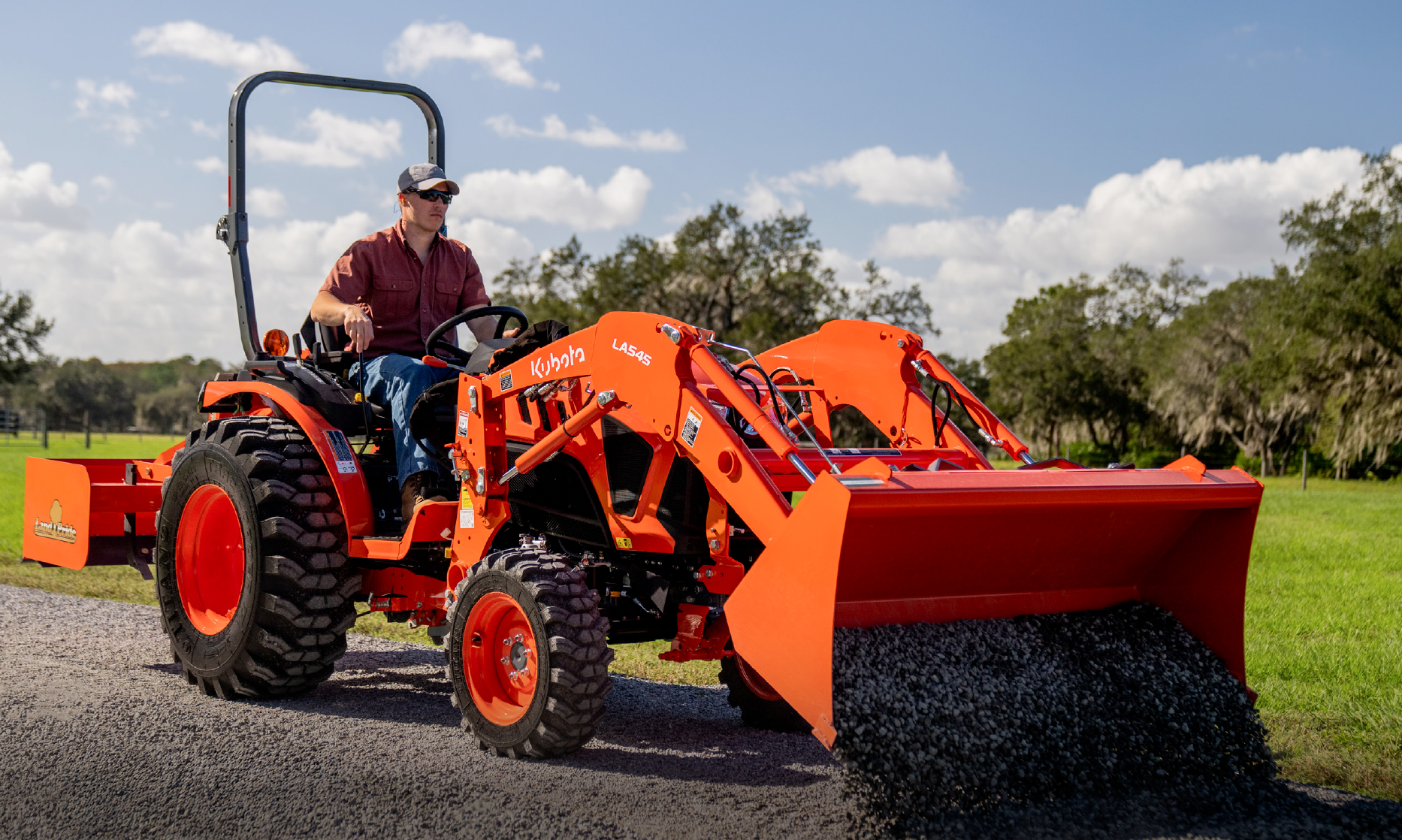
The front loader is the part you will use the most. It spreads base rock or decomposed granite, carries mulch, and with pallet forks it moves pallets of pavers, block or sod.
Loader capacity is the real limit
Every loader has a rated lift capacity, and the attachment counts against it. Carry loads low. A loaded bucket carried high is how compact tractors tip, especially on a slope. Keep the ROPS (rollover protection frame) up and the seat belt on. Rear ballast, like a box blade on the 3-point hitch or a ballast box, is needed when you use a front loader. Read the operator's manual.
| Job | Attachment | Tractor good fit? |
|---|---|---|
| Level ground for sod | Box blade or land plane | Yes |
| Spread base rock or DG | Loader bucket, box blade | Yes |
| Compact a paver base | Plate compactor (separate) | No |
| Irrigation trench | Backhoe or trencher | Yes, after 811 |
| Fence post holes | PTO post hole digger | Yes, on open ground |
| Move pallets of pavers | Pallet forks | Yes, within capacity |
| Till garden beds | Rear tiller | Yes |
| Haul dirt off the property | A truck | No |
| Dig a pool | An excavator and a contractor | No |
For the full list of what bolts on, see our compact tractor attachments guide.

Tilling Beds and Clearing Brush
Tilling
A rear tiller on the PTO turns hard ground into a planting bed in a few passes. Good for a big vegetable garden or prepping a new lawn. Till clay when it is just damp. Wet clay tilled turns into hard clods when it dries.
Brush and weeds
On a larger lot, a mower or brush cutter on the back and a grapple on the loader handle overgrown weeds and brush piles. Our brush clearing equipment guide goes deeper. In fire country, which is most of inland LA, Riverside and San Diego counties, clearing weeds before summer is not optional.
What a Compact Tractor Cannot Do
A tractor is a good tool. It is not every tool. And it will not fit through a 36 inch gate, as covered.
It will not dig a pool
A backhoe on a tractor can dig a trench or a tree hole. A pool means engineering, permits and a contractor. See our pool excavation equipment guide for what that job really takes.
It will not haul your dirt away
A tractor moves dirt around your yard. Getting it off the property takes a dump truck or a bin. Our guide to dirt removal covers how that part works.
Wrong tires on a lawn
R1 agricultural tires have tall, widely spaced lugs and the most traction in mud, but they tear up a lawn. R4 industrial tires are the in-between choice most loader tractors wear. R3 turf tires are gentle on grass and the worst in mud. More on the tradeoff in tractor tires and ballast.
It does not like wet ground
Weight works against you on soaked ground. The machine sinks, ruts and those ruts bake hard in summer. Stay off saturated lawns and wet clay, and never run a machine on a saturated slope or during a storm warning. Our guide on whether a compact tractor can handle a muddy property goes into it.
Rent It for a Weekend or Own One
The part a dealer is not supposed to say: if your makeover is one project, done once, you may not need to own a tractor.
When renting is the honest answer
Renting a machine, or hiring a landscape contractor who already owns one, is often cheaper than buying and storing a tractor you use twice. Our weekend equipment rental guide covers how to make a rented weekend count, and the PDQ rentals site lists what is available.
When owning makes sense
If you are leaning toward buying, our sibling guide on what first-time buyers overlook covers the costs people forget. Financing offers change, so we do not quote them here; see Kubota financing explained for how they work.
The Short Version
Measure the access first
The narrowest point between the street and the backyard decides everything. A 36 inch gate usually rules a loader tractor out.
Grading is its best job
A box blade or land plane levels a yard for sod or pavers far faster than a rake. Slope it away from the house.
Call 811 before you dig
Then find the private lines yourself. Sprinklers, lighting and garage power are not marked.
One project, rent it
Own a tractor when the work comes back every season. A one-time makeover often does not justify one.
Seven Questions to Answer Before You Shop
- What is the narrowest point on the path from the street to the work area?
- Is this one project, or work that will come back every season?
- Which jobs on my list are grading, digging, lifting or tilling, and which attachments do they need?
- What is the heaviest thing I will lift, and is it within the loader's rated capacity with the attachment on?
- Do I have a finished lawn to protect, and which tires does that call for?
- Where will the tractor live, and how will it get here?
- Which part of the job really needs a truck, a compactor or a contractor instead?
Straight Answers
What can a compact tractor do in a backyard?
With the right attachments it can grade and level ground for sod or pavers, spread base rock and mulch, dig trenches and tree holes with a backhoe, drill fence post holes, till garden beds, move pallets and clear brush.
Will a compact tractor fit through a 36 inch gate?
Usually not. Most tractors with a front loader are wider than a standard 36 inch side gate. Measure the narrowest point on the path and compare it to the spec sheet.
Will a tractor ruin my lawn?
It can. Agricultural R1 tires tear up grass, and any tractor ruts a wet lawn. Turf tires, dry ground and wide turns help.
Can a compact tractor level a yard for sod?
Yes. That is one of the best jobs for a small tractor. A box blade or land plane cuts high spots and fills low spots. Leave the ground sloping away from the house.
Should I rent or buy a tractor for a backyard project?
For one project done once, renting or hiring a contractor is often cheaper. Buying makes more sense when you have a larger property with work that comes back every season.
Do I need to call 811 before digging fence post holes?
Yes. Call 811 at least two working days before you dig. Utilities mark public lines only, so locate private lines such as sprinklers, landscape lighting and power to a garage yourself and dig by hand near them.
Fine, This Part Is the Sales Pitch
You just read a couple thousand words from a tractor dealer about tractors. We are not going to pretend that was a public service.
Tell us your lot size, your gate width and the jobs on your list. We will tell you which tractor fits, which attachments matter and which jobs you should hand to someone with a truck.
We have been doing this since 1952. The customers who come back are the ones we talked out of the bigger tractor.