

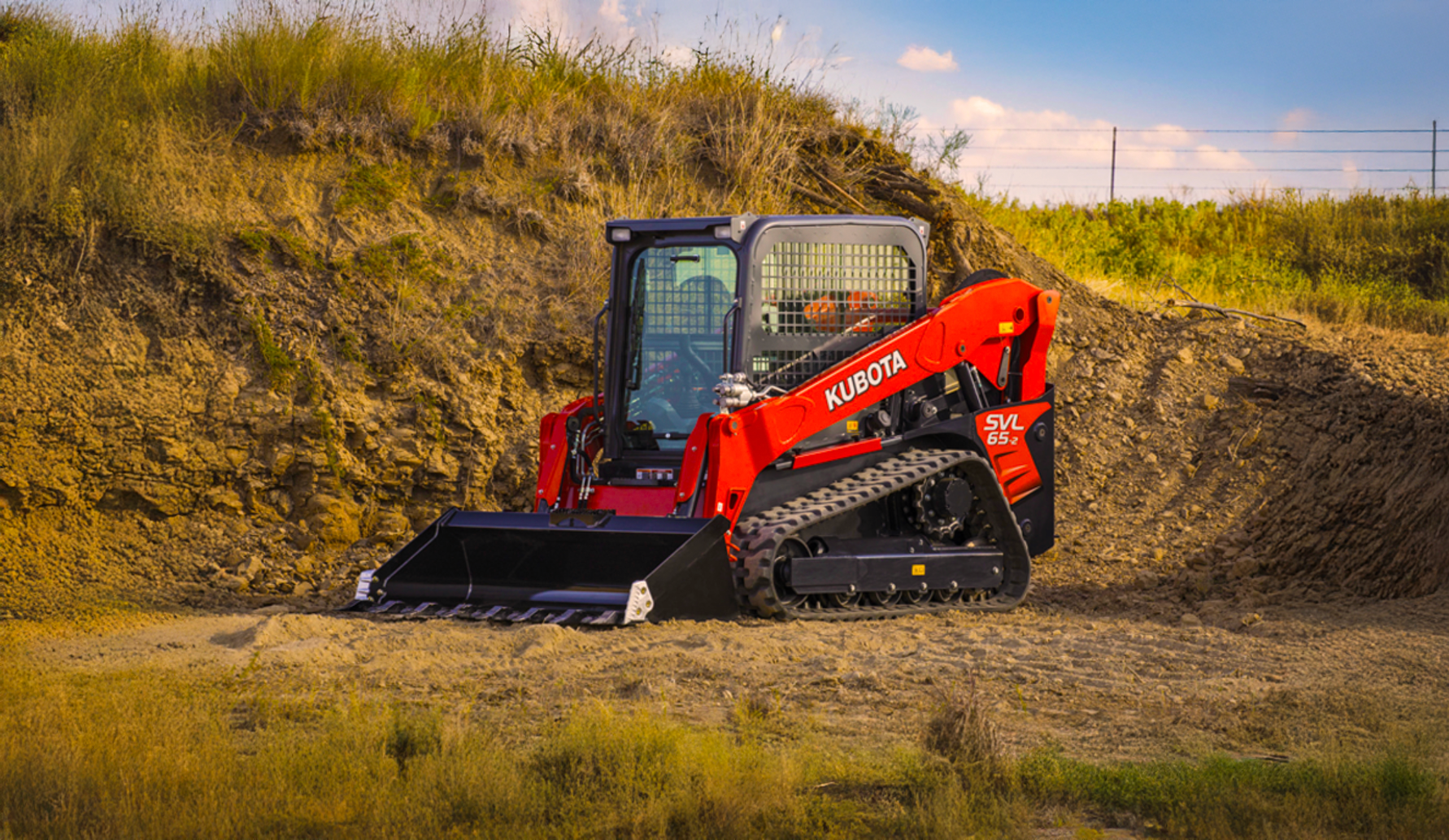
The Rain Finds Your Mistakes Hillside erosion control, drainage and storm prep, and the honest line between a weekend rental and a job that needs a licensed contractor
Disclosure first. We rent and sell the machines on this page, and we get paid when you take one home. Read the rest with that in front of you.
Now the part that argues against us. Most of what protects a Southern California property through a wet winter is not equipment work. It is a ladder, a shovel, a pair of loppers and a Saturday. Gutters. Downspout extensions. The brush in the culvert. Seed and mulch on bare dirt. None of it needs a machine and none of it makes us a dollar. The rest is real dirt work, and that is where we come in.
El Nino conditions come around every few years here, and when they do, storms tend to arrive in trains rather than one at a time. That is the detail that matters. One storm on dry ground mostly runs off. The third storm in ten days lands on ground that is already full. That is when slopes move, culverts back up, and water finds the low spot in your yard, which is very often the side of your house. This guide is about work that holds up under that. It is not a forecast.
Water does not create problems on a property. It finds the ones already there and bills you for all of them at once.
Jump to what you came for

What Actually Fails When It Finally Rains
We have branches in Sun Valley, Temecula and Escondido, so we hear this from Los Angeles hillsides, Inland Empire ranch lots and North County canyon properties in the same week.
Notice how much of that is maintenance, not construction. Do the culvert and the gutters and you have handled more real risk than most people who rent a machine.
Hillside Erosion Control, Ranked by What It Holds
Erosion control gets sold backwards. People start at the retaining wall, the most expensive and most regulated end of the scale, and skip everything cheap that would have worked. Start at the top of this table, before the first rain, and move down only when what is above will not do the job.
| Method | What it actually does | Machine needed? |
|---|---|---|
| Mulch and seed | Stops raindrop impact, which starts most surface erosion. | No. A rake and bags. |
| Blankets and straw wattles | Hold the surface while seed germinates, and slow sheet flow. | No. Stakes and a hammer. Best return per dollar here. |
| Deep rooted planting | The only item that gets better every year. Roots are the structure. | Rarely. An auger helps on hardpan. |
| Diversion swale above the slope | Keeps upslope water off the face. Often the fix when the slope was never the problem. | Usually. Tractor and box blade. |
| Benching or terracing | Breaks one long face into short ones so water never builds speed. | Yes, plus a permit and an engineer. |
| Engineered retaining wall | Holds soil that will not stay put any other way. The first answer almost never. | Yes, and a licensed contractor. |
Honest note. We rent and sell the machines in the right hand column, so we have a financial interest in you deciding your slope needs earthwork. It mostly does not. Seed, mulch, wattles and plants fix more slopes here than machines do.
Water Has To Go Somewhere, and You Are Deciding Where
Every residential drainage job is the same question asked four ways. Where does water arrive, where should it end up, what path gets it there, and whose problem is it when it arrives. Answer those in order and the equipment decision makes itself.
The machine that suits this is smaller than people expect. On a residential lot the small end of the range is plenty. Our mini excavator sizing guide picks a class by access rather than horsepower.
Where the Weekend Ends and the Permit Starts
This matters more than any machine recommendation on the page, and it is the section people skip.
There is a real line between work a capable homeowner does with a rented machine and work that needs a licensed contractor, a permit and sometimes an engineer. Crossing it by accident is how a drainage project becomes a lawsuit or a hospital visit.
| The job | Weekend with a rented machine | Licensed contractor, usually a permit |
|---|---|---|
| Clearing a culvert or existing swale | Yes. Restoring something to how it was built is maintenance. | Only in a public right of way. |
| Regrading a small pad away from the house | Usually. Small volumes, water stays on your lot. | If volumes are large or the ground is steep. |
| Cutting a diversion swale above a slope | Sometimes, if the outlet is already yours. | Often. Redirecting flow is the regulated part. |
| French drain with a new outlet | The trench, maybe. The outlet, no. | Get advice. Where it discharges is the legal question. |
| Benching or cutting into a slope | No. | Yes. Slope stability is an engineering question. |
| Retaining wall over the local height limit | No. | Yes. Engineered design, permit, inspection. |
| Anything that changes where water leaves your lot | No. | Yes. The one that ends up in front of a judge. |
We are deliberately not printing cubic yard thresholds, wall heights or slope ratios. Every city and county here sets its own, and a wrong number on this page is worse than none. Call your building department.
If You Do Need Iron, This Is the Short List
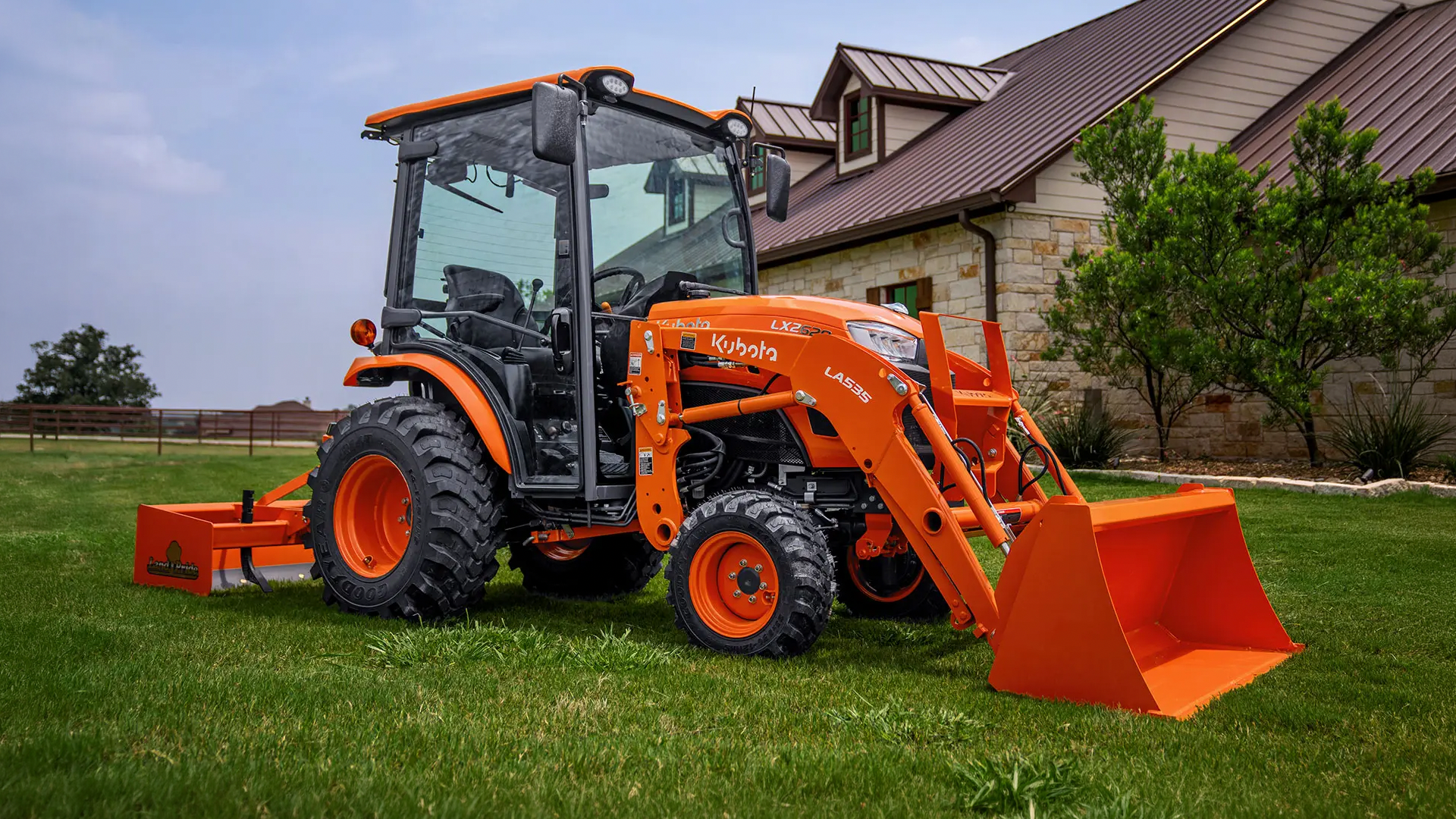
Compact tractor with a box blade
Driveways, swales, spreading base rock, moving material across an acre. Most rural properties should own one rather than rent. See the compact tractor range.

Sub compact tractor
Suburban lot, side gate, and a lawn you would like to still have in spring. Horse and hobby properties land here, which is what the horse property guide is about.
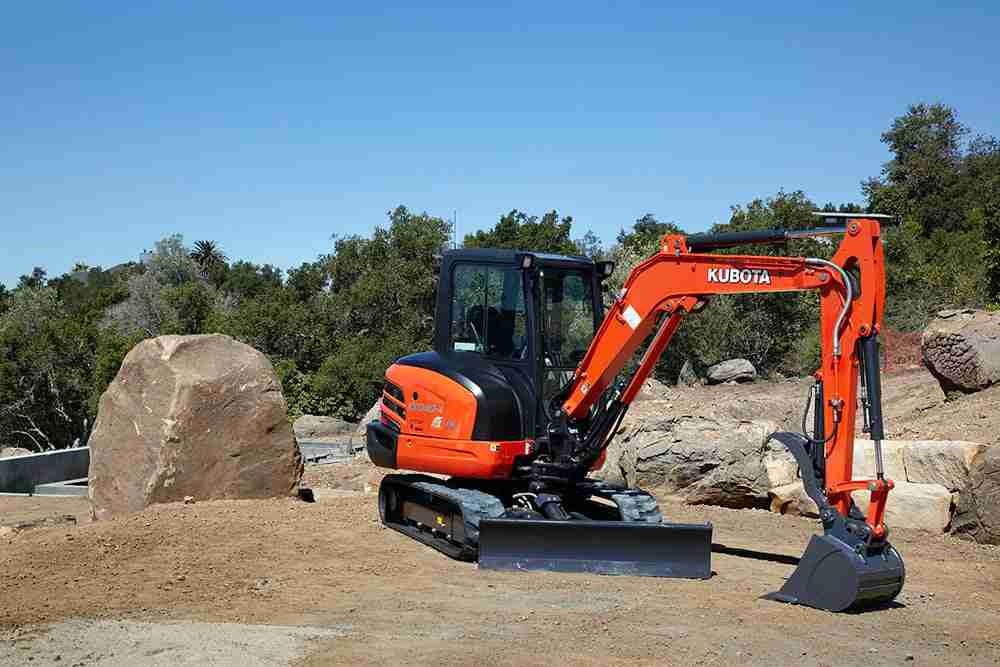
Mini excavator
Trenches, french drains, culvert work, stumps, anything where you dig down rather than push across. If your storm list is mostly drainage, this is the rental.
A track loader is the fourth option and the wrong first machine for most homeowners. The rent against own math is in our skid steer rental cost breakdown, and the case for small machines is in why compact equipment keeps winning.
The Short Version
Rent nothing yet. Gutters, downspout extensions, seed, mulch, wattles. Look again after the first real storm.
Compact tractor with a box blade, and probably a purchase, because this becomes an every year job.
Rent a mini excavator for a weekend. Call 811 first, and know where the water is going before you dig.
Licensed contractor, and expect a permit. We will still rent you a machine. We are telling you not to use it for this.
Stop. Get an engineer on it. This is the one that becomes a lawsuit instead of a repair.
Talk to someone who has seen the property type
Clear It Before the Rain, and What Wet Ground Costs Us
Brush and drainage are the same project on most properties here, because the thing plugging your culvert is last summer's growth.
Here is what the season costs us out of our own fleet, which is the part a homeowner guide leaves out.
The Machine Is the Least Important Thing on This Page
Here is the uncomfortable part, and it undercuts a good deal of what you just read.
You could do every job above with the wrong brand of equipment and be fine. The iron is not the variable. The plan is. Where water arrives, where it leaves, and whether anybody downhill of you gets a say. Get that wrong and the best machine in Southern California just digs a more expensive mistake, faster.
We would rather rent you nothing and still have you as a customer in five years than rent you a loader for a job that needed an engineer.
So before you book a machine or sign a proposal, ask these five. They work on us and on anyone else you call.
- Where exactly does this water end up, and is that spot still on my property?
- Does this job need a permit in my city or county, and who is pulling it?
- If a slope is involved, has anyone qualified looked at it, or are we guessing?
- What happens to this fix in the third storm in ten days, not the first one?
- What does the cheap version cost now, with a reassessment in spring?
If whoever you are talking to gets impatient at question two, that tells you something useful for free.
Straight Answers
How do I stop erosion on a slope?
Start cheap and escalate only if it fails. Mulch and seed the bare ground, add blankets or straw wattles to hold the surface while the seed establishes, then plant deep rooted species, because roots are the only part that gets stronger every year. If water arrives from above, cut a diversion swale. Benching and retaining walls are the last resort, and both usually need a permit.
What is a french drain and do I actually need one?
Perforated pipe in a gravel trench wrapped in filter fabric, sloped so water moves to an outlet. You need one when surface drainage cannot solve the problem, which is less often than people think. A shaped swale moves more water and never clogs. The three things that kill a french drain are no fabric, inconsistent fall and no outlet.
Do I need a permit to regrade my own yard?
Often, and the threshold varies by jurisdiction. Cities and counties across Southern California set their own limits based on volume of earth moved, depth of cut or fill and steepness. Clearing a culvert is maintenance. Cutting into a slope, building a retaining wall over the local height limit, or changing where water leaves your lot is not. Call your building department first.
Can I drain water onto my neighbor's property?
Not safely, and not without advice. California applies a reasonableness standard to surface water a landowner has redirected, which in practice means the person who changed the grade has to justify it. If your new outlet sends water somewhere it did not go before and a neighbor takes damage, you are exposed. Have a civil engineer review the plan first.
What equipment do homeowners actually use for storm prep?
Less than they expect. Gutters, downspout extensions, culvert clearing, seed, mulch and wattles are hand tools. Where a machine earns its place, a compact tractor with a box blade handles driveways and swales on acreage, a sub compact tractor fits gated suburban lots, and a mini excavator is the pick for trenching and french drains.
Should I rent or buy a machine for storm prep?
Rent, for most homeowners. Storm prep is a few days of work in a season, and a machine that sits in a shed still costs you insurance, maintenance and the space it occupies. Buying makes sense with acreage, a dirt driveway and a list of jobs that recurs every year. We sell and rent, so we make money either way, which is why we can say it.
Yes, This Is an Ad
You just read an equipment dealer spend most of a page saying that mulch, a rake and a phone call to the building department will outperform anything in our yard. It is still an ad. You knew that from the first line and kept reading, so we will not pretend otherwise.
Here is the offer instead. Call a branch, describe the property, and we will tell you which half of this guide you are on. If it is a weekend and a mini excavator, we will have one ready. If it is a licensed contractor and a permit, we will say so. Sun Valley, Temecula or Escondido, same family since 1952.
The cheapest storm prep is the work you do in October. Everything after that is a repair.