

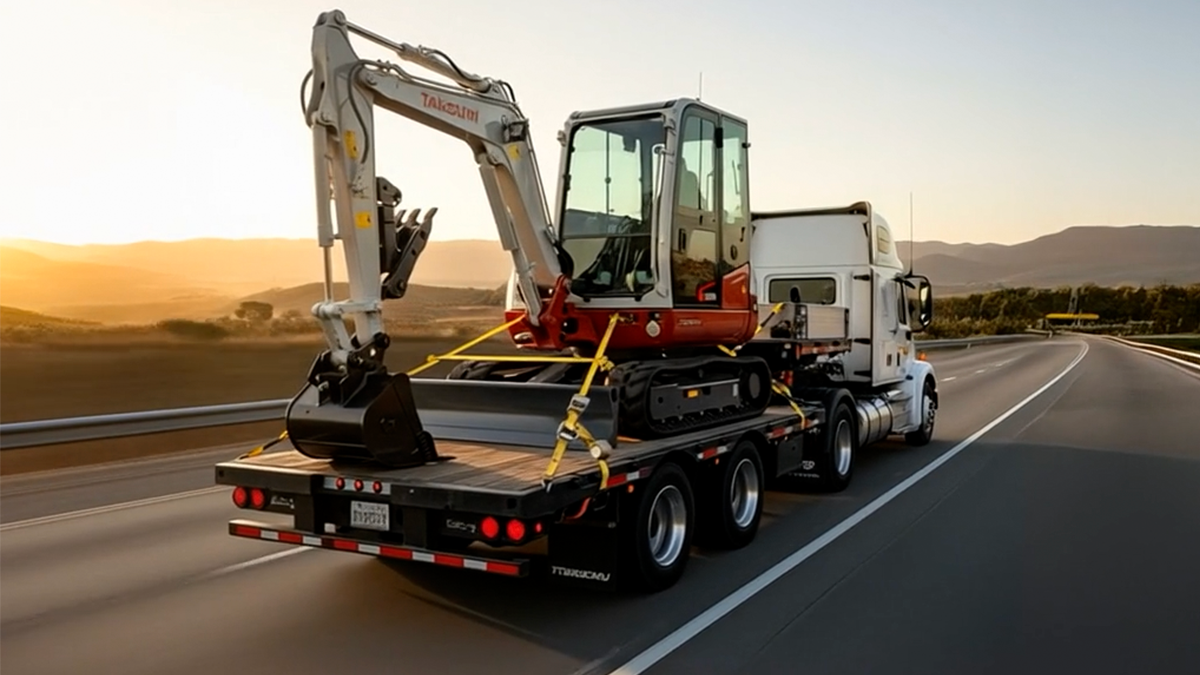
Can an Equipment Truck Reach Your Property After Heavy Rain? Wet clay, soft decomposed granite, tight gates and the unload spot nobody checked, plus the honest answer about when to just wait a few days
Disclosure. We rent equipment and we deliver it, so we would love to tell you the truck can always make it. It can't. A delivery truck stuck in a muddy driveway costs you a day, costs us a day, and sometimes costs you the driveway.
Short answer: Often not right away. After heavy rain, wet clay and decomposed granite roads can lose the strength to carry a loaded delivery truck and trailer, so heavy equipment delivery may need to wait until the ground firms up, switch to a smaller machine on a smaller trailer, or unload at a firm spot near the paved road. Walk the route, send the branch photos, and decide together before the truck rolls.
The machine is built for mud. The truck that brings it is not.
A track loader spreads its weight over a long strip of rubber. The truck hauling it puts the truck, the trailer and the machine on a few tires. On a soaked driveway, those tires find the soft spot you did not know was there, whether that driveway is on a hillside in LA County, a ranch road in Riverside County or a long DG drive in San Diego County.
Jump to what you came for
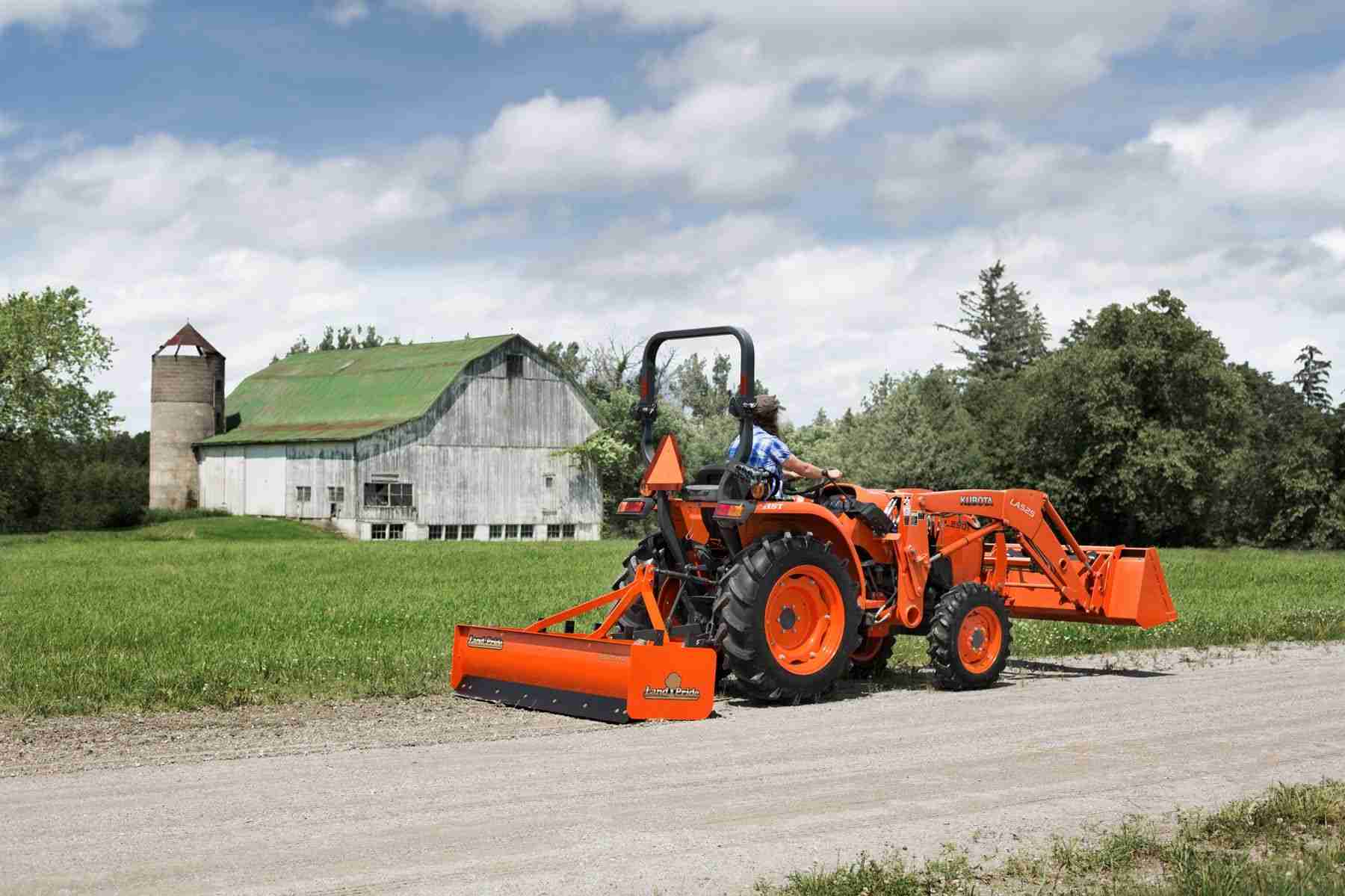
Why Wet Ground Stops a Delivery Truck
Dirt and gravel roads carry weight because the soil underneath is packed and fairly dry. Soak it and the layer a few inches down goes soft while the surface looks fine. A loaded truck finds that layer fast.
Clay holds water, then lets go
Expansive clay soils are common across parts of the Inland Empire and San Diego County. Dry, they feel like concrete. Wet, they swell, turn slick and lose much of their strength. Clay also stays wet longer than sandy soil, so a road can be soft days after the storm.
Decomposed granite turns to paste
A DG driveway packs hard when dry. Saturated, it goes soft and tires dig ruts that hold water for the next storm. Each loaded trip makes them deeper.
Hillsides make everything worse
Grade plus mud means less traction going up and less control coming down. A loaded truck that stops on a wet hill may not get going again, and a trailer can slide sideways on a crowned road.
Walk the Route the Truck Will Drive
Walk it, do not drive it.
Walk every foot from the paved road to where the machine comes off the trailer. Take photos. The branch would rather see ten pictures than hear "it should be fine."
The turn in from the street
Long rigs swing wide. Look at the apron, the curb, any roadside ditch and the shoulder where the trailer wheels will cut the corner. Shoulders are often the softest ground on the route.
Grade, turns and a place to turn around
Note steep pitches and tight corners. Then ask: once the truck is in, how does it get out? Backing a long rig down a wet grade is not a plan.
Soft spots and crossings
Look for low spots, places where runoff crossed the road, and culvert crossings where fill may have washed. If your boot sinks, a truck tire will sink much further. If storms are tearing up the road itself, our guide to private road repair before storm season covers crowns, ditches and culverts.
Gates, trees and overhead lines
Measure gate openings. Look up for branches, eaves and overhead lines. Ask the branch what width and height clearance their truck needs.
Our older construction equipment delivery checklist covers the dry weather basics. Rain raises the stakes on every line.
The Unload Spot Matters More Than the Driveway
A truck can sometimes creep up a marginal road. Unloading is different. It has to sit still while a machine rolls off, and that is when it settles.
Firm, level and big enough
Firm, close to level, and long enough for the truck plus room for the machine to come off and turn. Pavement or compacted base rock is best. Never a slope.
Not on the lawn, the septic or the pool lines
Keep the truck off saturated lawns, septic tanks, leach fields and buried sprinkler, pool or lighting lines.
Closer to the street is usually fine
Unloading at the street or a paved pad and walking the machine in on its tracks is often smart after rain. Tracks spread weight far better than truck tires, but still leave marks. Check with your city about unloading in the street.
PDQ's posted rental policies say delivery and pickup are available, and rates vary by equipment type and delivery location. The signed rental contract is what governs. For anything else about delivery, like what happens if a truck cannot get in, ask the branch and read the rental policies page.
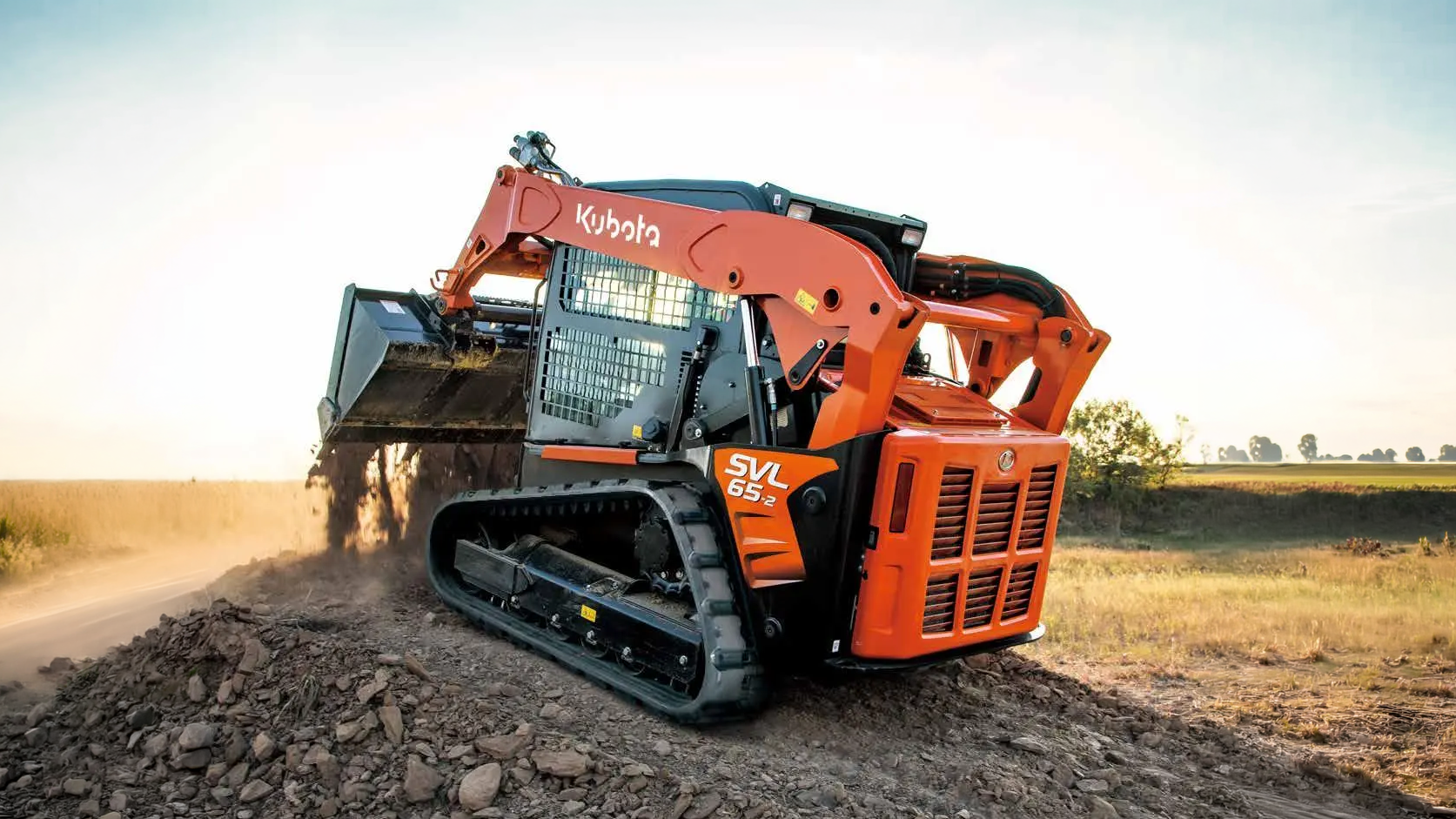
Wait, Downsize, or Haul It Yourself
When the route fails the walk, you have four honest choices. "Send the truck and hope" is not one.
| Option | Makes sense when | The catch |
|---|---|---|
| Wait for it to dry | The job can slide a few days | Clay stays soft longer than you expect |
| Rent the smaller machine | The work fits a smaller machine on a smaller trailer | Slower on big jobs |
| Pick it up yourself | You have a properly rated truck and trailer and know how to tow | Your rig gets stuck in the same mud, and you own the risk |
| Unload at the road | The street or a paved pad is firm and legal to use | Tracks can still rut a soft yard |
Waiting a few days
The answer more often than anyone likes. Push delivery until the road passes the shovel test. It costs patience and saves a tow bill.
Renting the smaller machine
Here is the dealer telling you to rent less. A smaller mini excavator or track loader usually rides on a lighter rig that handles marginal ground and tight gates better. For a few yards of mud or a short trench, smaller is often plenty.
Picking it up yourself
Will-call can work for small machines if your truck, trailer, hitch and license are up to it. Read our guide on mini excavator weight and California towing rules first. Your rig can get stuck too. PDQ's posted rental policies say the will-call clock runs from pickup until you drop it back off at a PDQ location, and the signed contract governs.
Calling in a rain day
If the machine is on site and the ground is too wet to work, PDQ's posted rental policies say you must notify PDQ the morning of that day so it can decide whether a credit can be extended. A chance at a credit, not a promise. The signed rental contract is what governs. Our guide on what happens to the rental clock when a job gets delayed covers the rest.
Protecting a Wet Driveway From the Truck and the Machine
Sometimes the job cannot wait. If you go anyway, limit the damage on purpose.
Where the water goes is not a DIY call
If runoff is crossing or undercutting your road, the fix is drainage, and water sent onto a neighbor's property is a new problem. Involve a licensed contractor, a civil engineer or your city or county first.

Getting the Machine Back Out After It Rains
The machine came in on a dry Tuesday. The storm hit Thursday. Now the same truck makes the same trip on worse ground.
Stage it before the storm
If rain is coming and you are nearly done, move the machine to firm ground near the road first. High ground, bucket down, keys out.
Calling it off rent does not move it
PDQ's posted rental policies say a delivered rental's clock stops when you call it off rent and PDQ issues a termination number. After that, the equipment must be accessible and available for pickup, and you are still responsible for keeping it safe until it is picked up. They also say items should be gathered in one spot convenient for pickup and protected from the weather. The signed rental contract governs. If the truck cannot reach the machine, ask the branch before you make the call.
Leave it reasonably clean
A machine caked in clay is harder to load and inspect. Knock off what you can. Ask the branch about any cleaning charge.
If storm cleanup is the actual job, our guide on storm debris removal equipment covers which machine fits the mess.
Planning Deliveries Around El Nino Storm Season
NOAA's U.S. Winter Outlook, released October 15, 2026, favors wetter than average conditions across the southern U.S., including California, for December 2026 through February 2027. The Climate Prediction Center described a very strong El Nino developing. That raises the odds of a wet winter. It does not guarantee one. The strong 2015 to 2016 El Nino underdelivered in Southern California.
For scale, the National Weather Service puts downtown Los Angeles at about 14 inches in an average water year. The strong El Nino winters of 1982 to 1983 and 1997 to 1998 brought more than 30.
Back to back storms are the real problem
A string of storms keeps clay roads soft for weeks, so deliveries happen in the dry windows, and everyone books the same windows. Our sibling guide on whether to reserve equipment now or wait covers that timing.
Fix the road before you need it
If your road is the weak link, firm it up before the rain starts. The El Nino property checklist walks the whole property, and the older El Nino storm prep guide covers which compact machines help.
Nobody delivers into a warning
Life safety first. During an active flood or debris flow warning, follow your county's evacuation orders and stay off the equipment. Machines are for prep before the storm and cleanup after the all clear, never for working in moving water or on a slope while it is raining. If you live below a burn scar, our guide to storm prep near a burn scar is the place to start.
The Short Version
Walk the route and send photos
Street to unload spot, on foot, with a shovel. Let the branch decide with real information.
Waiting is often the right call
A few dry days cost less than a stuck truck, a tow and a regraded driveway.
Smaller machine, smaller rig
If the job fits a smaller machine, it usually ships on a lighter trailer that handles marginal ground better.
Plan the pickup too
Stage the machine on firm ground near the road before the next storm, not after.
Seven Questions Before the Truck Rolls
- What truck and trailer will you send for this machine, and what width, height and turning room does it need?
- Can you review photos of my route before you dispatch?
- What happens if the driver gets here and decides the ground is too soft?
- Is there a smaller machine that would do my job on a lighter rig?
- Can you unload at the street or a paved pad, and is that allowed where I live?
- If it rains while the machine is here, who do I call the morning of, and how does a rain day work?
- Where should the machine sit at call-off so pickup works even if it rains?
Straight Answers
Can heavy equipment be delivered on a muddy driveway?
Sometimes, but often not safely right after heavy rain. Wet clay or decomposed granite can let a loaded truck and trailer sink or slide. Walk the route, send photos to the branch, and be ready to wait, unload at the street or rent a smaller machine.
How long after rain can a truck drive on a dirt road?
It depends on the soil, the grade and how much rain fell. Sandy ground can firm up fast, while clay can stay soft for several dry days. If a shovel slides easily into the tire path a few inches down, the road is not ready.
What do I need for an equipment delivery to my property?
A firm route, enough width and overhead clearance, a safe way back out, and a firm, level unload spot away from lawns, septic systems and buried lines. Ask the branch what their truck needs.
Will a track loader damage my wet lawn or driveway?
It can. Tracks spread weight better than tires, but spinning in place on wet ground tears it up. Use one path, make wide turns, mat the soft spots and regrade once it dries.
Can I pick up a rental machine myself if the delivery truck cannot reach my property?
Possibly, for smaller machines, if your truck, trailer, hitch and license are rated for the weight. Your rig can get stuck on the same wet road. Check transport weight and California towing rules first.
What happens if it rains while I have a rental?
PDQ's posted rental policies say you must notify PDQ the morning of a rain day so it can decide whether a credit can be extended. A credit is not automatic, and the signed rental contract is what governs.
We Still Want the Rental. Obviously.
A page about when our trucks should not show up is still a page from people who rent machines.
Send the branch photos of your route and unload spot. We will tell you if the truck can make it, if a smaller machine makes more sense, or if you should call back after it dries out.
Since 1952 we have pulled enough trucks out of enough driveways to know that "let's wait till Friday" is good advice.