


Your Neighbor's Yard Drains Into Yours. Now What? Prove it is their water, write it down, talk before you dig, and fix your own lot without starting a war over the fence
Disclosure. We rent excavators, tractors and compactors, so we would love for this to be an equipment problem. Mostly it is not. It is a people problem with a little dirt in it, and a rented machine fixes the dirt part last.
Short answer: First confirm the water is really coming from your neighbor's property by watching it during rain and taking dated photos and video. Then talk to your neighbor, and if that fails, go to your HOA or city or county code enforcement and talk to a real estate attorney. Meanwhile, manage the water on your own lot with grading, a swale or a drain to an approved outlet, never by sending it back at them.
Water does not care whose name is on the deed. Lawyers do.
Neighbor runoff is a common winter call that has nothing to do with renting anything. A side yard turns into a creek, and the caller is sure the house uphill is to blame. Sometimes they are right. Sometimes it is their own downspout. We are not lawyers or engineers, and we will say when you need one.
Jump to what you came for
Make Sure It Is Really Their Water
Before you knock on a door, rule out yourself. A lot of "neighbor water" starts on your own roof.
Check your own sources first
Then look at the soil
Expansive clay soils, common in parts of LA County, Riverside County and San Diego County, drain slowly and swell when wet. Water sits on top. Ground that was compacted during construction acts the same way. If your soil is the bottleneck, water from anywhere, theirs or yours, will pond.
Signs it really is coming from next door
Document It While It Is Happening
A photo of a puddle proves you have a puddle. A video of water crossing the fence proves where it came from.
Every next step goes better with a record. Start it before anyone is angry.
What to capture during rain
Keep a simple log
Date, where the water came in, how long it stood, and anything you said to the neighbor. Save repair receipts. Do not exaggerate. Someone paid to find the exaggeration may read it someday.
Stay safe while you film
Do not walk into moving water or onto a soaked slope. During a storm warning, film from a window.
Talk to Your Neighbor Before Anything Else
Most neighbors have no idea their water lands on you. Their yard is dry, which was the point. Opening with a lawyer's letter turns an accident into a twenty year feud.
How to bring it up
Write down what you agreed
Send a short, friendly text afterward: "Thanks for looking at the drainage. Sounds like you will move the downspout this month." A record without a threat. If the fix involves both lots, pay a professional to design it.
HOAs, Code Enforcement and Real Estate Attorneys
Sometimes the conversation goes nowhere. Here is the usual ladder, cheapest and friendliest first.
| Option | Good for | Cost and friction |
|---|---|---|
| Talk again, with a written note | Honest mistakes, small fixes | Free, keeps the peace |
| HOA | Common area drainage, rule violations, unapproved work | Low cost, slow, only if you have one |
| City or county code enforcement | Possible illegal discharge, unpermitted work, ongoing nuisance | Free to report, the neighbor will likely know |
| Mediation | Stalemates where both sides want it over | Moderate, usually cheaper than court |
| Real estate attorney | Real damage, refusal to act, insurance questions | Most expensive, most adversarial |
HOA
If you live in an HOA, read the CC&Rs (the rules that come with the property) and check whether the drainage swale or common area is the association's responsibility.
City or county code enforcement
Things like pool water or a sump pump discharge aimed at your property, or major work that looks unpermitted, may be a code matter. Rules vary by city and county, so call yours and ask.
What California law looks at
We are not giving legal advice, and you should not take it from an equipment dealer. California surface water disputes between neighbors are generally judged on reasonableness. The case lawyers usually cite is Keys v. Romley from 1966. The idea is that each owner is expected to act reasonably in how they handle runoff. What counts as reasonable on your two lots is a question for a real estate attorney who has seen your photos and your log.

What You Can Do on Your Own Lot
Whatever happens next door, the next storm still comes. The hard rule: you move it toward an approved outlet, never back toward the neighbor or onto anyone else.
Small fixes first
Regrading low spots
Ground should slope away from your house. A commonly cited guideline is a drop of about 6 inches in the first 10 feet, but confirm with your city or a contractor before you do new work.
Swales
A swale is a shallow, wide ditch, often lined with grass or rock, that carries water along the surface instead of letting it pool. Along a shared fence line, a swale on your side can catch incoming water and carry it toward the street or an approved drain.
French drains and catch basins
A French drain is a gravel filled trench with a perforated pipe that collects water underground and carries it away. A catch basin is a box with a grate that collects surface water into a solid pipe. Both need a legal place to discharge, such as the street or a storm system, which your city may regulate. Ask before you connect anything.
The full list of fixes and the equipment behind each one is in our backyard drainage equipment guide. If you are dealing with one stubborn puddle rather than a flow across the line, read what to do about standing water in your yard.
When to Hire an Engineer or a Contractor
Some neighbor water problems are a weekend with a shovel. Some are a civil engineer, a permit and a licensed contractor. Guess wrong on the second kind and everyone downhill pays.
Call a professional if
Who does what
A civil engineer designs drainage and grading and can document the problem in a way an attorney or a city will take seriously. A licensed landscape or grading contractor builds it. Your city or county building department tells you what needs a permit. On hillside lots in Riverside County and San Diego County, and in many LA County canyons, expect that last step to matter.
Where a Rented Machine Actually Fits
Equipment is the last ten percent of this problem. Sorry.
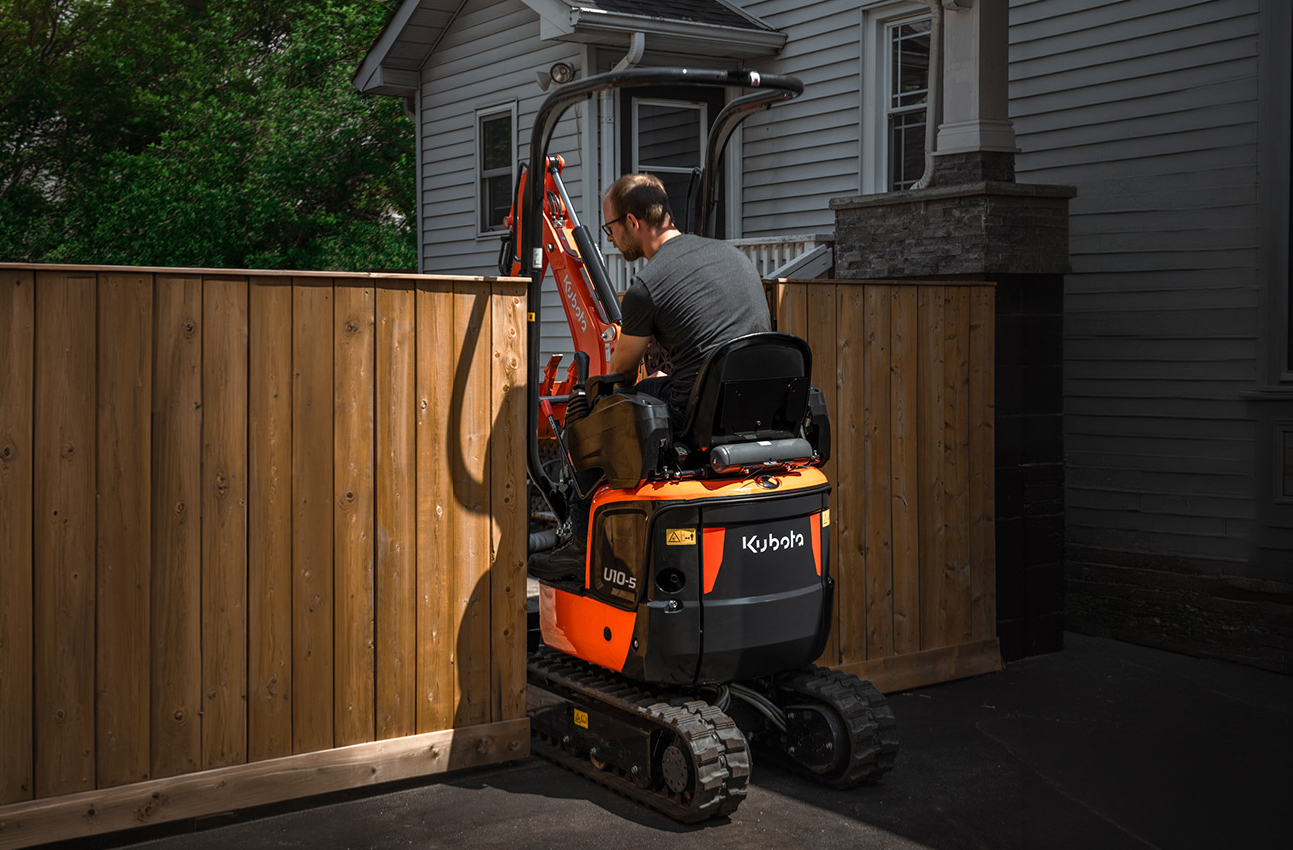
Once you know what you are building, and it is on your side, a machine can save your back. A mini excavator can cut a swale or a drain trench through rocky Inland Empire ground or hard caliche (a cemented layer of soil) that would take days by hand. A small tractor or skid steer moves fill, and a plate compactor keeps it from settling into a new puddle.
Before the bucket touches dirt
Rain days and the rental clock
PDQ's posted rental policies say that if rain keeps you from using the equipment, you need to notify PDQ the morning of that day so they can decide whether a credit can be extended. The signed rental contract is what governs. For delivery, cancellation and anything else, ask, and read the rental policies page. If you have never rented before, our first-time renter guide covers the basics.
Or hire it out
If the fix involves a slope, a wall, a permit or a shared line, hire the contractor and let them bring their own machine. That is the honest answer.
The Short Version
Prove it, then talk
Rule out your own downspouts and sprinklers, film the water crossing the line, then show your neighbor on a dry day.
Keep a record
Dated photos, video and a plain log make every later step easier, from the HOA to an attorney.
Fix your side, legally
Regrade, swale or drain toward an approved outlet. Never push it back at them.
Slopes and walls mean professionals
Engineer, licensed contractor, permit. Equipment comes after the plan, not before.
Seven Questions Before You Do Anything
- Have I ruled out my own downspouts, irrigation and grading?
- Do I have dated video of the water crossing from their lot to mine?
- Did anything change on their property before the problem started?
- Have I talked to my neighbor calmly, and did I write down what we agreed?
- Is there an HOA, and does it own any of the drainage involved?
- Is there a slope, a retaining wall or water reaching my house that needs an engineer?
- Where can water legally leave my lot, and does my city need to approve the fix?
Straight Answers
Is my neighbor responsible for water draining onto my property in California?
It depends on the facts. California surface water disputes between neighbors are generally judged on whether each owner acted reasonably in handling runoff, and the case usually cited is Keys v. Romley from 1966. A real estate attorney can tell you how that applies to your situation.
How do I prove my neighbor's water is flooding my yard?
Take dated video during rain that shows water moving from their lot onto yours, photograph the same spots each storm, record damage close up and wide, and keep a simple written log. Rule out your own downspouts and sprinklers first.
Who do I call about neighbor water runoff?
Start by talking to your neighbor. If that fails, contact your HOA if you have one, or your city or county code enforcement for things like pool or sump discharge aimed at your property. For damage or a neighbor who refuses to act, talk to a real estate attorney.
Can I build a berm or wall to block my neighbor's water?
Do not do anything that sends water back onto their lot or onto someone else's. Blocking flow can create a new problem and a new dispute. Have a civil engineer or licensed grading contractor design any fix, and check with your city about permits.
Can I put a French drain along the property line?
Often a drain on your side of the line is possible, but it needs a legal outlet such as the street or a storm system, and your city may regulate where it discharges. Anything on or across the line should be designed by a professional and agreed in writing by both owners.
Does homeowners insurance cover water damage from a neighbor's yard?
It depends on your policy, and surface water and flooding are often treated differently from other water damage. Call your insurer, share your photos and log, and ask a real estate attorney if the neighbor may be responsible.
We Wrote All That and Then Asked for Your Business
We just spent a couple thousand words telling you not to rent anything yet. That is still true. This is the ad anyway.
When you have a plan, a dry week and a fix that sits on your side of the fence, come tell us the gate width and the soil. We will match a machine to the job, or tell you a shovel and a wheelbarrow will do it.
We have been renting equipment since 1952. We have never once settled a property line dispute, and we would like to keep it that way.