


That Hill Behind Your House Is Eroding. What Can You Do? How to read the damage, what a homeowner can fix with a rake and some straw, and the signs that mean you call an engineer instead of us
Disclosure. We rent excavators, loaders and tractors for a living. Most hillside erosion control does not need any of them, and the worst thing you can do to a soft slope is drive a machine across its face. We will say that a few more times.
Short answer: Hillside erosion control starts with water, not dirt. Move roof and irrigation water off the slope, cover bare soil with plants, jute or coir netting and straw wattles laid along the contour, and fill small rills by hand. Cracks in the ground, slumping, bulging soil or a slope above or below a house mean you stop and call a civil or geotechnical engineer.
A hill does not erode because it is a hill. It erodes because water found a bare path down it.
Most backyard slopes we see in LA County, Riverside County and San Diego County were cut or filled when the tract was built, planted once, and then left to fend for themselves through heat, drought, gophers and the occasional wildfire. Then one wet winter shows you every weakness at once.
Jump to what you came for
Read the Damage Before You Fix Anything
Erosion comes in stages. Each one tells you how far along the problem is and who should be fixing it. Walk it after a rain and take photos from the same spots every time.
Sheet erosion
A thin layer of soil washes off evenly. You see it as exposed roots, small stones sitting on little pedestals of dirt, and a fan of silt at the bottom of the slope or on your patio. Minor, and the cheapest stage to fix.
Rills
Small channels, a few inches deep, that run straight downhill. Water has started to concentrate. They grow every storm. A homeowner can still handle them.
Gullies
Channels deep enough that you cannot step over them casually, often a foot or more. Gullies usually point straight back to a water source: a downspout, a broken sprinkler line, a driveway edge.
Slumps and slides
This is a different problem. Instead of soil washing off the surface, a chunk of slope moves as a block. Look for a curved crack or step near the top, soil bulging out near the bottom, leaning trees or fence posts, and new cracks in walls, paths or pool decking. This is not erosion you fix with straw. This is a stop sign.
| What you see | Stage | Who fixes it |
|---|---|---|
| Exposed roots, silt on the patio | Sheet erosion | You, with plants and netting |
| Small channels a few inches deep | Rills | You, plus fixing the water source |
| Channels a foot or deeper | Gullies | Landscape or grading contractor |
| Cracks at the top, bulge at the bottom | Slump or slide | Civil or geotechnical engineer, city or county |

Why Southern California Hills Wash Out
Our slopes spend eight months baking and then get a year of rain in a few weeks.
If your problem is water sitting on the flat part of the yard rather than washing down the hill, that is a drainage question. Our guide on why a backyard turns into a swamp every winter covers that side.
Move the Water Off the Slope First
Every erosion fix fails if water keeps arriving in the same place. Netting slows water down. It does not stop a downspout.
Walk it in the rain
During light rain, from a safe spot off the slope, watch where water enters it. Lawn edge, driveway, a roof corner. The rill usually lines up with it.
Deal with the downspouts
Extend downspouts so they do not empty onto the top of the slope. Where the water goes next matters. A solid pipe that carries roof water to the bottom of the slope, or to a street or approved outlet, is a common approach. Ask a contractor or your city what outlet is allowed. Never point it at a neighbor's property.
Turn the sprinklers down
Shut slope irrigation off or way down in the rainy season. A wet spot on a slope in July is a leak, not a spring.
Look at the top edge
The flat ground above a slope should not dump water over the edge. A small berm (a low ridge of soil) or a shallow swale (a gentle, wide ditch) along the top can catch sheet flow and carry it to a controlled outlet. Anything that changes how water leaves your property needs a contractor or engineer to sign off.
Cover the Soil: What a Homeowner Can Actually Do
Once the water is under control, keep rain off bare dirt and slow down whatever runs across it. None of this needs a machine. It needs gloves, stakes and a free Saturday.
Plants, the long-term answer
Roots hold soil. Deep-rooted, drought-tolerant ground covers and shrubs suited to your area do more for a slope over time than anything else on this list. Ask a local nursery what works on slopes in your area. Plant in fall so winter rain does the watering. Expect a season or two before they fill in.
Jute or coir netting
Erosion control blankets are open-weave mats made of jute (plant fiber) or coir (coconut husk fiber). You roll them down the slope, overlap the edges, and pin them with landscape staples. They break raindrop impact, hold seed in place, and rot away as plants take over. Coir lasts longer. Jute is cheaper. Skip plastic netting, which tangles snakes and birds.
Straw wattles and fiber rolls
Wattles are long tubes of straw or fiber, about the diameter of a fence post. Lay them across the slope along the contour (level lines across the hill, like the rings on a topo map), set them in a shallow trench, and stake them. Each one slows water and catches soil above it. Running them downhill or leaving gaps at the ends turns them into gutters.
Filling rills
Small rills can be filled by hand with soil, lightly tamped, then covered with netting. Fill them after you fix the water source, not before, or you will be doing it again next storm.
If you are working through a whole property list before winter, our El Nino property checklist puts this alongside gutters, culverts and the rest.
When to Stop and Call an Engineer
Here is the part where a rental company tells you to hire somebody else.
And one rule that has no exceptions. Nobody works on a saturated slope, in moving water, or during a storm warning. If the hill is actively moving during a storm, leave and call your local emergency number.
If water from the slope is crossing a property line, document it with photos and dates and read our guide on what to do when a neighbor's yard drains into yours. Talk first. Lawyers later, if at all.
Where Machines Fit, and Where They Don't
Machines are for the flat ground around the slope. Not the slope.
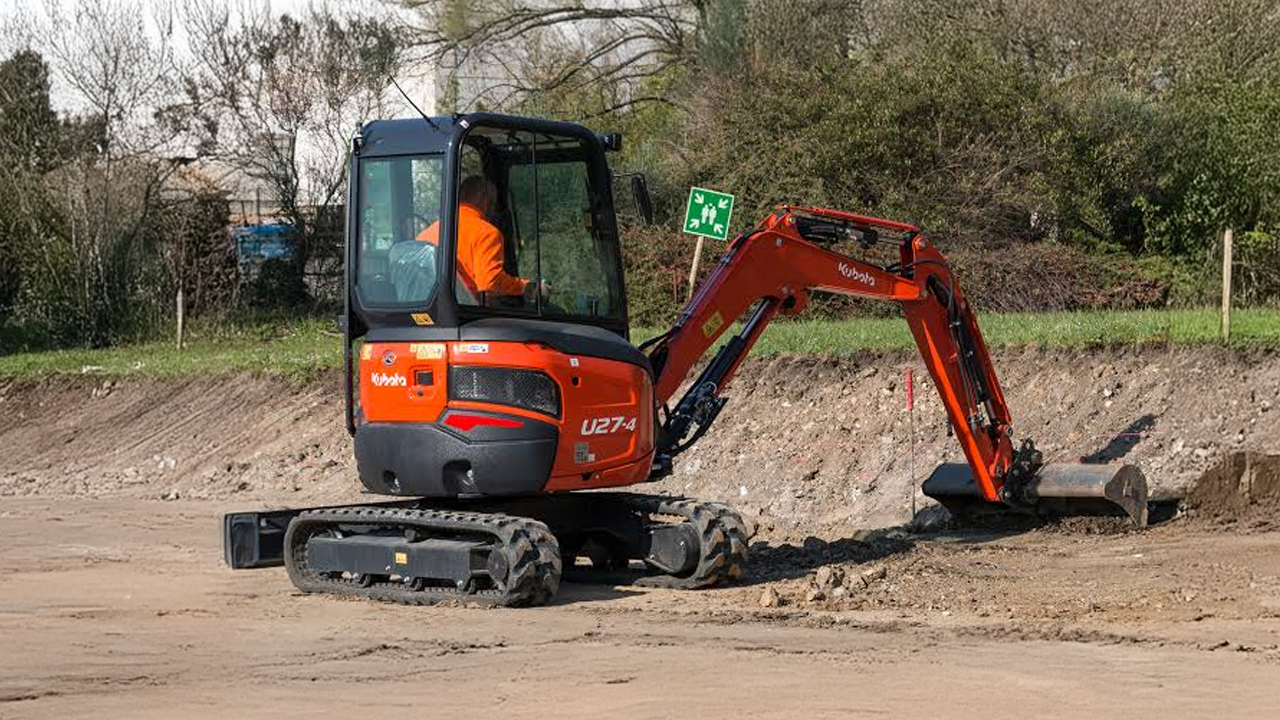
A mini excavator or a tractor on a soft hillside face does three bad things. It compacts soil so water runs off faster. It leaves tracks that become rills. And it can tip. Here is where renting actually helps.
Cleaning up what came down
Silt piled at the bottom of a slope is often more than a wheelbarrow wants. A small skid steer or skip loader on dry, flat ground handles it. Our guide on cleaning up your property after the rain walks through the order to do things in.
Careful small grading on the flats
Shaping a small berm or swale on level ground above a slope is reasonable equipment work. A garden tractor or small loader is plenty. Call 811 (DigAlert in Southern California) at least two working days before you dig, and remember that sprinkler mains and landscape lighting lines are usually not marked, so find those by hand.
Brush and debris
Dead brush on the slope can be cut and carried out by hand, then chipped at the bottom. A limb chipper is often the only machine the job needs. Our brush clearing equipment guide covers what to rent. Leave the roots in the ground. They are holding the hill.
For broader storm-season equipment, see our guide on compact equipment for El Nino storm prep. PDQ's posted rental policies say a rain day must be called in that morning so PDQ can decide whether a credit applies. The signed rental contract governs. For anything else, like delivery to a tight hillside lot, ask.
The Short Version
Fix the water first
Downspouts, sprinklers and runoff from the top edge cause most hillside erosion. Netting will not beat a downspout.
Cover bare soil
Plants for the long term, jute or coir netting and straw wattles along the contour until they fill in.
Cracks mean stop
Ground cracks, bulges, slumps or a slope near a house call for a civil or geotechnical engineer, not a rental.
Keep machines off the face
Rent for cleanup, small grading on flat ground and moving materials. Never on a wet or steep slope.
Seven Questions to Answer Before You Touch the Hill
- Is this sheet erosion, rills, gullies, or is the slope actually moving?
- Where does the water on this slope come from, and can I redirect it to an approved outlet?
- Are my slope sprinklers off or turned down for the rainy season, and is there a leak?
- Does this slope sit above or below a house, pool, road or neighbor's property?
- Did this hill burn, and do I need a burn scar plan instead of a backyard fix?
- If I rent a machine, will it stay on firm, flat, dry ground the whole time?
Straight Answers
What is the cheapest way to stop hillside erosion?
Redirect the water first. Extending downspouts, turning off slope sprinklers in the rainy season and fixing irrigation leaks cost very little and often stop rills from growing. Then cover bare soil with jute or coir netting, straw wattles and plants.
How do you install straw wattles on a slope?
Lay them across the slope along level contour lines, set them in a shallow trench so water cannot run underneath, butt the ends tightly together and stake them in place. Never run them straight downhill.
Is jute or coir netting better for erosion control?
Both work. Coir is made from coconut fiber and lasts longer on steeper or longer slopes. Jute is cheaper and breaks down faster. Either one holds soil and seed while plants establish.
When should I call an engineer about my hillside?
Call a civil or geotechnical engineer if you see cracks in the ground, soil bulging at the bottom, a slump or slide, leaning trees or posts, or if the slope sits above or below a house, pool or road. Your city or county may also need to be involved.
Can I use a mini excavator to fix an eroding hillside?
Usually not on the slope itself. Running a machine on a soft or wet slope compacts soil, leaves tracks that become rills and risks a rollover. Machines are best used on firm, flat ground for cleanup, small grading and moving materials.
What plants are best for hillside erosion control in Southern California?
Deep rooted, drought tolerant ground covers and shrubs suited to your local climate work best. Ask a local nursery or your county or water district for a slope planting list, and plant in fall so winter rain helps them establish.
An Ad That Mostly Told You to Buy Straw
We spent a few thousand words explaining why you probably do not need our machines for this. Then we put a call button at the bottom anyway. That is the business.
If you do need equipment for the cleanup or the flat ground around your slope, tell us what the site looks like and how you get to it. We will tell you the smallest thing that does the job, or that a landscape contractor is the better call.
Since 1952 we have rented a lot of excavators. We have never seen one improve a wet hillside by driving on it.