

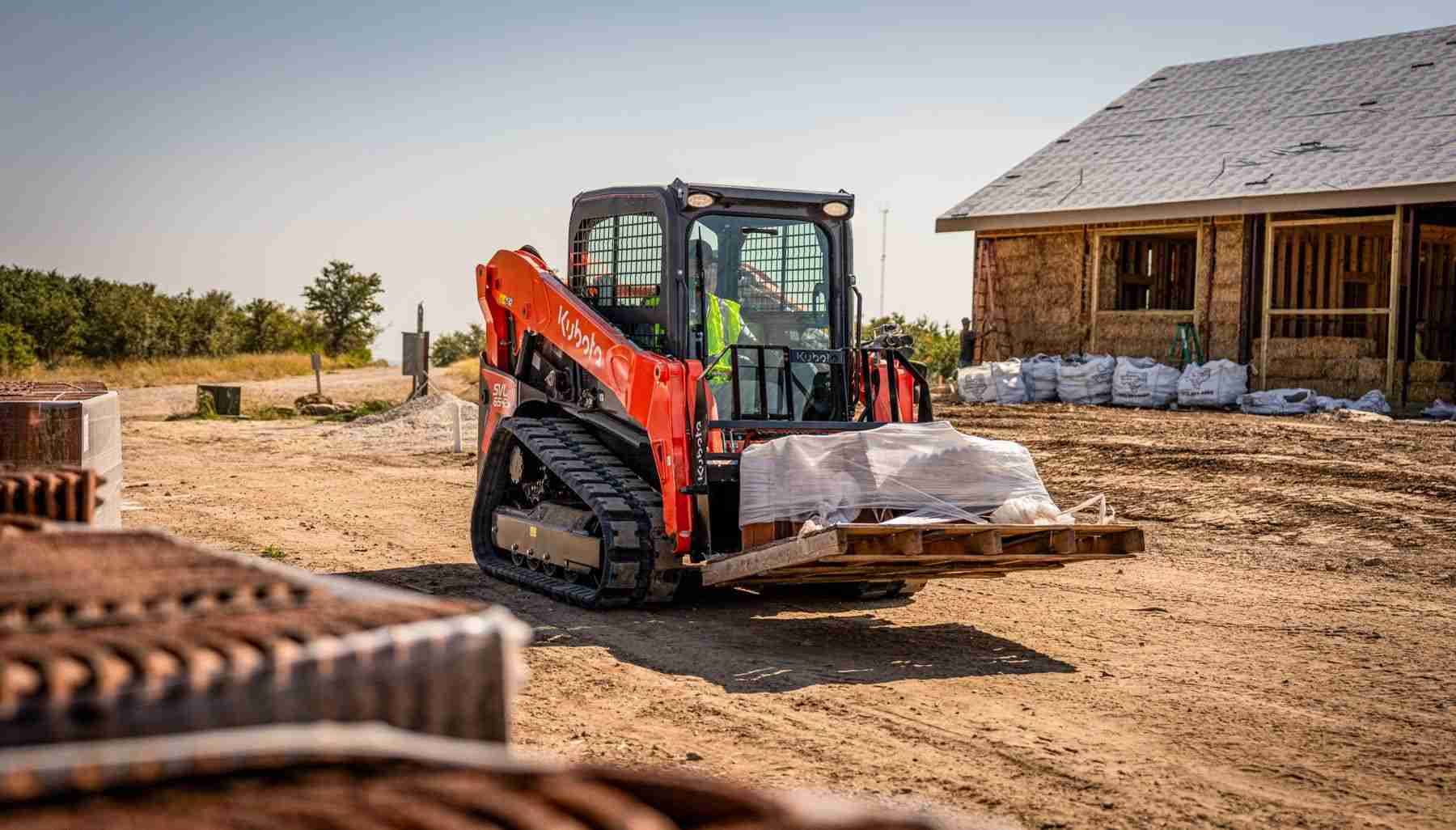
Sandbags Need Sand: Equipment for Moving and Staging Storm-Prep Materials The bags are cheap or free. The sand weighs tons. Here is how to move it without wrecking your back, your lawn or your neighbor's yard
Disclosure. We rent loaders, tractors and dump trucks, so we profit when you decide a sandbag job needs a machine. We do not sell sand or sandbags. For a lot of people, the honest answer here is a shovel and a friend.
Short answer: Sandbags are cheap at supply yards and often free from city yards and fire stations during storm season. The hard part is weight: a filled bag runs roughly 35 to 40 pounds, so 100 bags is around two tons of sand you have to shovel, carry and stack. For a few dozen bags, use hand tools; for hundreds, a tractor or track loader with a bucket and pallet forks, plus a dump truck for bulk sand, saves days of labor.
Nobody runs out of bags. They run out of sand, daylight and people willing to lift.
This guide covers the math, the staging and the equipment. It is not about protecting a slope; that needs a civil engineer, a licensed contractor, or your county. If you are building a bigger storm plan, start with our El Nino property planning checklist and come back here for the sand.
Jump to what you came for
The Sandbag Math Nobody Does Until Saturday Morning
Step one: count the bags
Measure what you are protecting, then lay and measure one filled, tamped test bag. A tamped bag covers very roughly a foot or so of length. Treat any count as rough. Divide the length by what one bag covers, multiply by the number of layers, and add 20 percent for staggered seams, ends and the bag that splits.
Step two: turn bags into sand
County guidance usually says fill bags about half to two-thirds full. A filled bag typically weighs roughly 35 to 40 pounds. So every 100 bags is roughly 3,500 to 4,000 pounds of sand. A cubic yard of sand weighs well over a ton, more when wet. Ask the supply yard what theirs weighs and order extra.
Step three: turn sand into hours
Two people can fill a lot of bags in an afternoon. The filling is rarely the slow part. The carrying is.
| Job | Rough bag count | Rough sand weight | What usually makes sense |
|---|---|---|---|
| One garage door, two or three layers | 40 to 60 | About 1 ton | Shovel, wheelbarrow, a friend |
| Garage plus side yard and a gate | 100 to 200 | 2 to 4 tons | Hand tools if close, a loader if the sand is far away |
| Long run along a driveway or barn | 300 to 500 | 5 to 10 tons | Bulk sand delivered, loader with bucket and forks |
| Several buildings on acreage | 500 plus | 10 tons plus | Loader, dump truck, more people, and a plan |
First row? You do not need us. Grab a shovel.
Where to Get Sandbags and Sand
To be clear up front: PDQ does not sell sand, bags, plastic sheeting or mats. Here is where people actually get them.
Free sand versus bulk sand
Free sand works for a few dozen bags. For a few hundred, bulk sand delivered or hauled in a dump truck lets you fill at home on your schedule.

Staging the Sand and Setting Up a Filling Station
Where you dump the sand decides how many times you lift each bag.
Put the pile close to where the bags go
Every extra 50 feet between pile and wall is 50 feet you carry each bag. Pick the closest firm, flat spot a truck can reach. Our guide on whether a truck can reach your property after heavy rain covers what a loaded truck needs underfoot.
Keep it off the drainage path
A sand pile in the gutter, the swale or the low corner of the yard becomes sediment in the storm drain at the first rain. Stage it away from where water runs, and cover it. A pile in the street may need city approval; ask first.
Build a filling station
A cone with the tip cut off or a bottomless bucket on a stand holds the bag open. One person shovels, one ties, one stacks.
Which Machine Actually Helps With Sandbags
A machine does not fill bags. It moves sand to the station and bags to the wall. If neither trip is long or heavy, skip it.
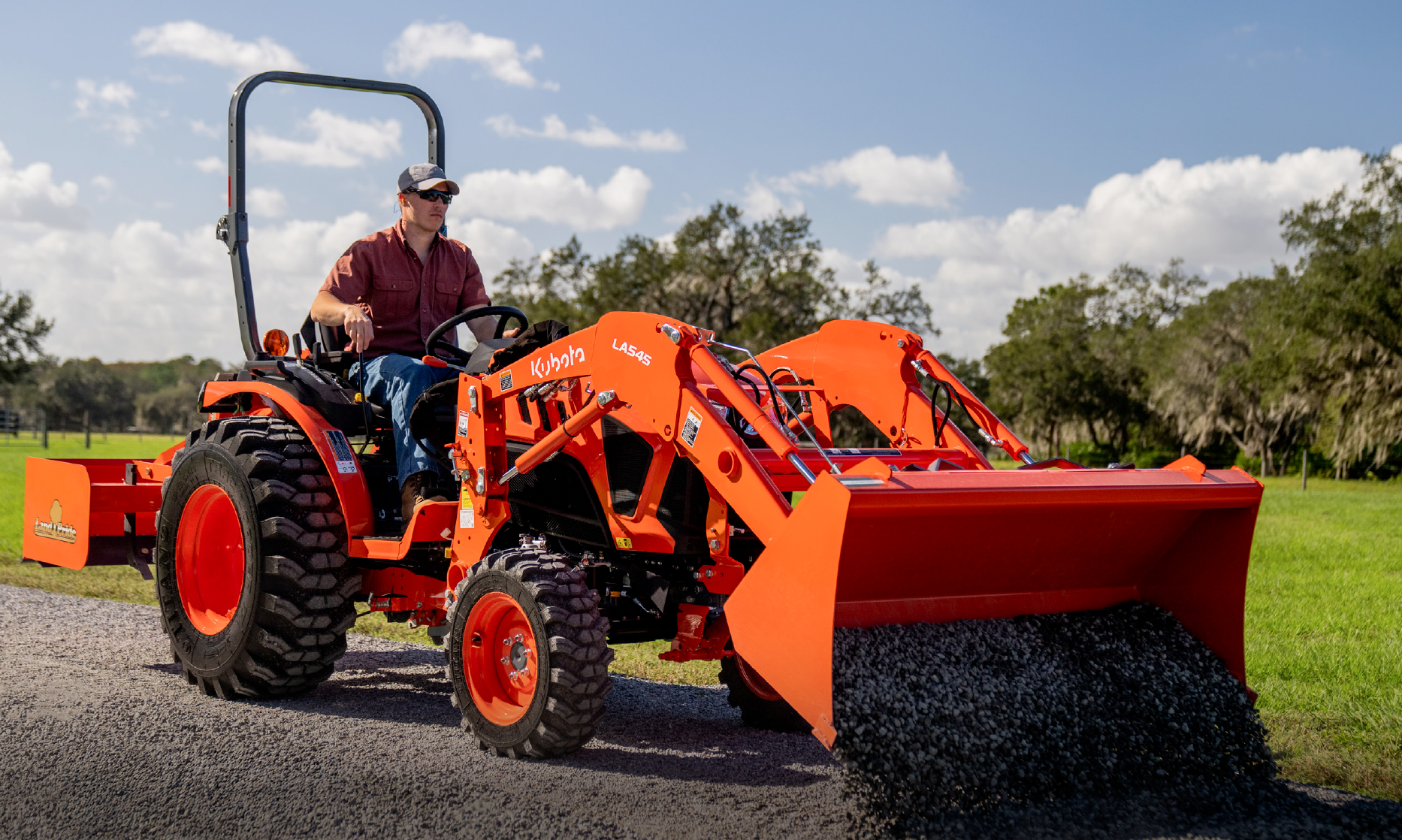
Compact tractor with a loader
If you own one, it is your sandbag machine: bucket for sand, forks for modest pallets. Mind the rated capacity.
Skid steer or compact track loader
The rental most people picture for this job. A bucket for sand, forks for pallets, and a quick attach plate to swap between them. Tracks float better on soft ground than wheels; wheels are kinder to pavement. Our skid steer attachments guide covers buckets and forks, and the track loader versus skid steer comparison covers which one fits your ground.
Dump truck
Useful when the sand is somewhere else and you would otherwise make ten pickup trips. PDQ's posted rental policies say proof of insurance is required for truck rentals, and the signed rental contract governs. Ask what license the truck you are renting requires.
Wheelbarrows and hand trucks
Still the right tool for the last 30 feet, through a side gate or across a patio. No loader fits there.
| Trip | Hand tools | Tractor or loader | Dump truck |
|---|---|---|---|
| Supply yard to your property | Not realistic past a few dozen bags | Not a road machine | Built for it |
| Sand pile to filling station | Fine if they sit side by side | Bucket does it in minutes | Overkill |
| Filled bags to an open wall line | Slow past 100 bags | Pallet forks | No |
| Bags through a side gate or onto a patio | Wheelbarrow, hand truck | Usually will not fit | No |

Moving Pallets of Filled Bags Without Tipping Anything
Pallet forks are where a loader earns its rental, and where people get hurt, because nobody weighs the pallet.
Do the pallet math first
Forty filled bags at roughly 35 to 40 pounds each is around 1,400 to 1,600 pounds, plus the pallet. Rated operating capacity on a loader includes the weight of the forks. Check the machine's rating, subtract the forks, and stack the pallet to fit what is left. On a compact tractor loader, that might mean half a pallet per trip. That is fine. Two light trips beat one tipped tractor.
Carry low, go slow
Keep the load low and the heavy end uphill. Hillside lots in LA County and San Diego County rarely have a truly flat path from the driveway to the back of the house. If the rear of the machine gets light, set the load down. Follow the operator's manual limits.
Wet ground changes everything
Expansive clay and decomposed granite turn soft fast once the rain starts. Loaded machines on a soaked lawn leave ruts that become new drainage channels. Do the heavy moving before the first storm. If you have to cross turf or a finished driveway, ground protection mats help, but get them from a supply source, not us.
Placing Sandbags So They Do Something
Sandbags slow and steer shallow water. They do not seal a wall or hold back a hillside.
Slopes and burn scars are a different job
A sandbag row on a hillside below a burn scar is not a debris-flow defense. Debris flows can carry mud, rocks and trees, and they can start with a short burst of intense rain. If that is your situation, read our guide on storm prep near a burn scar and get your county and a professional involved.
Life safety first
During an active flood or debris-flow warning, follow evacuation orders and stay off the equipment. Machines are for prep before and cleanup after. Never for working in moving water or on a slope during a storm.
After the storm
Floodwater can carry contaminants. Ask your city or county how to handle used bags. When it is time to clear mud and silt, our storm debris removal guide covers the machines and where the material goes.
Renting a Loader or Dump Truck for a Sandbag Job
Most sandbag jobs are one long day, so timing matters more than the machine.
Book before the forecast fills up
When a storm is a few days out, everyone wants loaders, dump trucks and pumps at the same time. If you know the job, reserve. PDQ's posted rental policies say reservations are welcome and to call for availability. Our guide on whether to reserve now or wait walks through the call.
What the posted policies say
PDQ's posted rental policies say minimum rental periods vary by item, from a few hours up to a day or two depending on the equipment. A day rate is 24 hours in your possession with up to 8 hours of use. If rain keeps you from using the equipment, PDQ must be notified the morning of that day so it can decide whether a credit can be extended. Delivery and pickup are available, with rates that vary by equipment and location. You are responsible for the equipment from delivery to return, including keeping it secured and protected from the weather. The signed rental contract is what governs, so read it. Anything not listed here, like cancellation terms, ask about and check the rental policies page.
You can browse the categories on the PDQ rentals site, then call the branch to confirm what is actually available that week.
The Short Version
Do the math first
Count the bags, multiply by 35 to 40 pounds, and see what you are really moving. Under a ton, skip the machine.
Get sand and bags elsewhere
City yards, fire stations and supply yards. We do not sell either one.
Stage close, fill on pallets
Put the pile near the wall line and off the drainage path. Fill straight onto pallets if forks will move them.
Move it before the rain
Loaders and wet clay do not mix. Do the heavy hauling on dry ground and stay off equipment during warnings.
Questions to Answer Before You Rent Anything
- How many bags do I actually need, and what does that weigh in sand?
- Where is the sand coming from, and can it be delivered close to where the bags go?
- Is the trip from pile to wall long enough or heavy enough to need a machine?
- Will a loader fit through my narrowest gate and path, and will the ground carry it?
- What does a pallet of filled bags weigh, and what can my machine lift with forks on it?
- Does my bag line push water toward a neighbor, a slope or the street?
Straight Answers
Where can I get free sandbags in Southern California?
Many city yards and LA County fire stations hand out free sandbags during storm season, and some also provide sand. Supplies vary and can run out before big storms, so check your city or county website before you go.
How much does a filled sandbag weigh?
A bag filled about half to two-thirds full typically weighs roughly 35 to 40 pounds. That means 100 bags is around two tons of sand to shovel, carry and stack.
How much sand do I need for sandbags?
Multiply your bag count by roughly 35 to 40 pounds to get the weight, then ask your supply yard how much a cubic yard of their sand weighs. Order a little extra for split bags and a second layer.
How full should a sandbag be?
Common county guidance is about half to two-thirds full. Fold the open end under, lay bags like bricks with staggered seams, and tamp each one down.
Do I need a skid steer to move sandbags?
Usually not for a garage door or a single gate. A loader with a bucket and pallet forks starts to pay off when you are moving hundreds of bags or the sand pile is far from where the bags go.
Does PDQ sell sand or sandbags?
No. Get bags and sand from your city, county or a supply yard. PDQ rents equipment that helps move bulk sand and filled bags, such as tractors, loaders with pallet forks and dump trucks.
Fine, You Caught Us Selling
A rental company wrote a whole page about sandbags. We do not sell sandbags. Draw your own conclusions about why the loader kept coming up.
Tell us how many bags you are planning, where the sand is coming from and how wide your gate is. We will tell you whether a tractor, a track loader or a dump truck saves you a day, or whether you should just call a couple of friends and order pizza.
Since 1952 we have watched a lot of people rent a loader to move forty bags. We will talk you out of it if you ask.